
Strauss’ Greek Tragedy Receives an Elektra-fying Revival in San Francisco
/By Elsa Tranter
6/18/2026
Photo credit: Cory Weaver
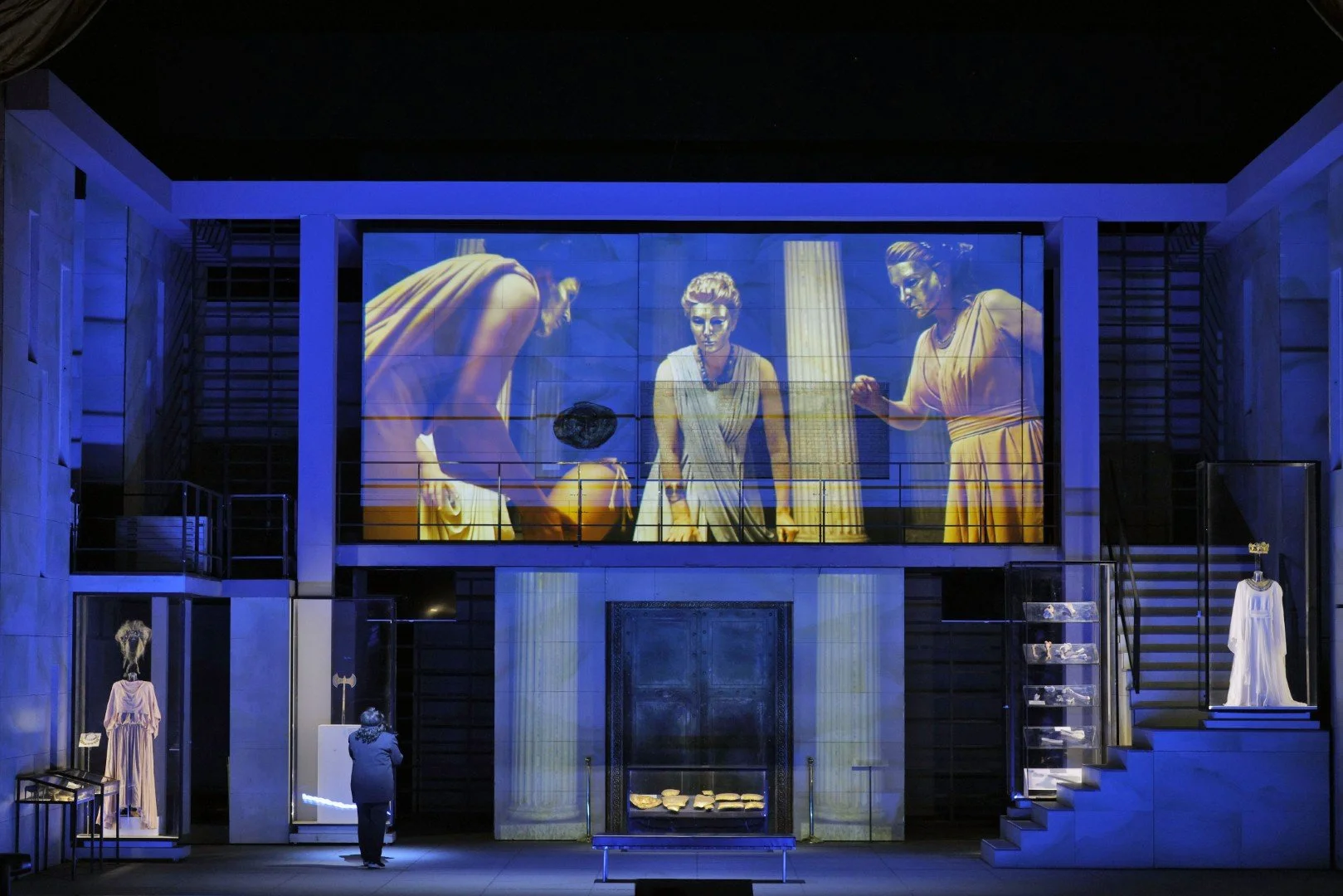
Richard Strauss’ 1909 masterwork Elektra returned to San Francisco this month after a nine-year gap. It is marked by its intensity in time—one act, no intermission, one hour forty minutes, and size—close to 100 musicians in the pit and 82 in the cast, for a breathtaking experience altogether.
Elektra was the first collaboration between Strauss and Hugo von Hofmannsthal, who would go on to write four other operas together, including Der Rosenkavalier and Arabella. Theirs was a very successful partnership.
Strauss’s music is magnificent—Wagnerian and then some. Loud, lots of horns, and beautifully melodic but with the insertion of enough dissonance to make it feel modern and 20th century. It’s glorious to listen to.
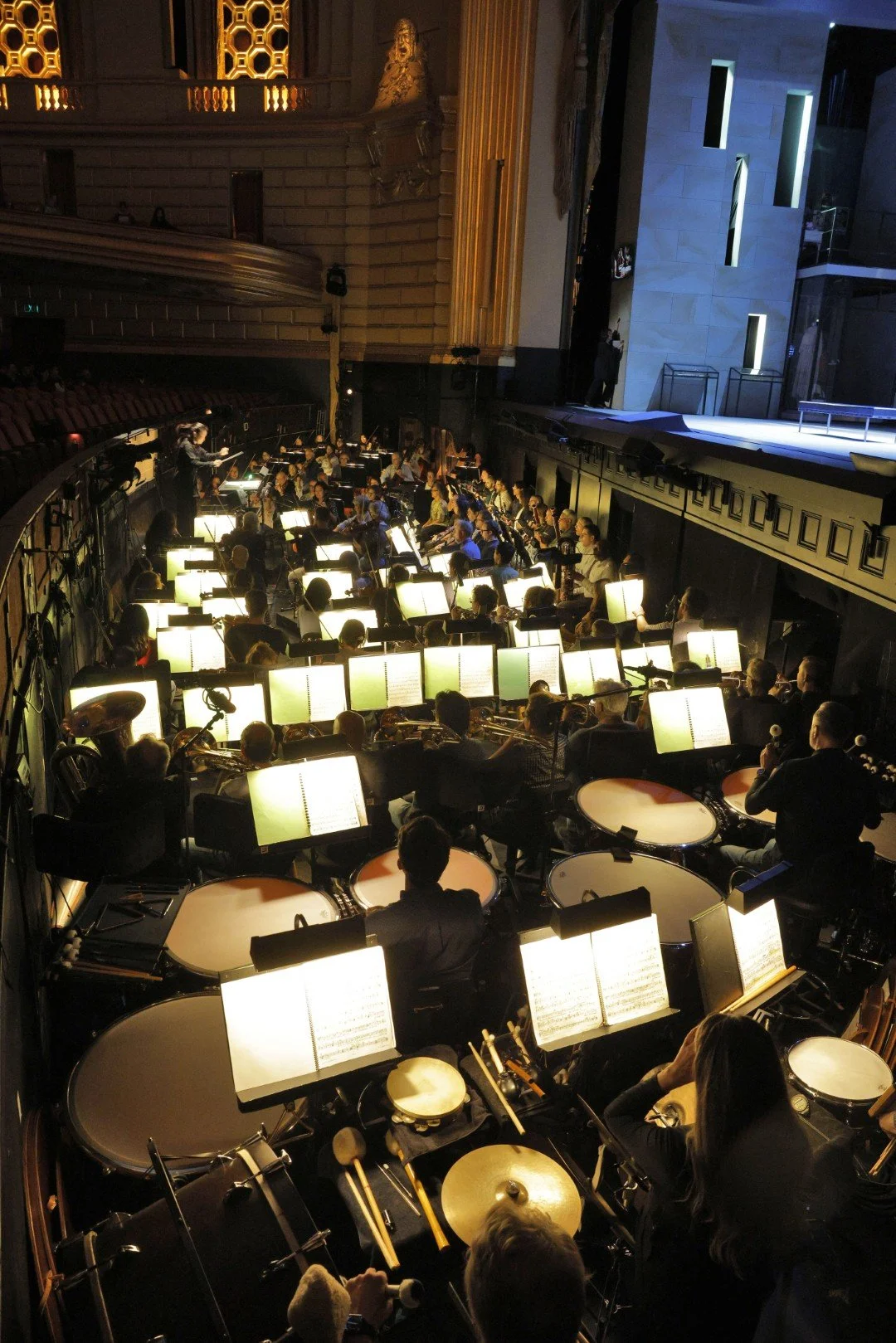
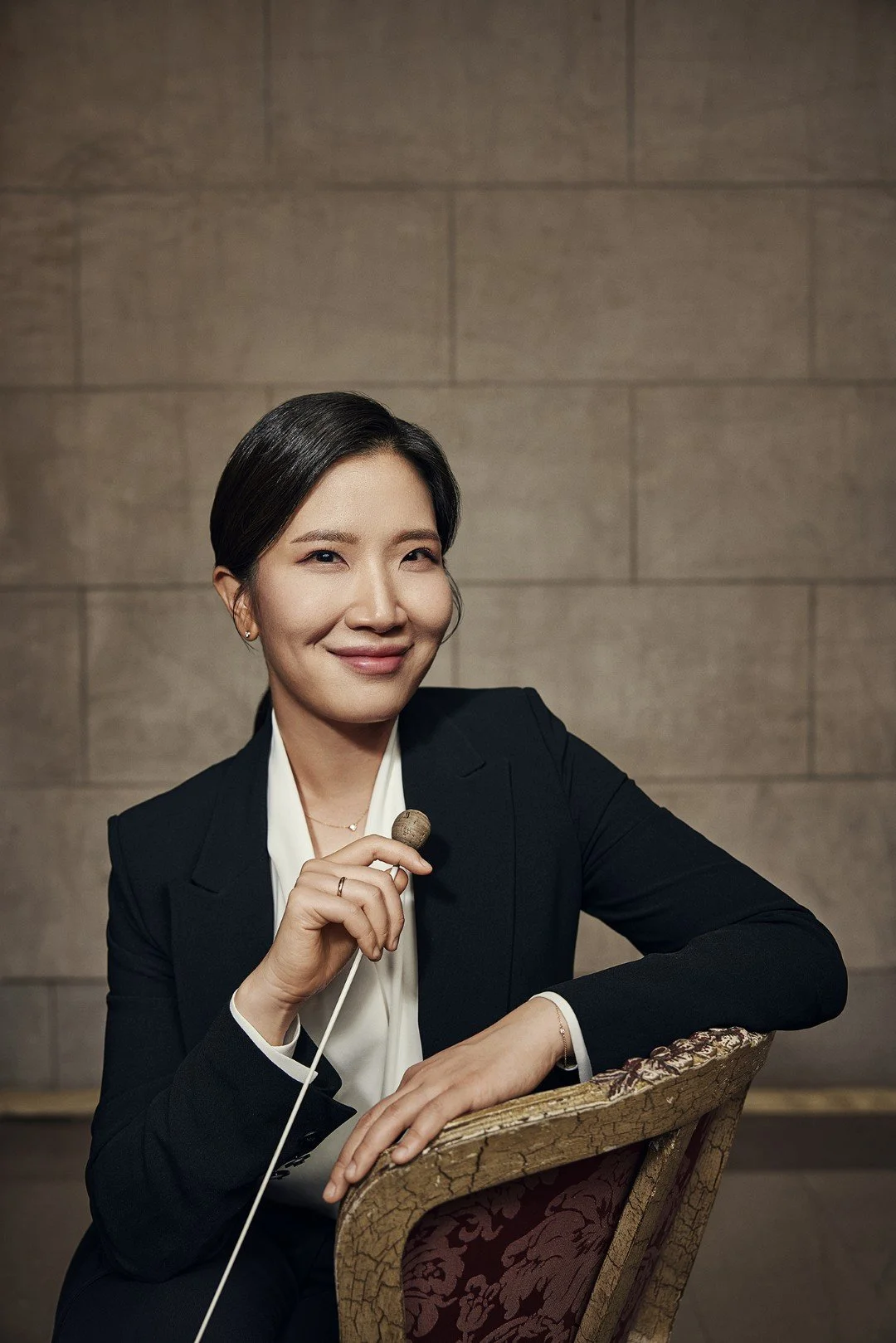
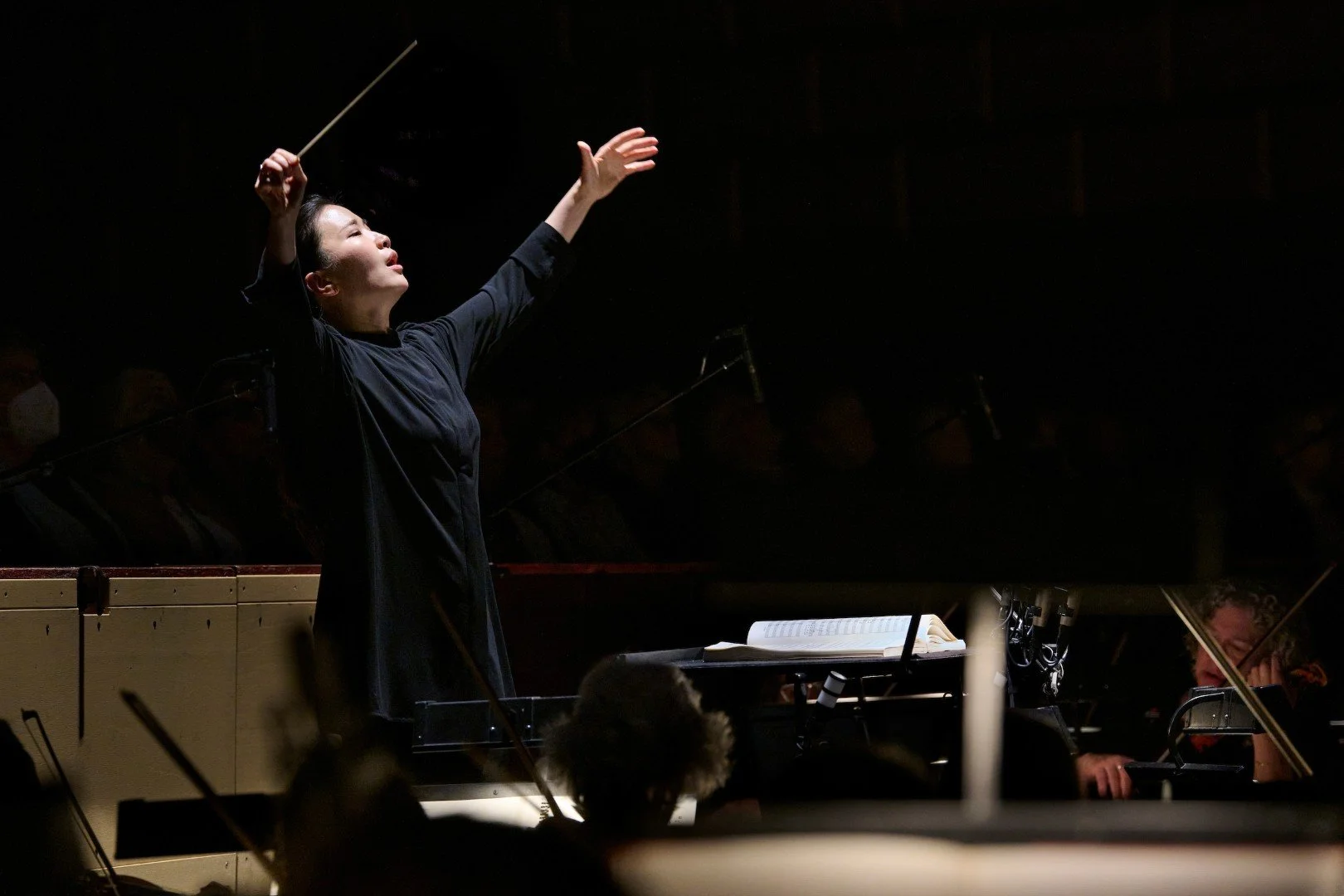
The orchestra was conducted by Music Director Eun Sun Kim and she did a masterful job keeping all of the parts together with great energy and skill. When the opera was first performed in San Francisco in 1938 (six years after the opera house opened) the pit had to be enlarged by four feet under the stage to accommodate all the musicians.
The story, at least vaguely familiar to most of us, concerns the Greeks at the time of the Trojan War. King Agamemnon, his ships stalled with no wind, sacrifices his daughter to the gods so he can set sail for Troy. Killing her can be justified by saying that the greater public good is more important than the private life (but only if you believe that war is the right thing—and that gets very complicated). While he is away his wife, Klytemnestra, takes a lover, Aegisth. When the King returns from war his wife and lover kill him, ostensibly to punish him for killing his daughter, but perhaps for other reasons. Our opera is about Elektra, another daughter, her sister Chrysothemis, and their brother Orest. Revenge for the death of Agamemnon is the theme.
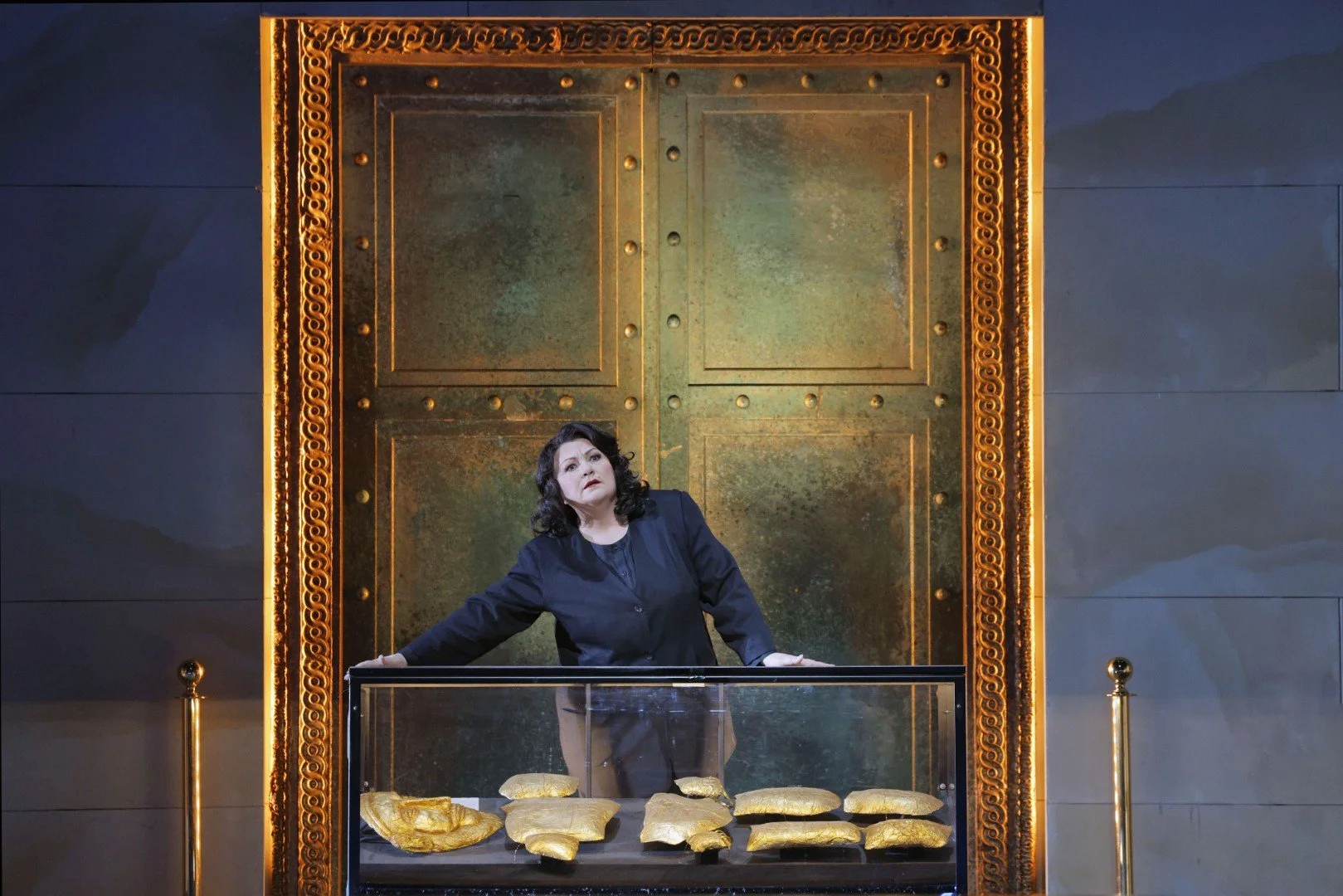
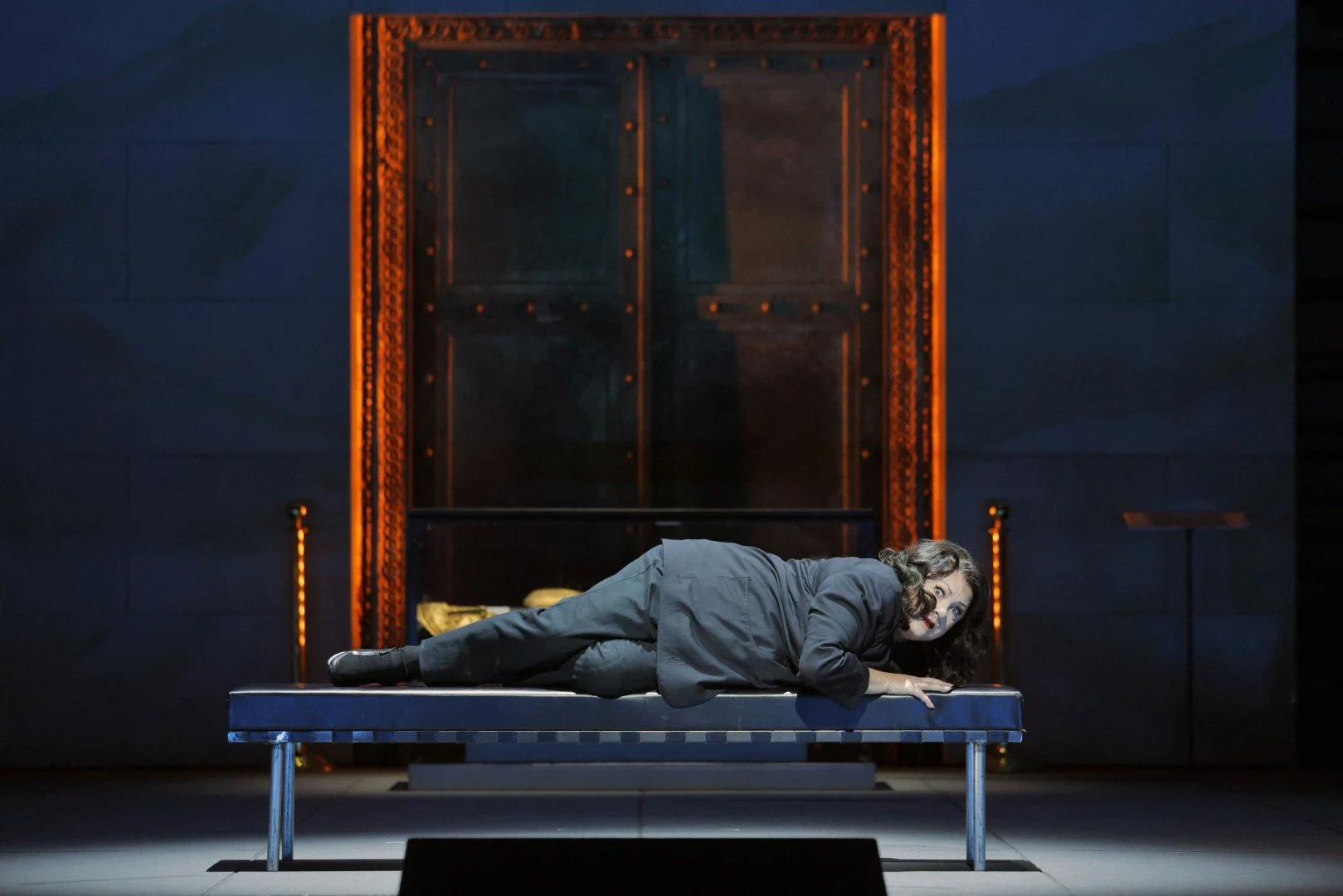
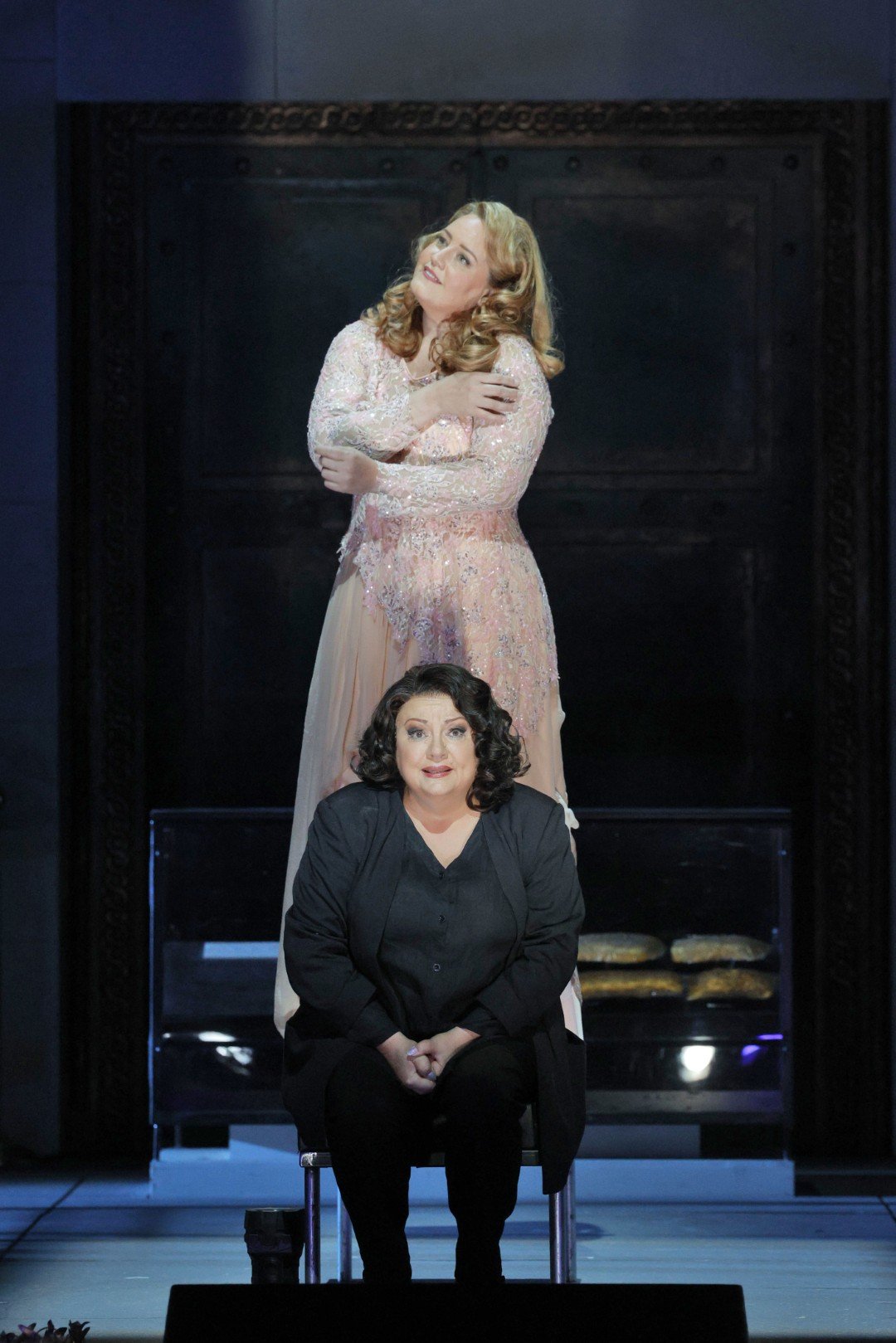
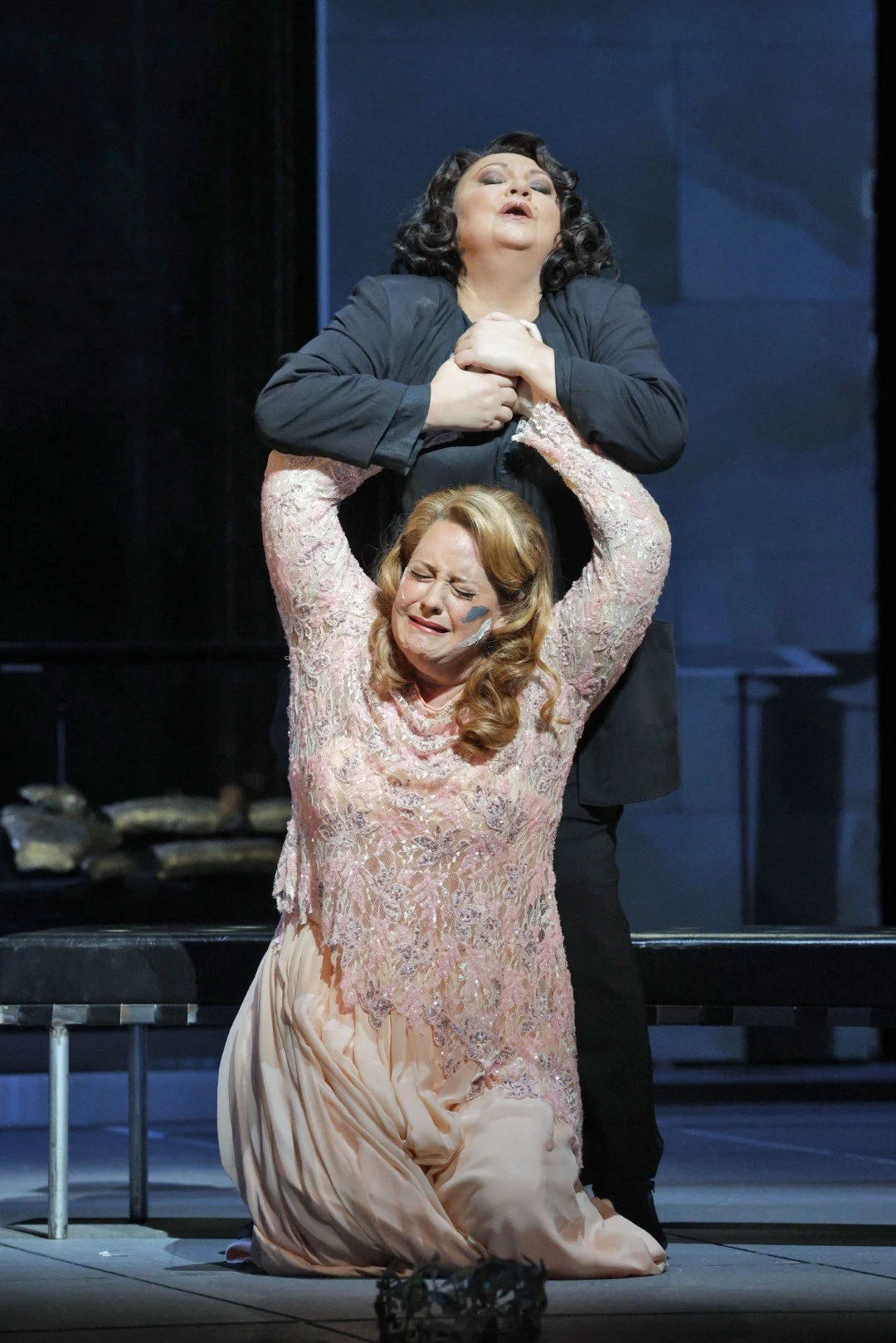
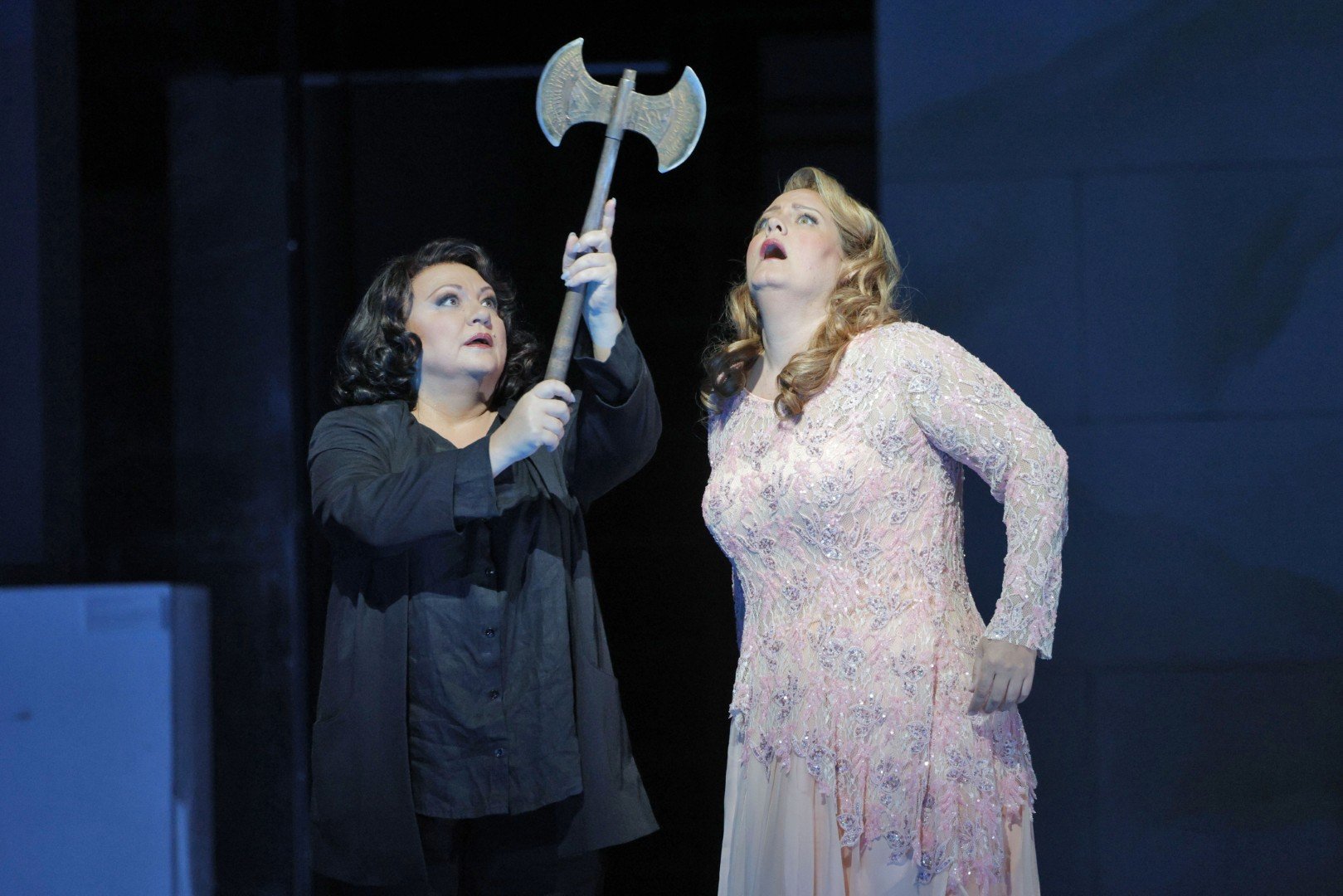
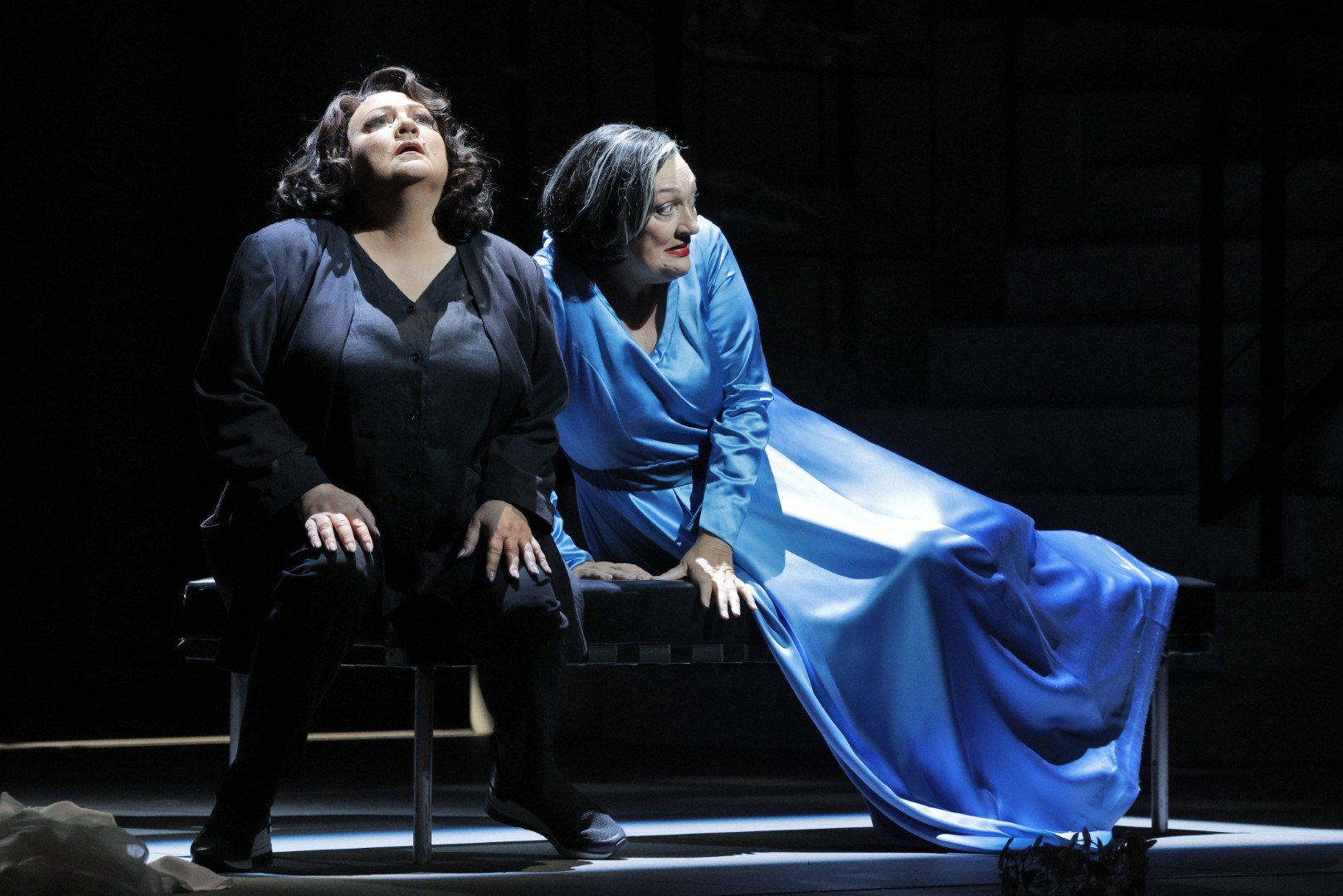
Russian soprano Elena Pankratova makes her company debut in the enormous title role. She has performed the role many times before in Europe. She has the right kind of large powerful voice and forceful energy to really bring Elektra to life and to engage with the rest of her family. She completely inhabited the role throughout.
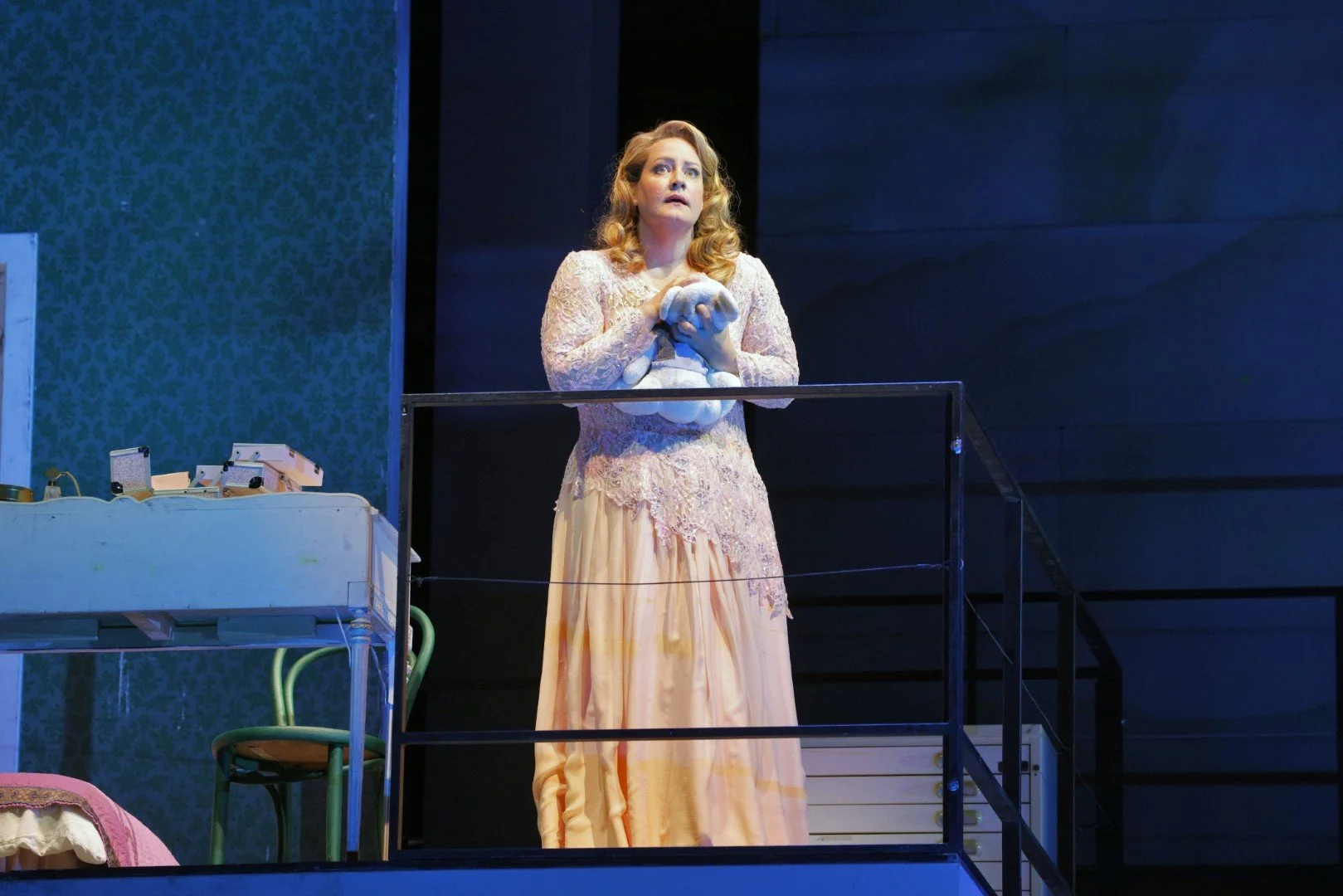
Elektra’s sister Chrysothemis is performed by South African soprano Elza van den Heever. We have seen much of her in San Francisco since her days as a Merola Opera Program participant and an Adler Fellow. She has a big following in the Bay Area; most recently she was here for Idomaneo last year and she sang an outstanding Salome at the Met. She, too, was magnificent in her portrayal of the ‘sweet’ sister (a little overdone in Goldylocks curls and a pink dress, in sharp contrast to the somber tones of everyone else’s costumes—a minor quibble). At first she wants only to get married, and be a housewife. Hence the brightness. But later she comes around to share the views of her siblings. Ms. Van den Heever is very tall and imposing and has excellent command of her voice.
Austrian mezzo-soprano Michaela Schuster sings the role of their mother Klytemnestra. She was previously here as Mme de Croissy in Dialogues of the Carmelites. She, too, sang and acted with great authenticity and character.
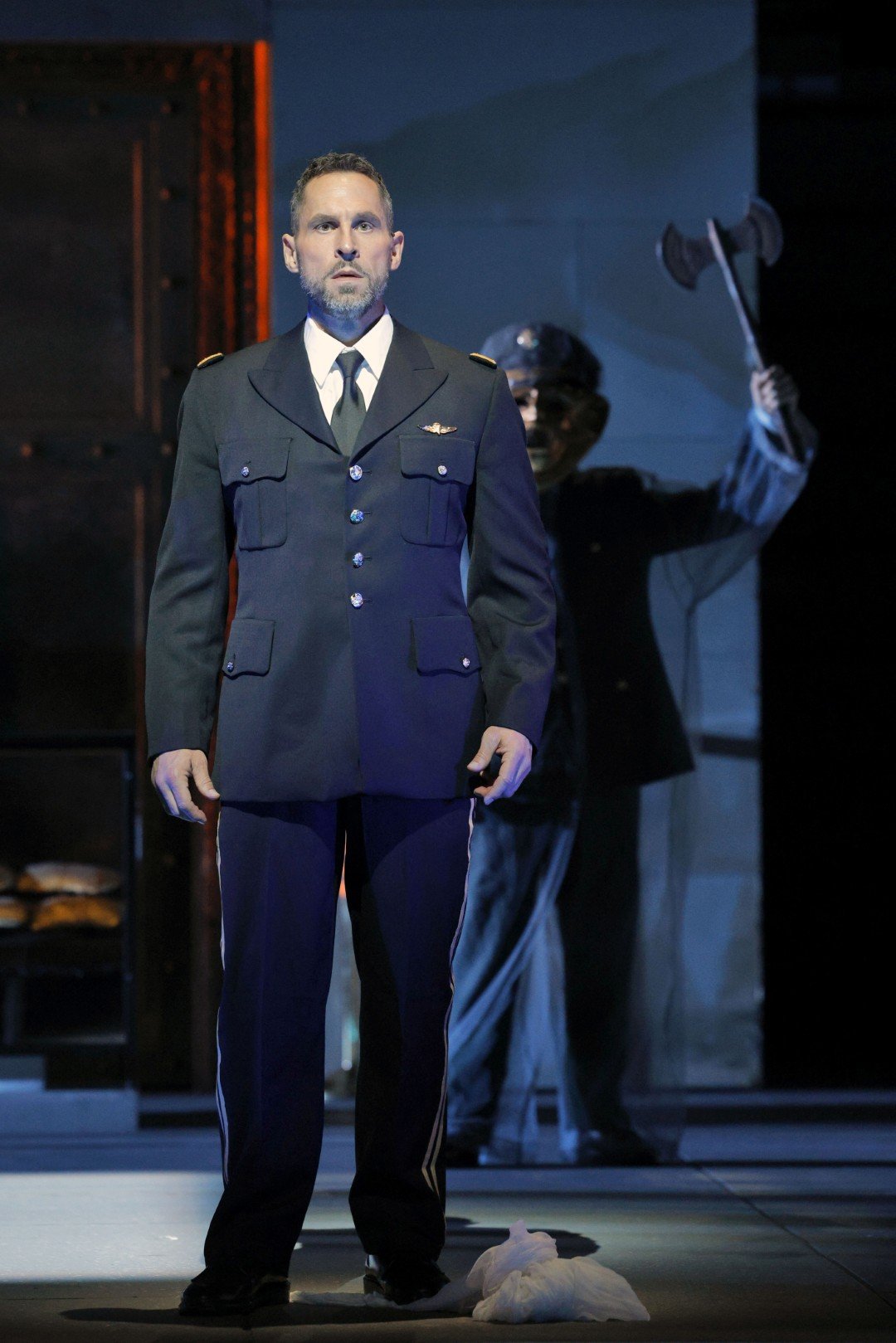
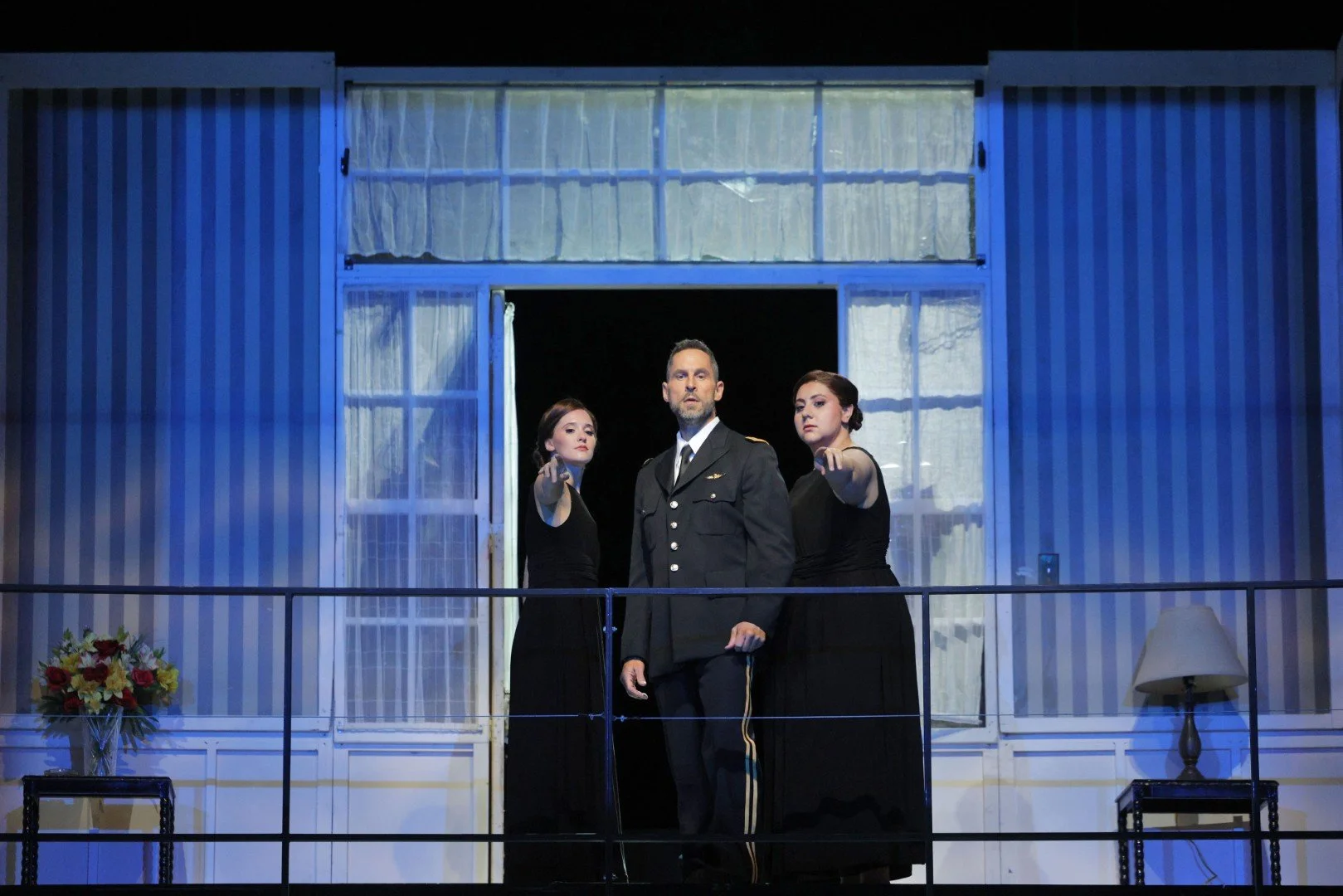
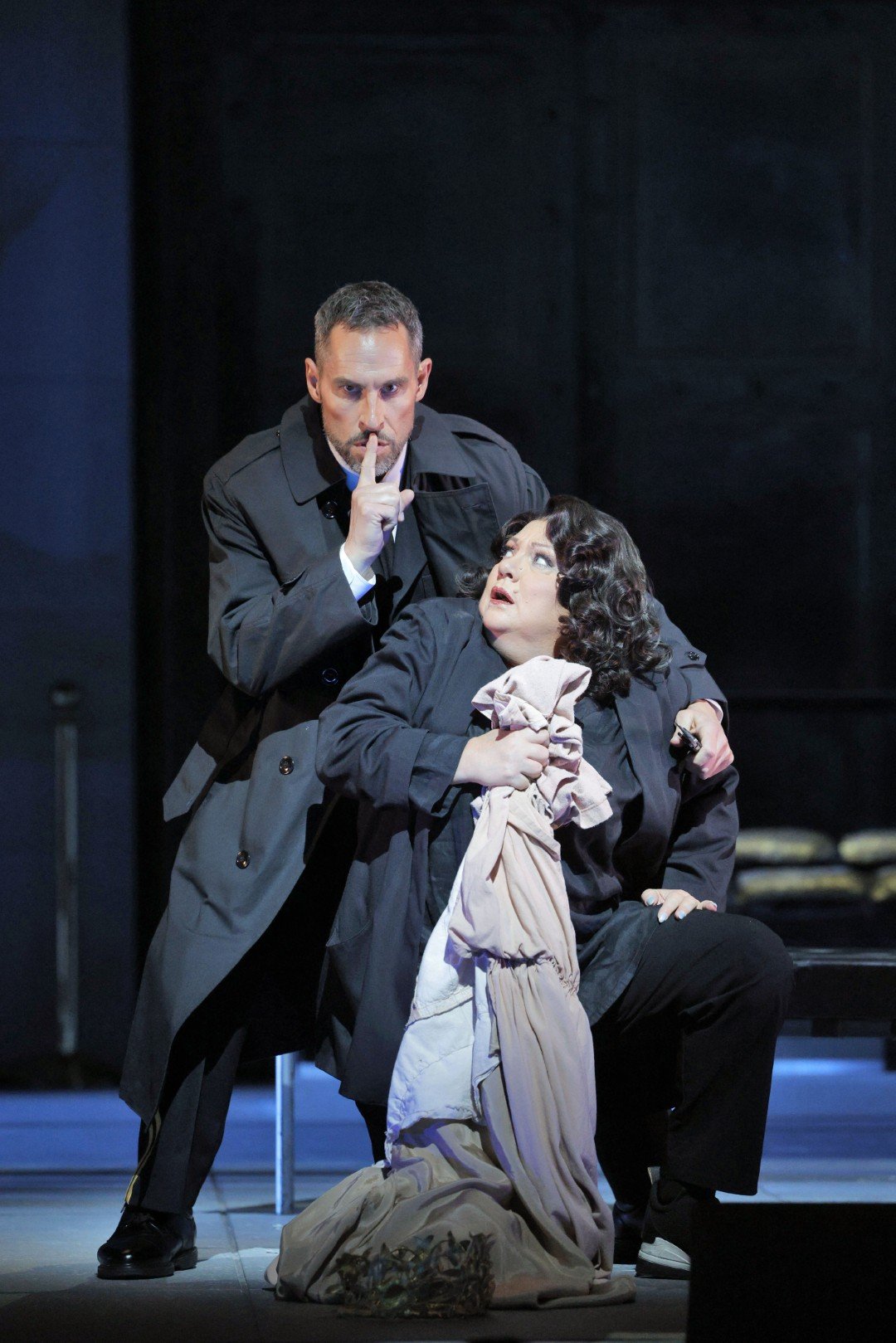
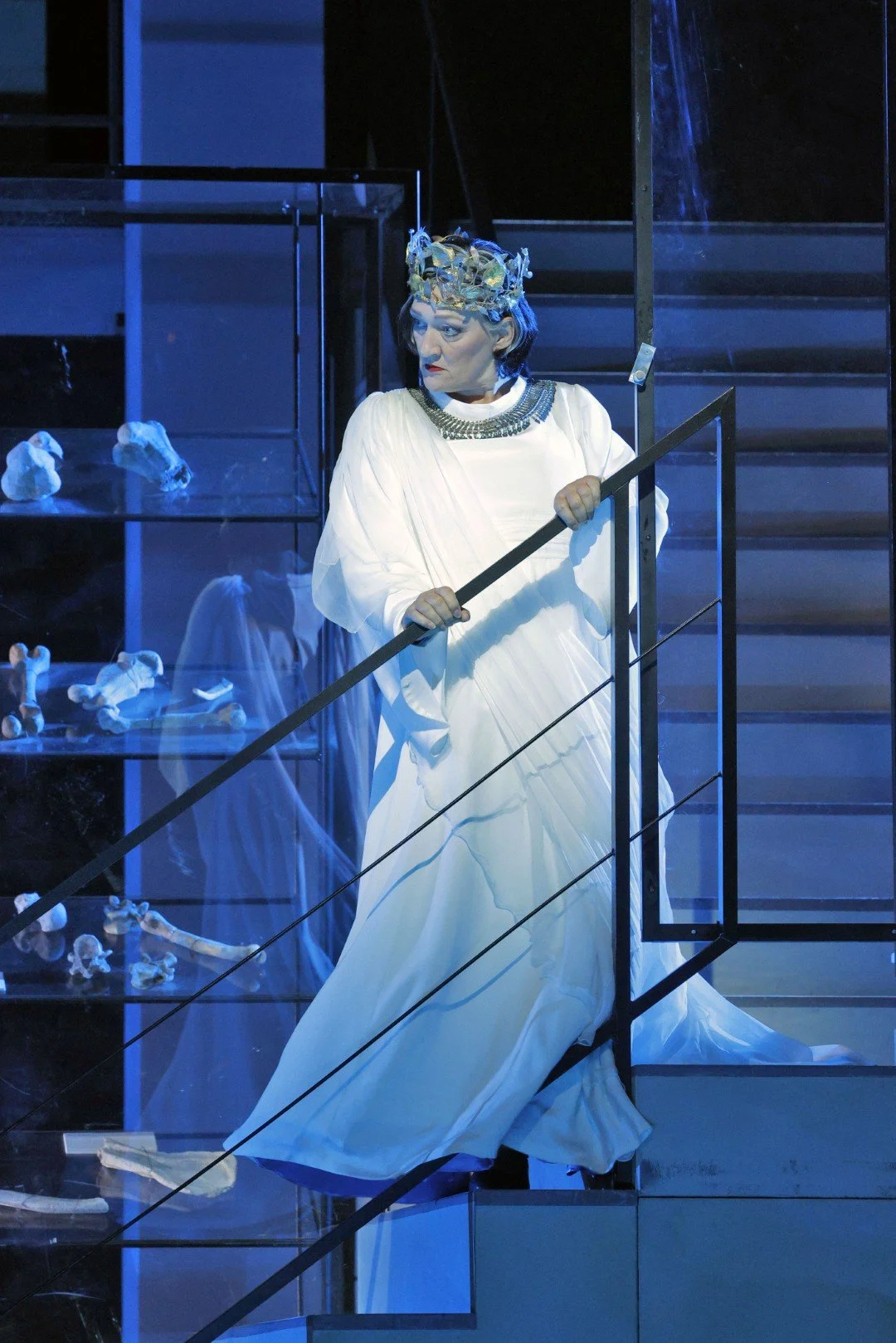
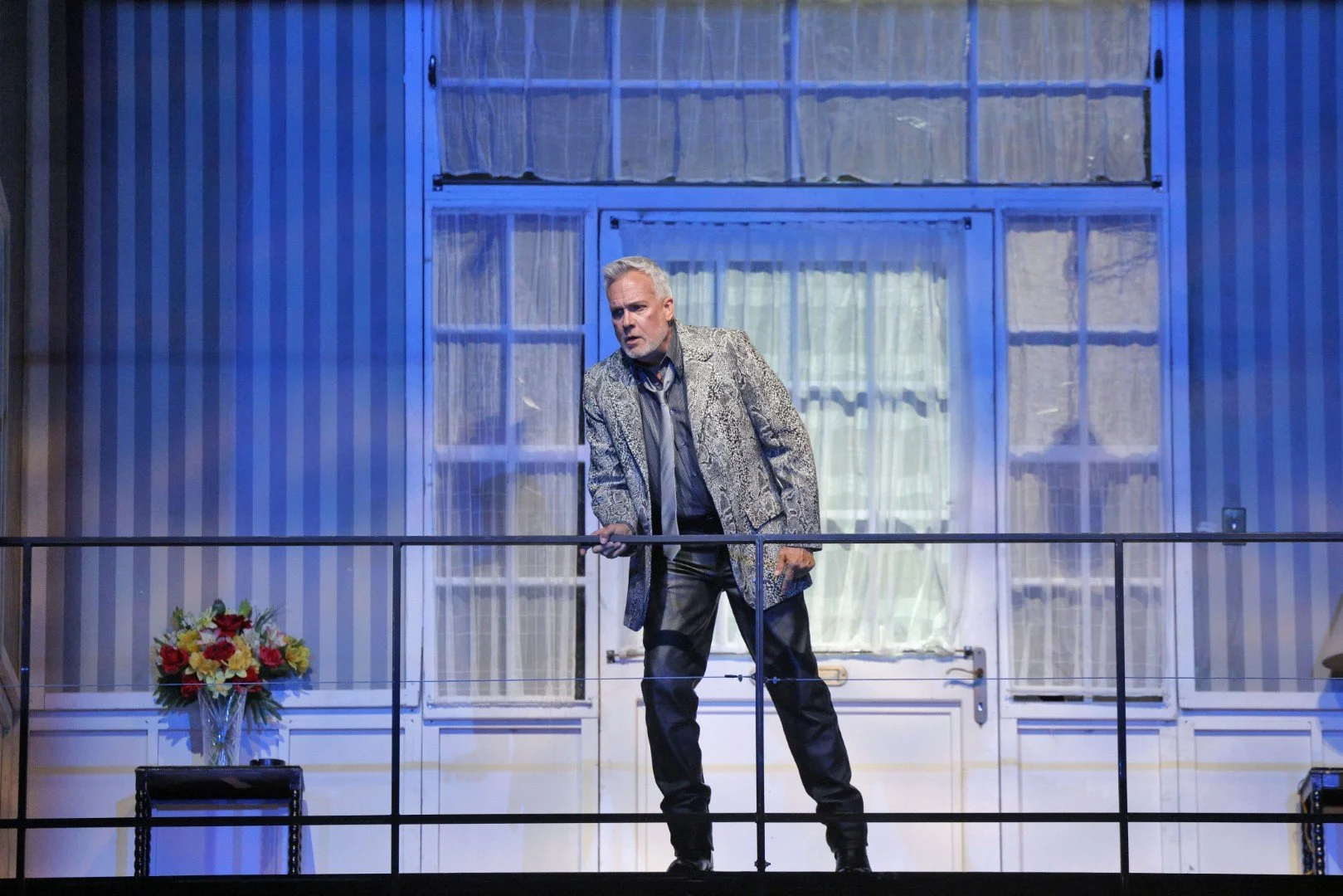
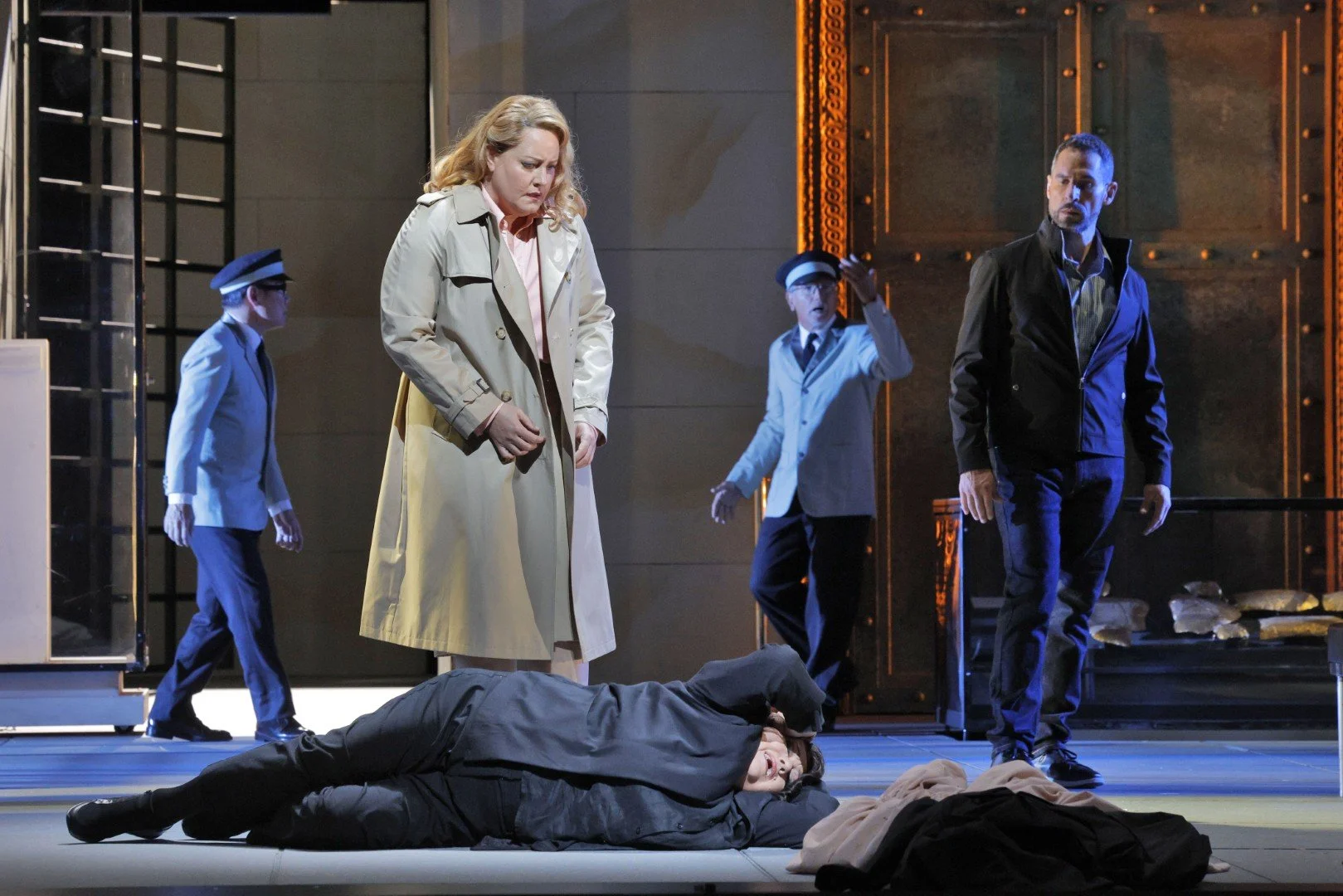
Three dynamic and strong women, balancing and blending perfectly on stage. And now to the men—yes there were men: Orest, the brother first thought to be disappeared, then dead, and finally there he was onstage to help his sister ‘do the deed’ to their mother and her lover.
American bass-baritone Kyle Ketelsen was compelling in the part. He’s been here before as Escamillo in Carmen and goes on soon to the title role of Don Giovanni at the Met.
Rounding out the principals was American tenor William Burden as the lover Aegisth. He’s another San Francisco favorite, having appeared recently as George Bailey in It’s a Wonderful Life, among other roles. His singing and acting were on par with the others. It was a compelling performance, all 100 minutes.
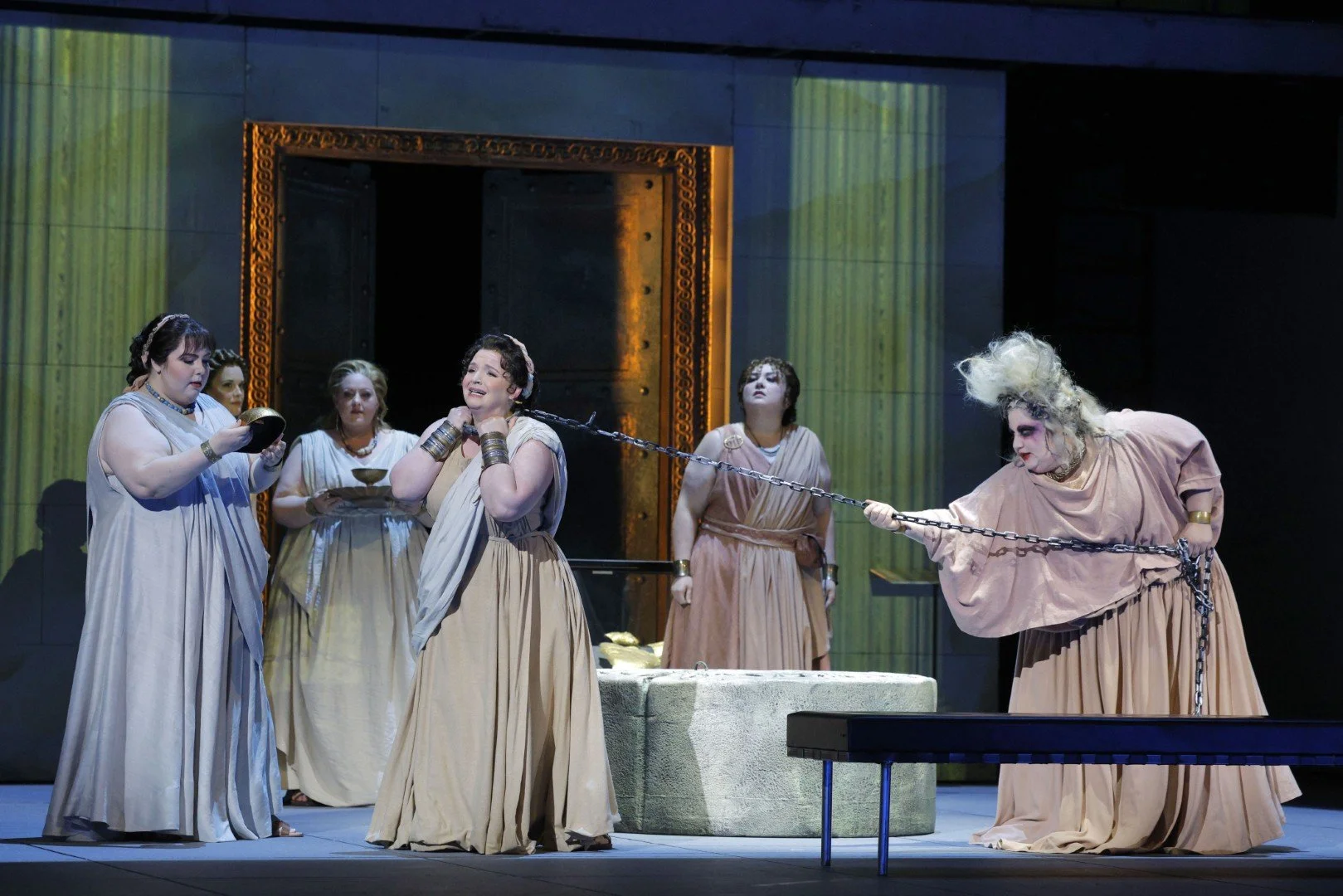
All the smaller roles (11 of them, plus 45 choristers offstage) were performed to perfection. They were joined by 21 supernumeraries. So altogether 82 singers and supers plus 95 musicians, all held together with great élan and accuracy by Maestra Kim, who makes it appear so easy.
On Sunday June 14 there was a post-performance talk with Ms. Kim (who appeared calm, collected and charming) and Matthew Piatt, who is Director of Music administration as well as coach and prompter. They talked about the challenge of putting so many musicians and singers together and how hard it is for singers on stage to hear the orchestra. The prompter, in a tiny box below the front of the stage, is most helpful in keeping the singers cued in properly. It seems a herculean effort, one more aspect of the whole production of what seems effortless to those of us in the audience.
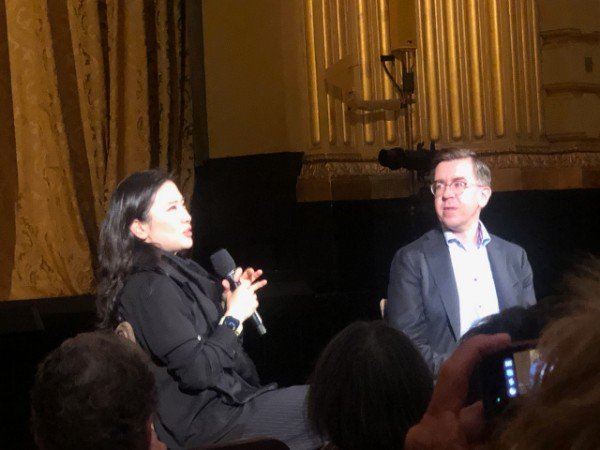
Post-opera talk with eun sun kim, matthew piatt (photo by elsa tranter)
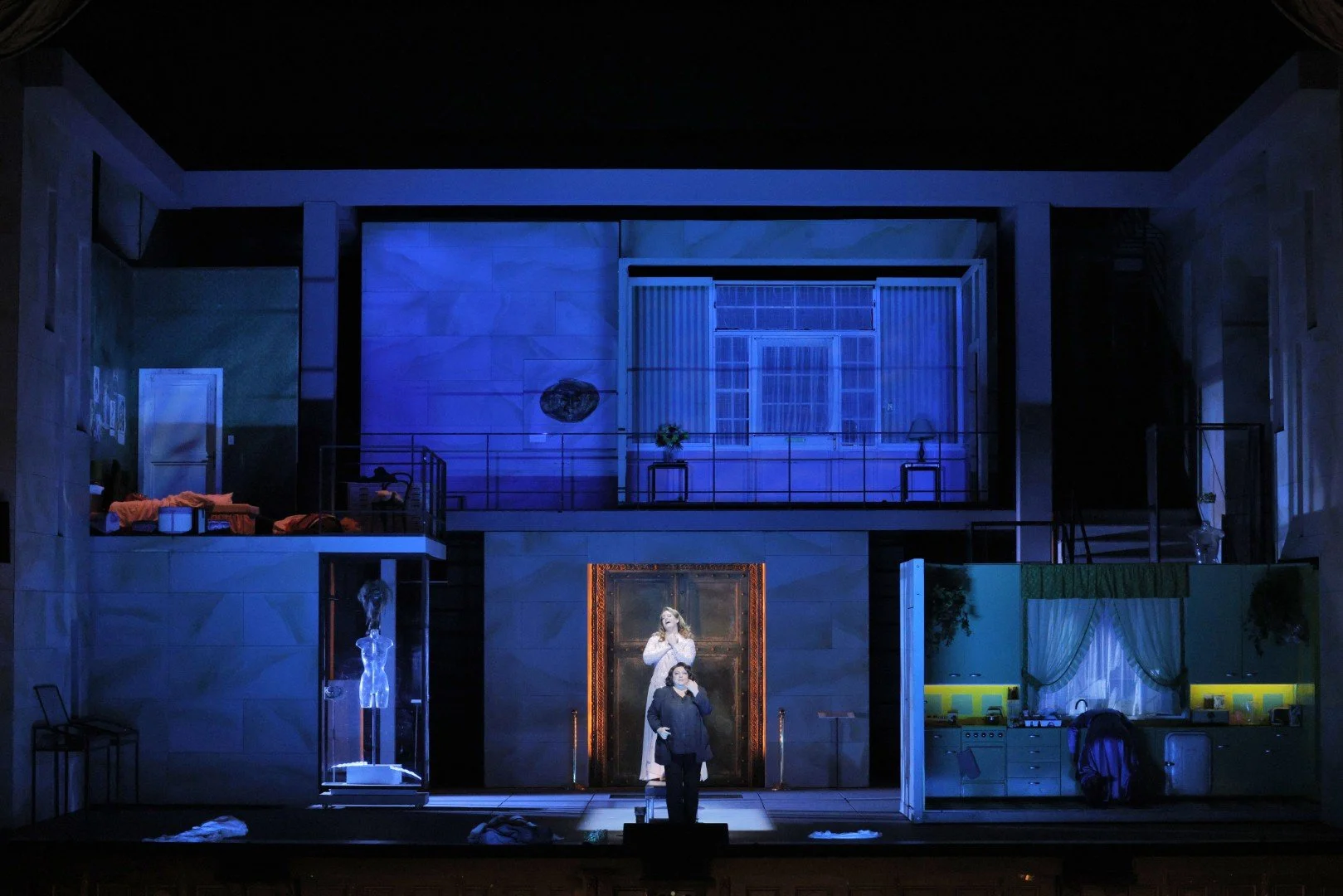
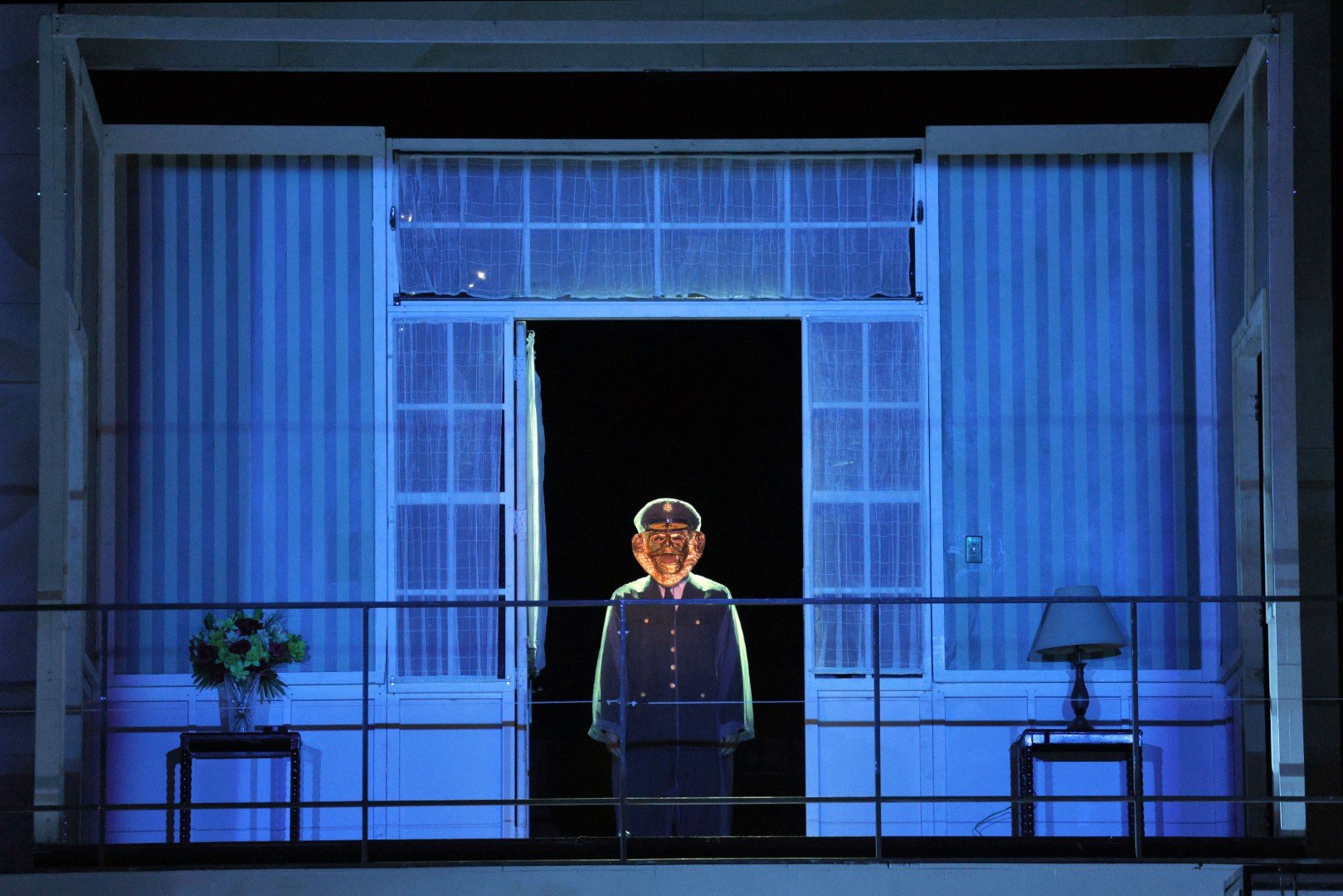
I’ve not forgotten the production design, by Keith Warner, with set design by Boris Kudlicka. In my 2017 review I left it for last because I didn’t have much positive to say about it. This time I was satisfied with it mostly—a modern museum with movable cases displaying Greek artifacts. After the museum closed the cases were moved away and the stage became the house of Agamemnon, two stories tall, with various rooms coming forward, going back, being opened and closed as the action moved around. The modern bright 1950s kitchen was very jarring and seemed out of place; the rest was serviceable if not compelling. One note of staging that didn’t sit well was the graphic killing of Klytemnestra – Orest chops off her head with an ax as she’s leaning over the kitchen sink; when he holds up her head in triumph there were loud twitters and giggles in the audience. It seems that this scene could have been acted with a less cartoonish look.
The opera was directed by Anja Kuhnhold and it all worked well, to her credit. Costume Designer was Kaspar Glarner; lighting Designer John Bishop; Video Designer Bartek Macias; Chorus Director John Keene and Fight Director Dave Maier.
Some random bits of information that I picked up in the press release: in the 1950s it was twice performed as a double-bill; once with Beethoven’s ballet The Creatures of Prometheus (I didn’t know that Beethoven had written ballet music) and once with Puccini’s Gianni Schicchi. It’s hard to imagine either of those working very well as Elektra itself is so all-consuming and exhausting to absorb. San Francisco Opera must have realized that too, because since then it’s been performed in seven different seasons all on its own. Curiously also, in 1966, after three performances at the opera house Elektra was performed at the Greek Theater on the UC Berkeley campus, an appropriate venue.
Sunday’s performance was the third of six; remaining dates include June 19, 23, and 27 all at 7:30. It’s the best kind of intensive opera experience and highly recommended.
Elsa Tranter is a Bostonian who has lived in Berkeley for over 50 years and has been an opera goer for most of those years. She worked as a graduate student adviser at UC Berkeley and still attends Cal Performances regularly. Her favorite composer is Wagner and her favorite opera is Les Troyens.