
Two Weeks of LA Phil Saw the Best of Guest Conductors, the Worst of Audience
/By Truman C. Wang
4/6/2026
Returning home after a two-week musical and arts tour of Boston, New York and Philadelphia, I have undertaken a critical re-evaluation of what constitutes good orchestral playing, which more often than not depends on who’s wielding the baton rather than the repertoire itself. Under Gustavo Dudamel, the L.A. Philharmonic is second to none in the twentieth-century repertoire, but often unconvincing in late-Romantic and particularly Classical works. That is, until a maestro comes along who specializes in the Romantic or Classical works.
Incredibly, not one, but two such maestros came through L.A. in as many weeks to lead the orchestra in superlative readings of Beethoven, Brahms and Tchaikovsky – in a style as idiomatic and natural as it was showy and put-on when Dudamel ruled the podium.
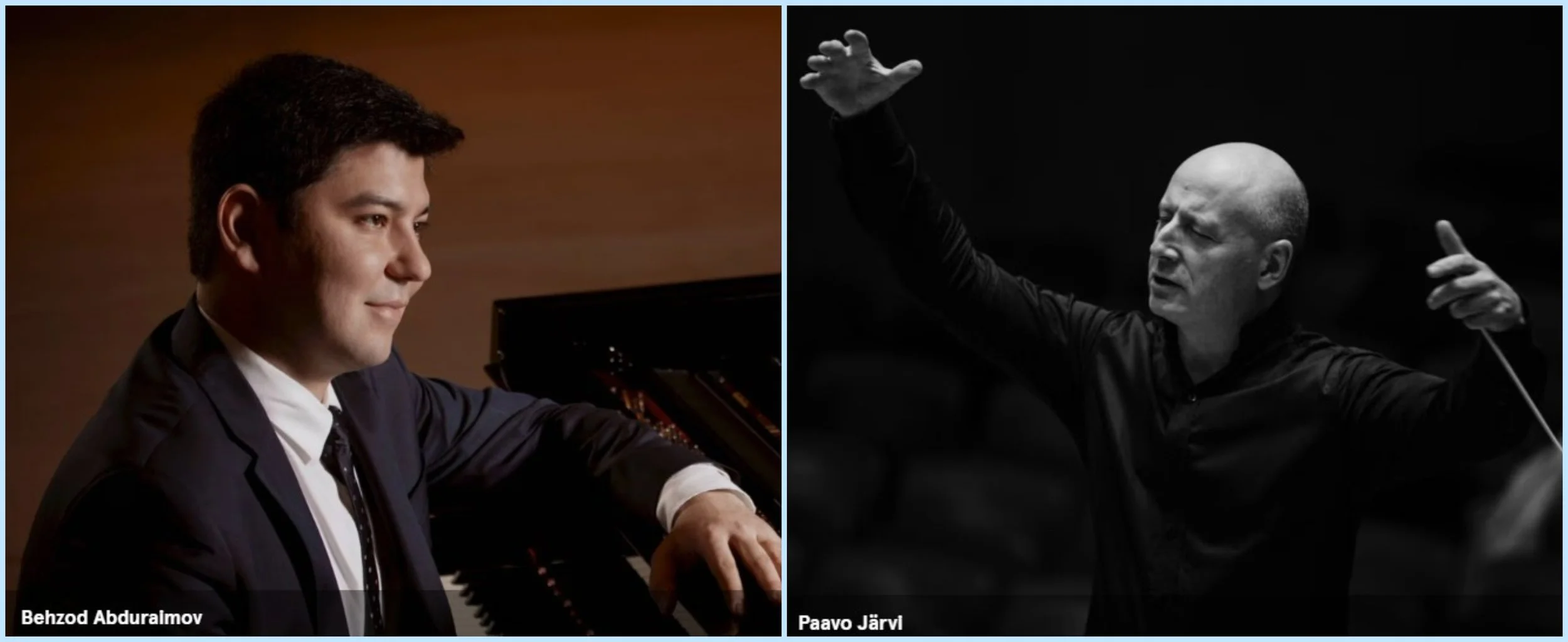
Paavo Järvi opened the Sunday, March 29 concert with Schumann's rarely heard Overture, Scherzo and Finale — a piece brimming with what the composer himself called the "flush of spring." The LA Phil played it with freshness and forward momentum, setting the mood for what followed.
The Uzbek pianist Behzod Abduraimov stepped in on short notice to replace Beatrice Rana and proved a more than worthy substitute in Beethoven's Piano Concerto No. 1 (Rana was to play No. 3 originally.) Abduraimov's playing was characterized by playful wit: his left hand dancing alongside the orchestra's trumpets and drums, his right hand spinning out the long lyrical lines of the slow movement with an easy, singing tone. The cadenza in the first movement crackled with personality.
After intermission, Järvi delivered a most warm and engaging Brahms' Second Symphony — with the authority of a seasoned Brahmsian. The first movement's opening cello and horn dialog glowed warmly, and the finale arrived with slashing rhythmic energy and thrilling dynamic contrasts. The LA Phil strings sang through the slow movement with a rich, golden sheen, the likes of which I have never heard under Dudamel’s baton. In Boston, I heard a superlative Brahms’ Fourth, during which I thought I would never hear such beautiful Brahms playing by the L.A. Phil – I was happily proven wrong!
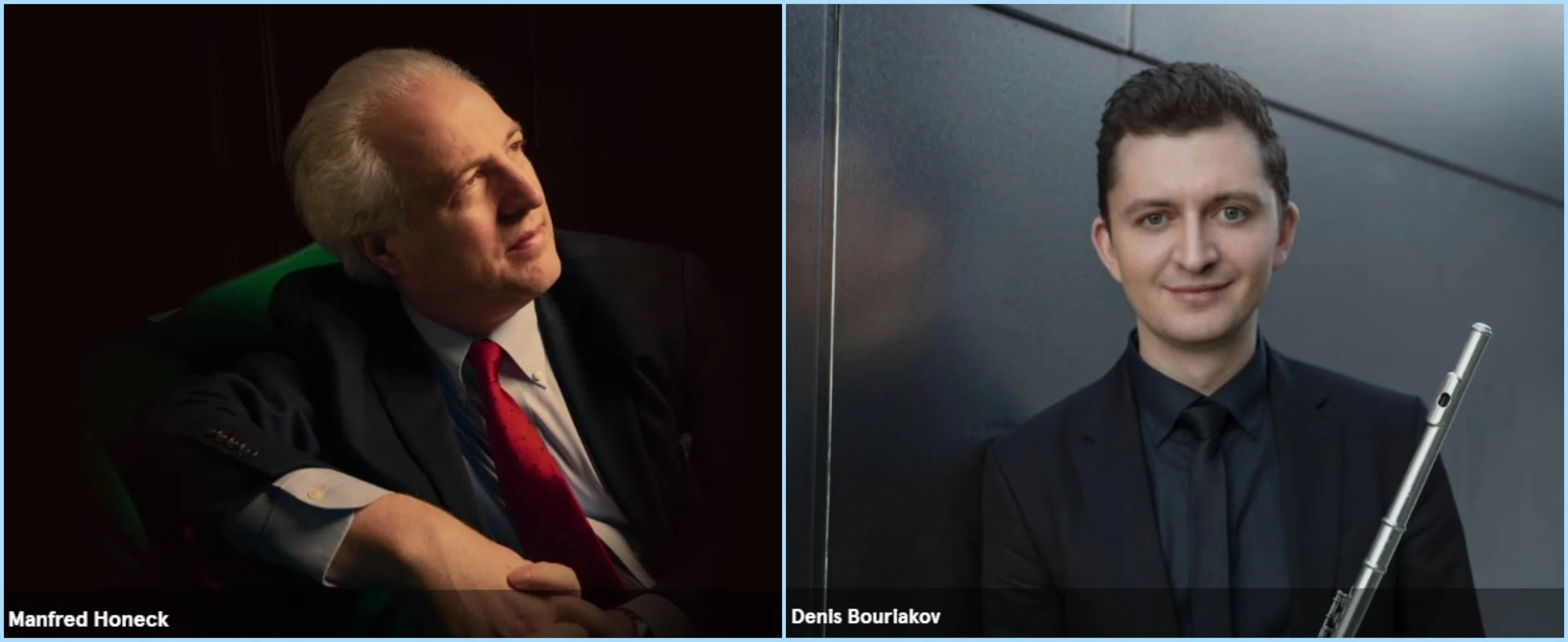
On Saturday, April 4, the second guest conductor, Austrian conductor and Music Director of the Pittsburgh Smphony Manfred Honeck, was meticulous, dramatically purposeful, and alive to orchestral color at every turn. Haydn's Symphony No. 93 was full of easy charm and good humor. The famous second-movement bassoon "grunt" — a rude, unexpected fortissimo intrusion into an otherwise delicate theme — landed with comic precision and earned a ripple of laughter from the audience. The timpani, pompous and proud, gave the finale a satisfying swagger.
Carl Reinecke's Flute Concerto was the evening's hidden gem, showcasing L.A. Phil principal flute Denis Bouriakov in a work tailor-made for his luminous, cantabile playing. Unlike most concertos, here all the thematic materials and their development fall on the soloist, relegating the orchestra to a mostly obbligato role. The opening melody floated effortlessly into the hall, and the slow movement's extended flute solo — dreamy and introspective — revealed Bouriakov as a master of long-breathed phrasing and tonal warmth. The finale sparkled with fleet-fingered bravura.
Tchaikovsky's Fifth Symphony closed the program with Honeck at his most commanding and all sections of the L.A. Phil on their top form. The lower strings showed tremendous grit in their phrasing. The brooding clarinet statement of the "fate" theme in the opening movement set a fateful tone, and the celebrated solo horn in the slow movement — hushed, aching, perfectly shaped — was the emotional heart of the evening. Honeck drove the finale to a triumphant conclusion, the brass blazing and the strings surging. The performance as a whole was warm, free, highly personal in the manner of Furtwängler.
Two extra-musical matters that I find concerning. First, the hall was only 60-70% filled for both concerts. Second, on April 4, the uninformed audience applauded after every movement, even during the Tchaikovsky with its many ‘false’ endings. This sort of thing, in my opinion, will continue to happen in American concert halls (the Europeans know better) so long as the educational outreach programs remain focused on children and not adult education, and people go to concerts for entertainment rather than spiritual and cultural enrichment.
Truman C. Wang is Editor-in-Chief of Classical Voice, whose articles have appeared in the Pasadena Star-News, San Gabriel Valley Tribune, other Southern California publications, as well as the Hawaiian Chinese Daily. He studied Integrative Biology and Music at U.C. Berkeley.