
LA Opera’s Third ‘Flute’ Is Still Magical and Fun
/By Truman C. Wang
6/1/2026
Photo credit: Cory Weaver
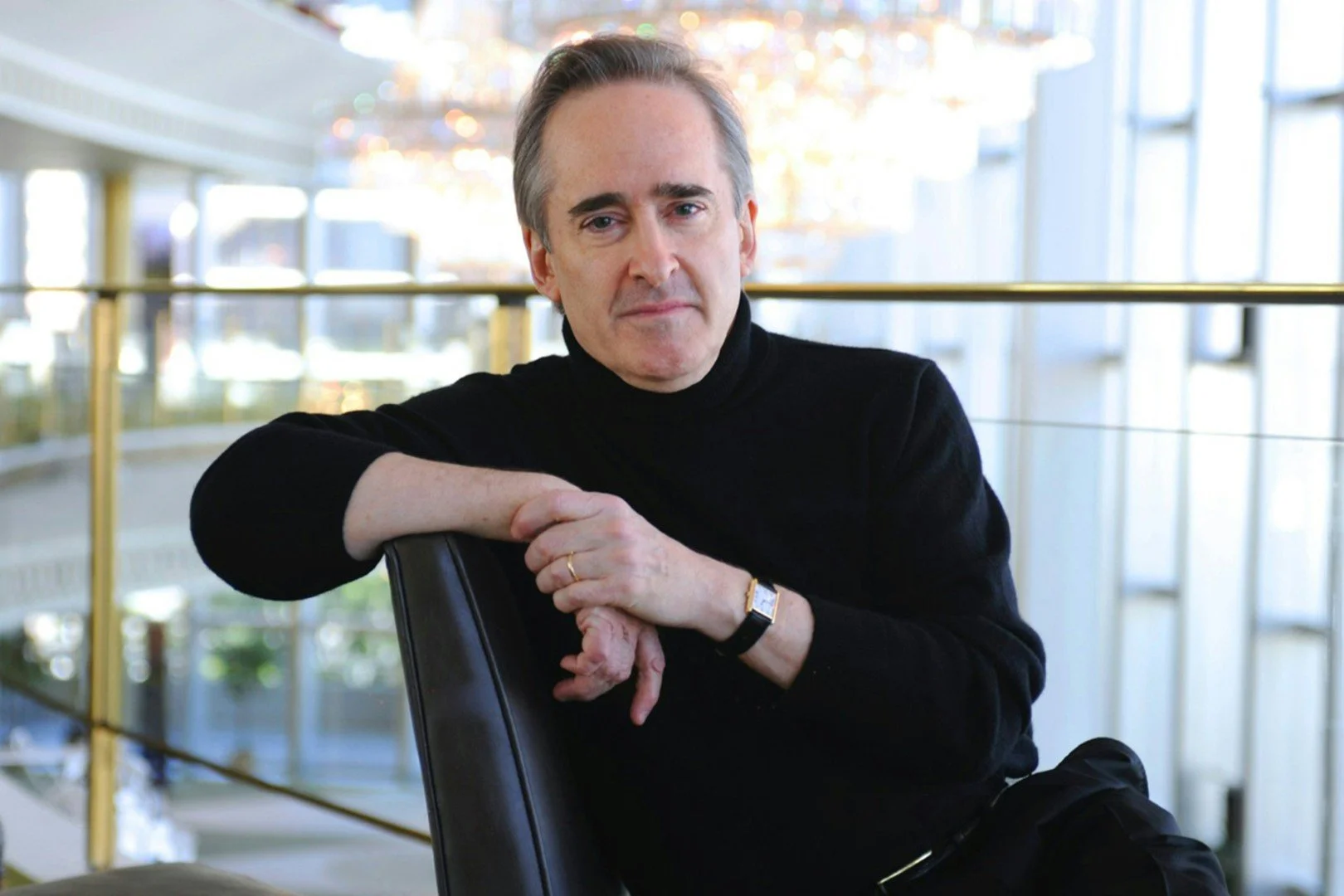
Retiring music director james conlon
A decade on from my first encounter with Barrie Kosky's whimsically delightful Magic Flute – that landmark 2016 production that left this jaded music critic wide-eyed in amzement – and now three outings deep with the same hand-drawn animations by Paul Barritt and the British theater company 1927 Studios, one might expect the novelty to have worn thin. It hasn't, quite. There is something durably ingenious about the concept: singers planted at fixed positions on a mostly bare stage, interacting in real time with a living comic strip projected all around them, the silent film–style title cards doing the work of all the spoken dialogue. It is opera stripped to its essentials – voices and music – dressed up in the most visually inventive costume imaginable.
The signature gags remain as inventive as ever. The black widow spider descending for the Queen of the Night still provokes gasps. Monostatos, cast as vampire Nosferatu slinking through the animated shadows, is still one of the cleverest directorial conceits. Papageno’s black cat sidekick, Pamina and Papageno racing across animated rooftops in a video-game chase, and Papageno's magic bells transforming Monostatos and his henchmen into high-kicking Rockettes – these sequences still draw laughter from an audience that, judging by their reactions on opening night (and inappropriate applause in the overture and Queen’s aria), included many first-timers alongside the returning faithful.
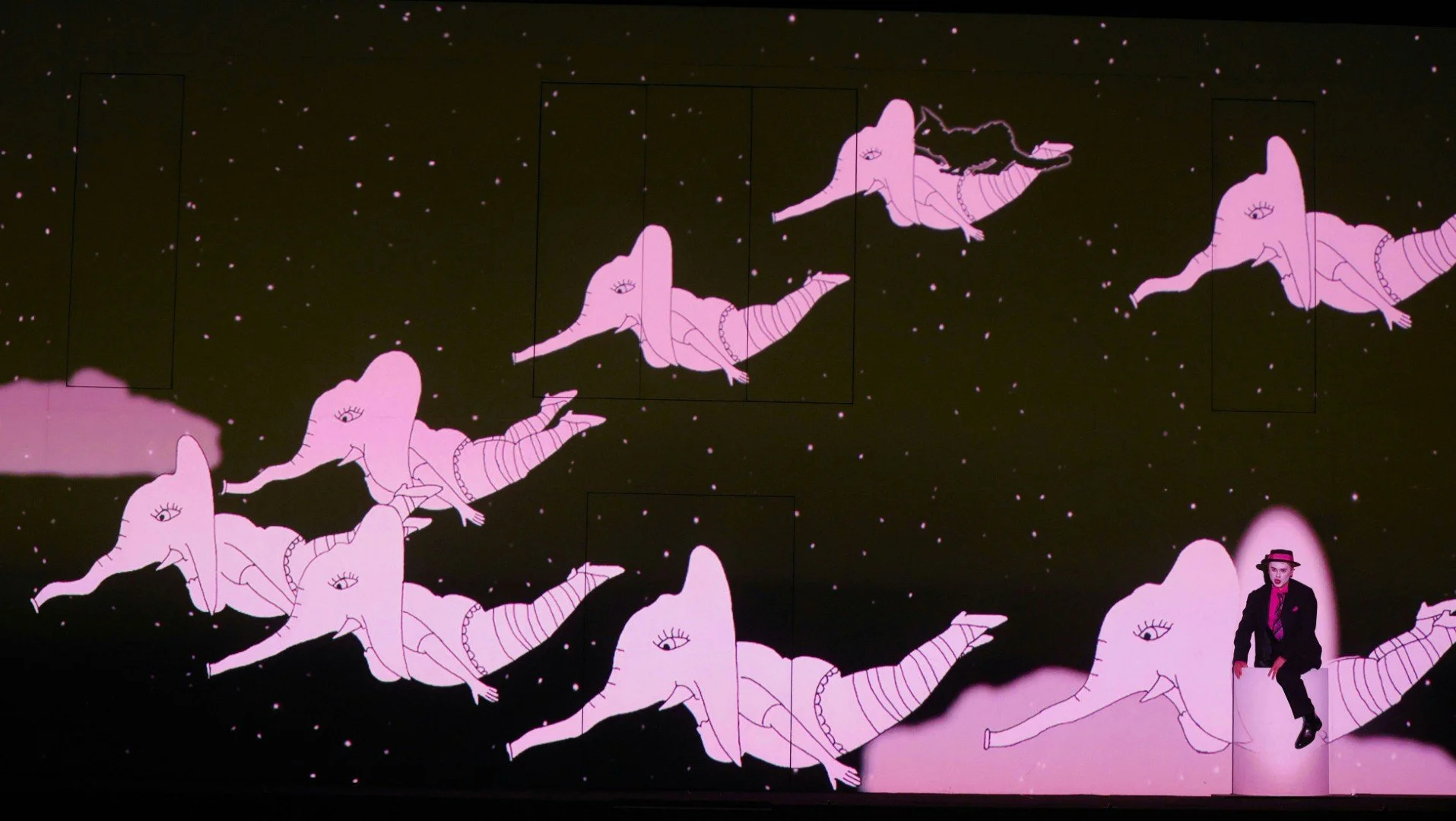


Yet the production's old shortcomings persist, as they did when I revisited it in November 2019: still no flute, no magic bells, no birdcage. Instead, there are flying elephants during Papageno’s “Ein Mädchen Oder Weibchen”, fluttering birds and bees in the duet “Bei Männern… Mann und Weib,” and flying constellations of animals in the starry sky in Tamino’s magic flute aria. A big “Kill Sarastro” splashed across the stage is a pale substitute for the powerful verbal exchange between Pamina ("Do I have to kill him, Mother!?”) and the angry, vengeful Queen of the Night before launching into her famous aria "Der Hölle Rache”.
Some misogynist Masonic title cards – "Do not fall for women's tricks," "She's a woman, has a woman's mentality" – have been wisely jettisoned. But other questionable ones remain: “As a man you will triumph,” “Women do little but talk a lot,” “A woman is proud… man should keep her in her sphere.” But as Mr. Conlon pointed out in his pre-concert lecture, although a Freemason, Mozart was not to blame (Schikaneder wrote all the words of the Singspiel); Mozart’s music is universal and transcends gender politics.


Musically, this second Flute revival is strong but bittersweet. It marks the final opera James Conlon will conduct before retiring from LA Opera after twenty years. I consider the fourteen years (2006-2019) of the Conlon-Domingo team to be LA Opera’s golden age, and I look forward to the new Hindoyan era with hopeful anticipation. Mr. Hindoyan is married to a famous opera soprano so I expect him to be a sympathetic singers’ conductor like Mr. Conlon. In the Saturday, May 30 opening night performance, the orchestra played magnificently – beautiful silken strings, busy fortepiano playing during all the ‘dialogs’, and Heather Clark’s silvery flute playing in the Trial Scene.
Sydney Mancasola gave the finest singing of the evening as Pamina. In fact, she might be the finest Pamina of LA Opera’s three Flute stagings. Her effortless, crystalline voice and clear, pellucid tone carried the words in the most musical and expressive way. She sang Pamina’s gentle lament “Ah ich fühls” in a bright, sweet timber (like the great German soubrette Hilde Güden), spinning the ascending scale of "So wird Ruh' im...Tode sein /Then there will be peace in death” with supple legato and a well-judged tempo di rubato, effectively stretching the emotional thread and Pamina’s grief to near-breaking point. In her portrayal, Miss Mancasola demonstrated that the finest singing, given a good voice to begin with, comes from the constant play of a fine musical mind upon the inner meaning of the text.


The three ladies (Diana Newman, Katie Trigg, Meridian Prall) were a highly musical and euphonious team. The three boys (Elle Thorman, Clark Chua, Alexa Ho) were also commendable - and highly audible - particularly for their hanging perilously high up in their four appearances. Kyle Miller, the Papageno, and Emily Damasco, the Papagena, are also a strong team and delighted in their duet, sung to comical animation of little Papagnos and Papagenas popping up all around them. Zhengyi Bai was a loveable comical villain Monostatos
Aigul Khismatullina’s Queen of the Night, Miles Mykkanen’s Tamino, and Kwangchul Youn’s Sarastro were accurate but undistinguished.
The Kosky-directed Flute has now entered the operatic annals as a perennial crowd pleaser and a box office success. LA Opera should consider bringing it back, in an abridged form, every year in the holiday season. Additional performance dates are June 6, 11, 14, 17, 21. One extra performance was added on June 20 due to popular demand.
Truman C. Wang is Editor-in-Chief of Classical Voice, whose articles have appeared in the Pasadena Star-News, San Gabriel Valley Tribune, other Southern California publications, as well as the Hawaiian Chinese Daily. He studied Integrative Biology and Music at U.C. Berkeley.