
Two Operas Under the Stars in Santa Fe
/By Elsa Tranter
8/18/2026
Photo credit: Santa Fe Opera
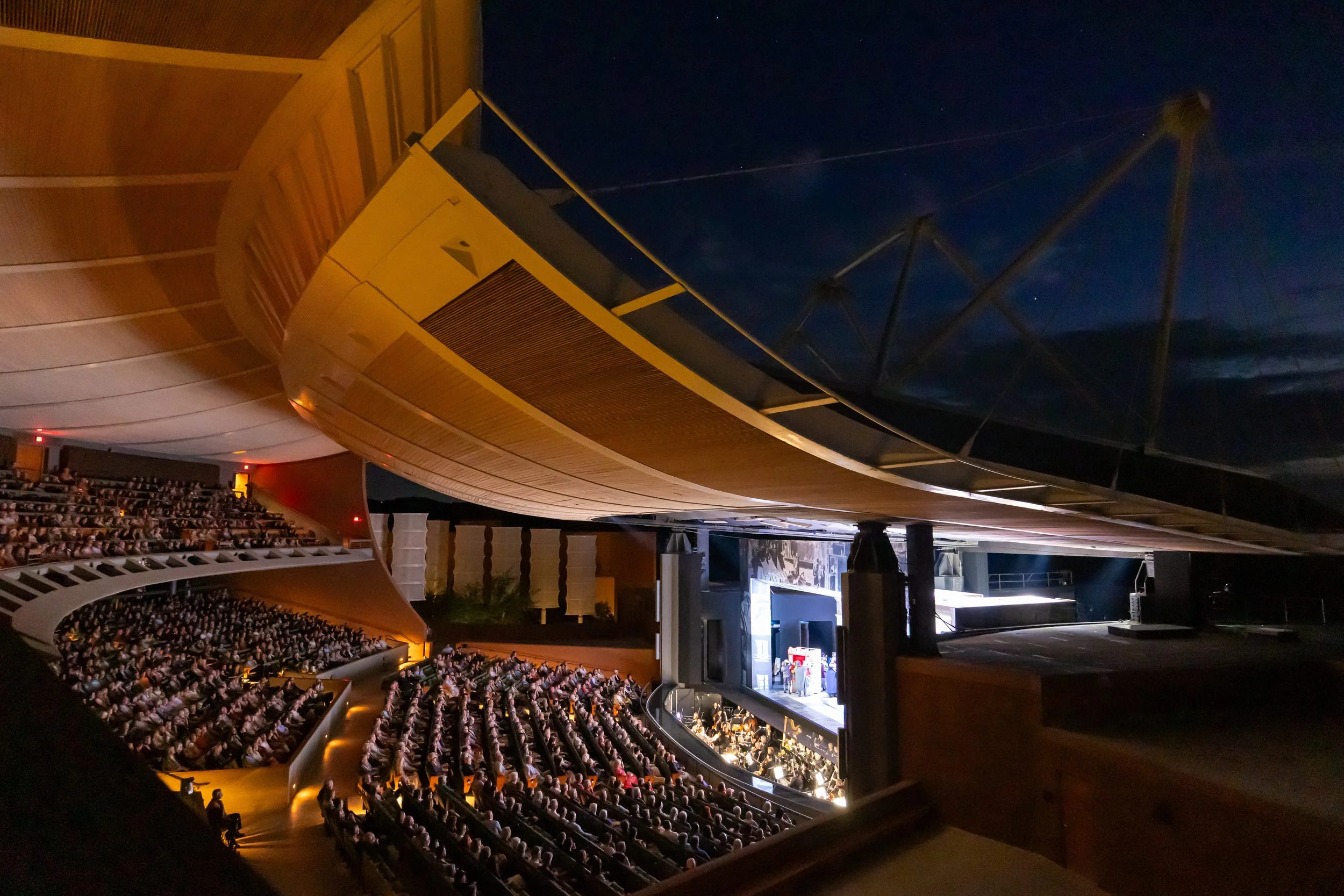
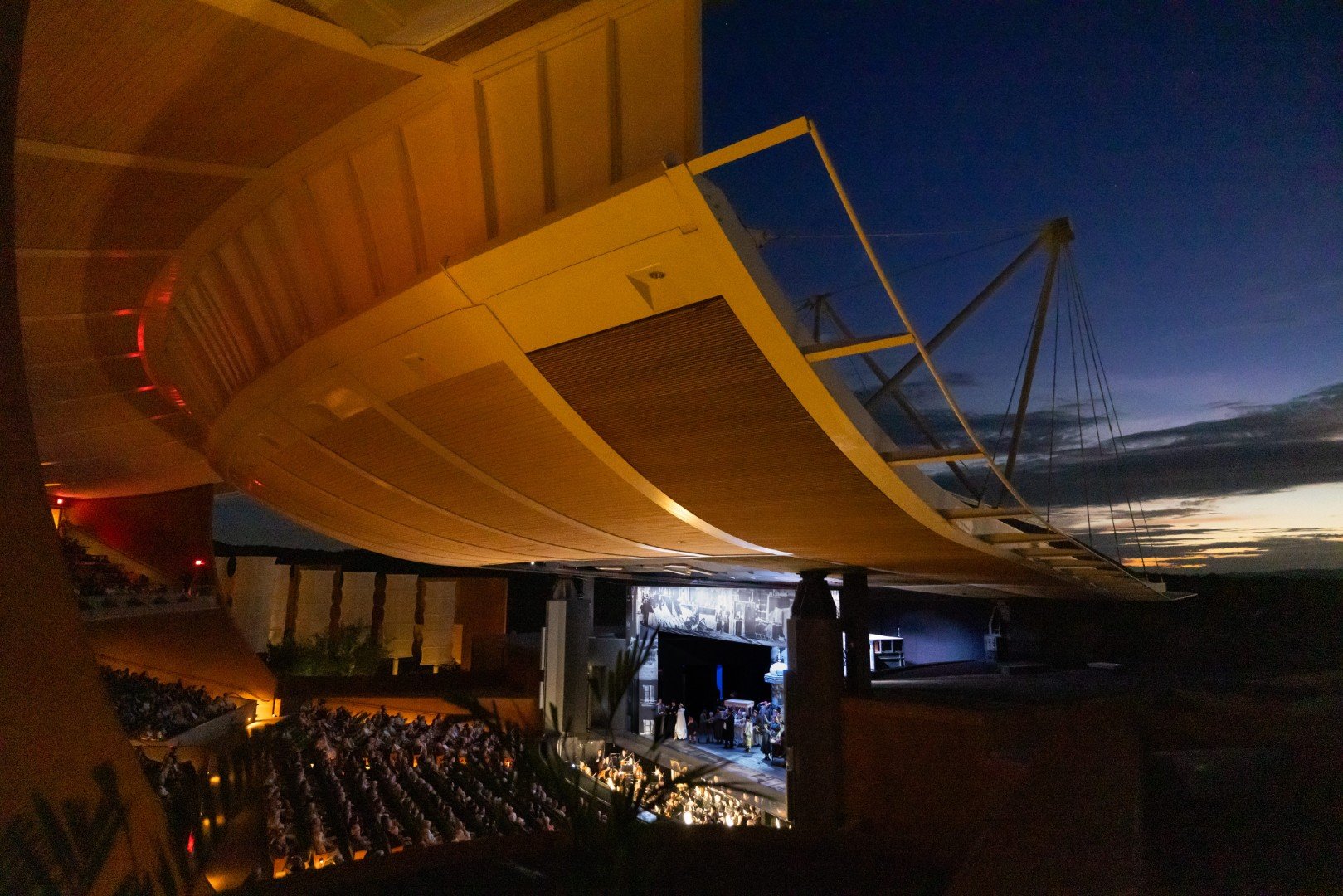
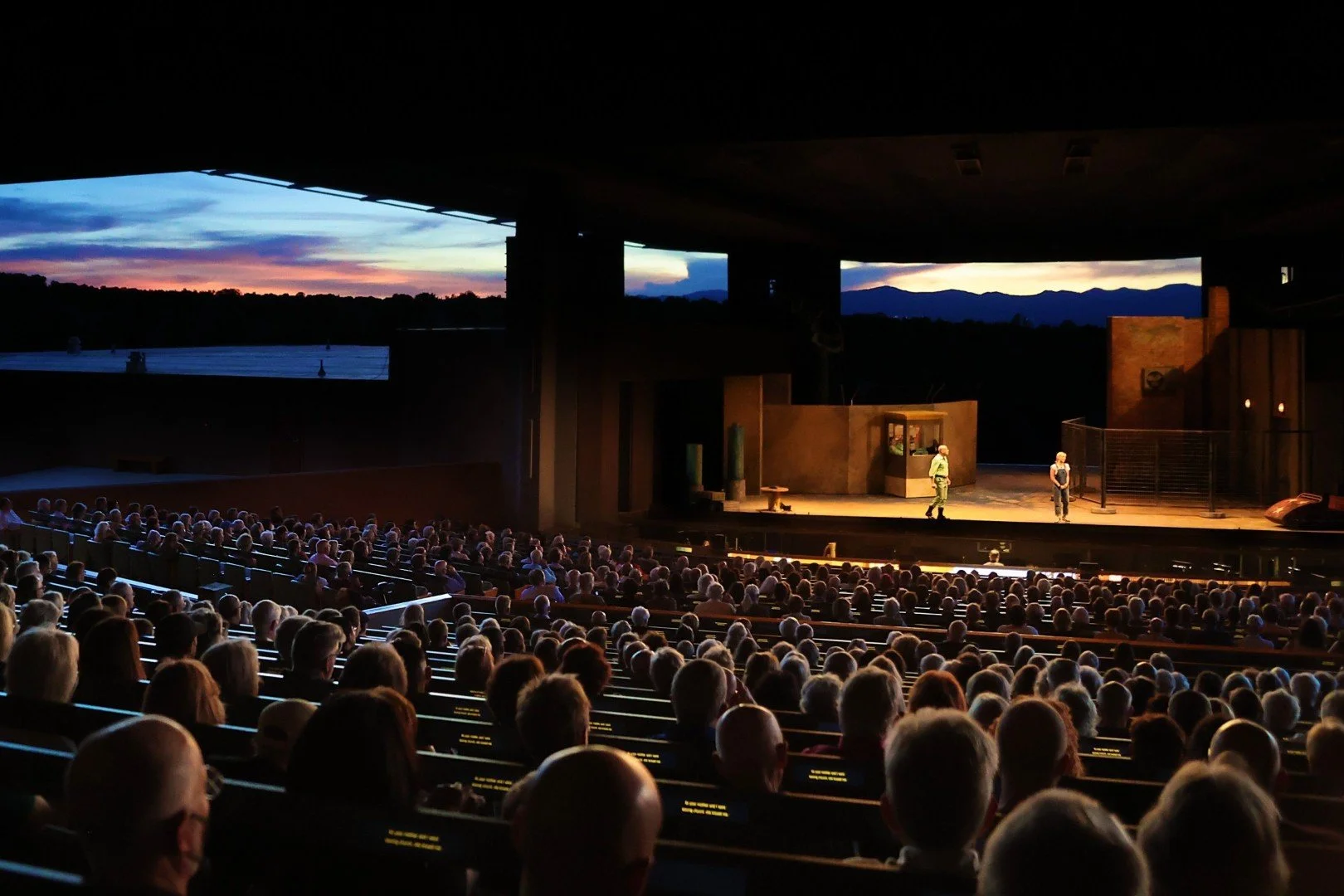
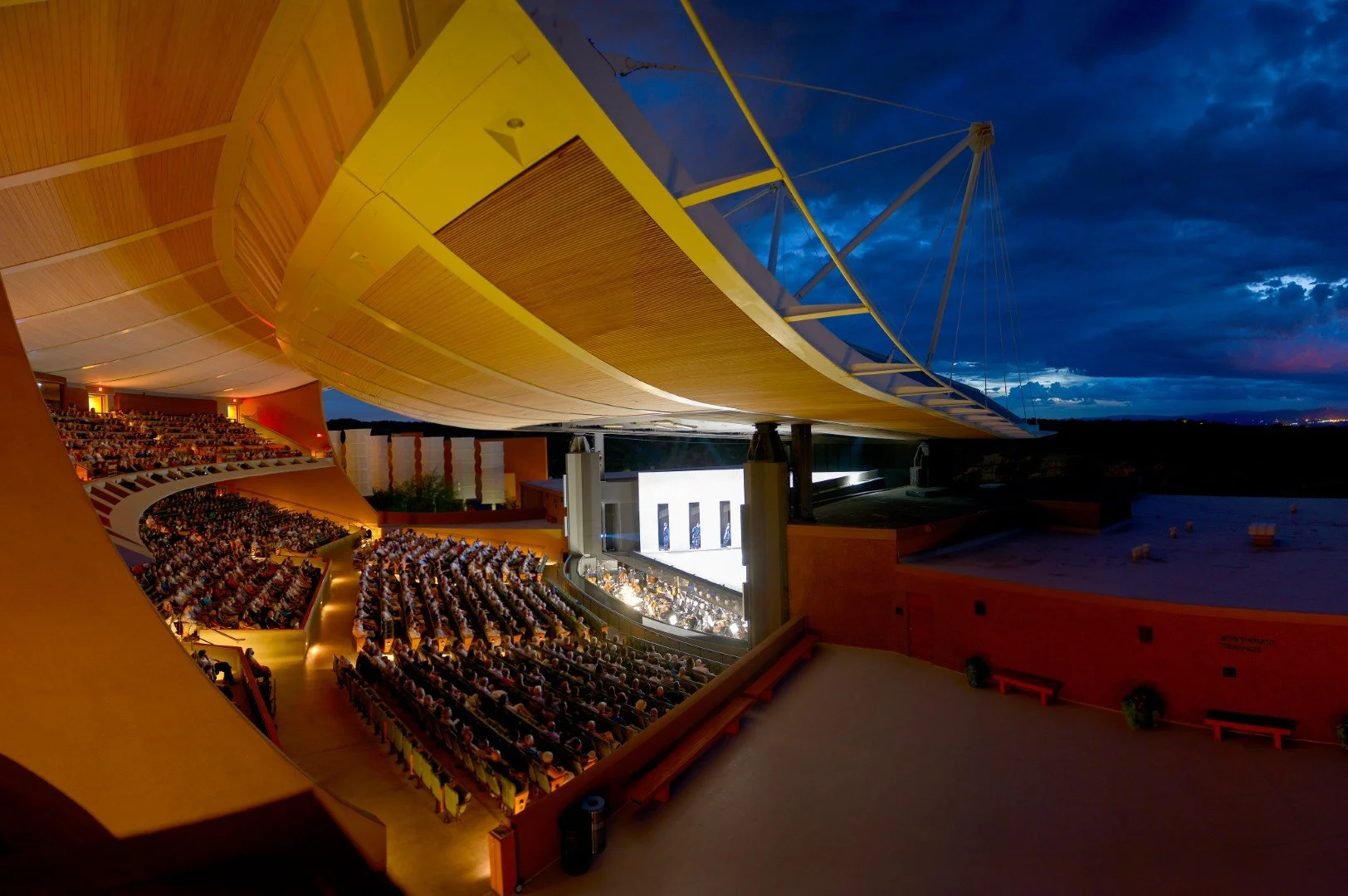
Two excellent evenings of music at the glorious Santa Fe Opera last week. Before the music even started, it was an amazing experience. The very Southwestern semi-open-air theater (there is a roof covering but no walls) is dramatic, simple, and grand, with a wonderful sense of spaciousness everywhere you look. The vistas cry out for photography from every angle.
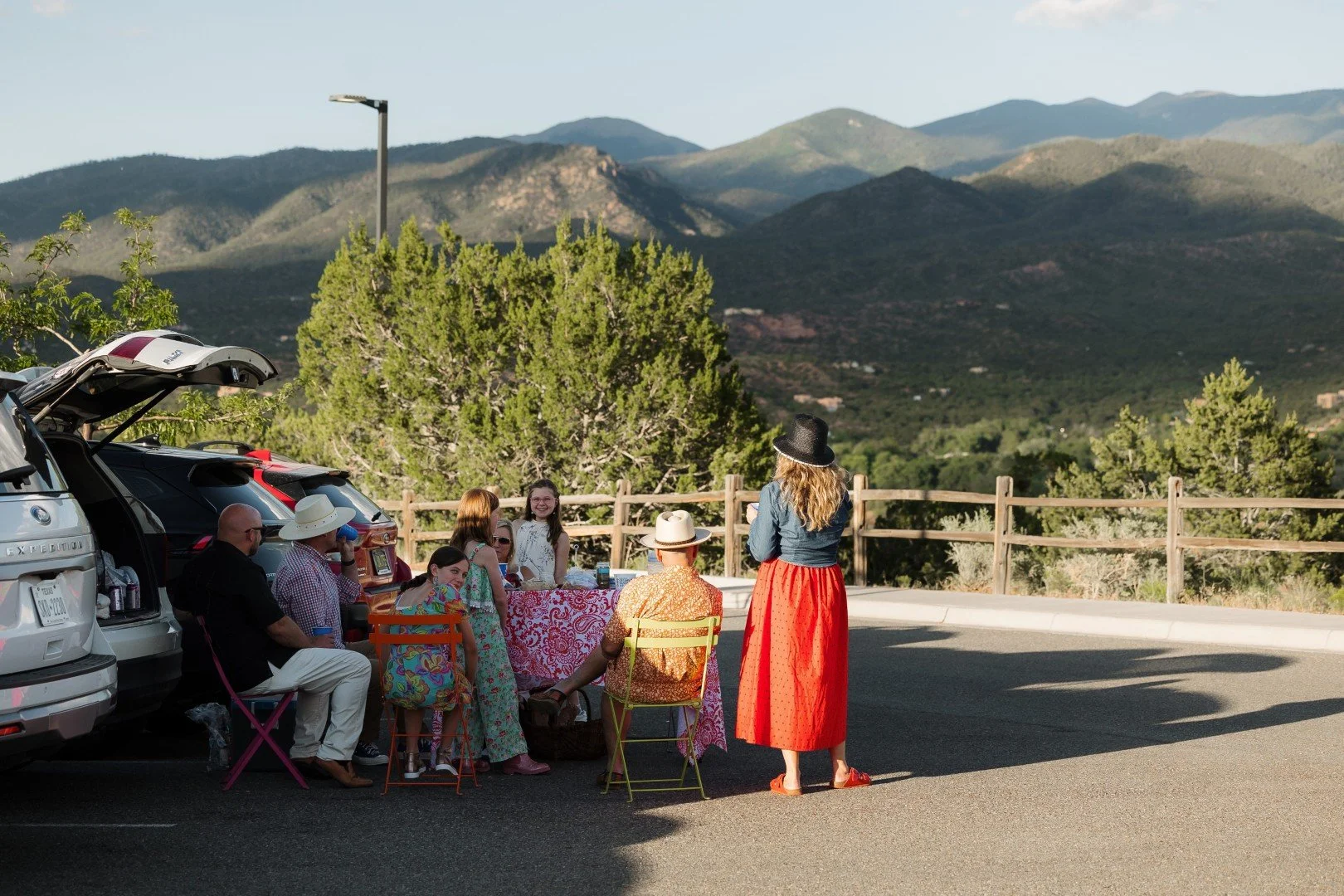
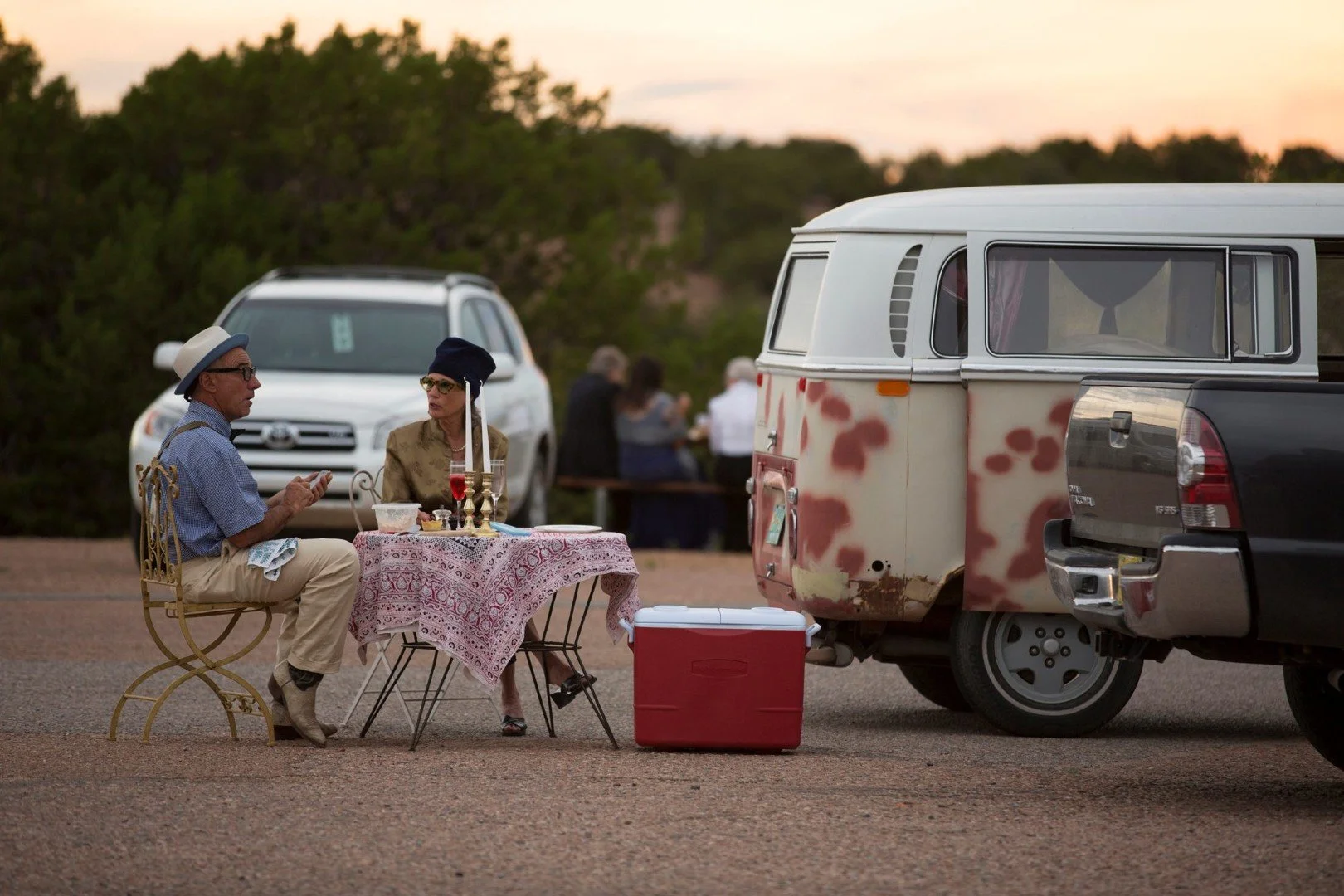
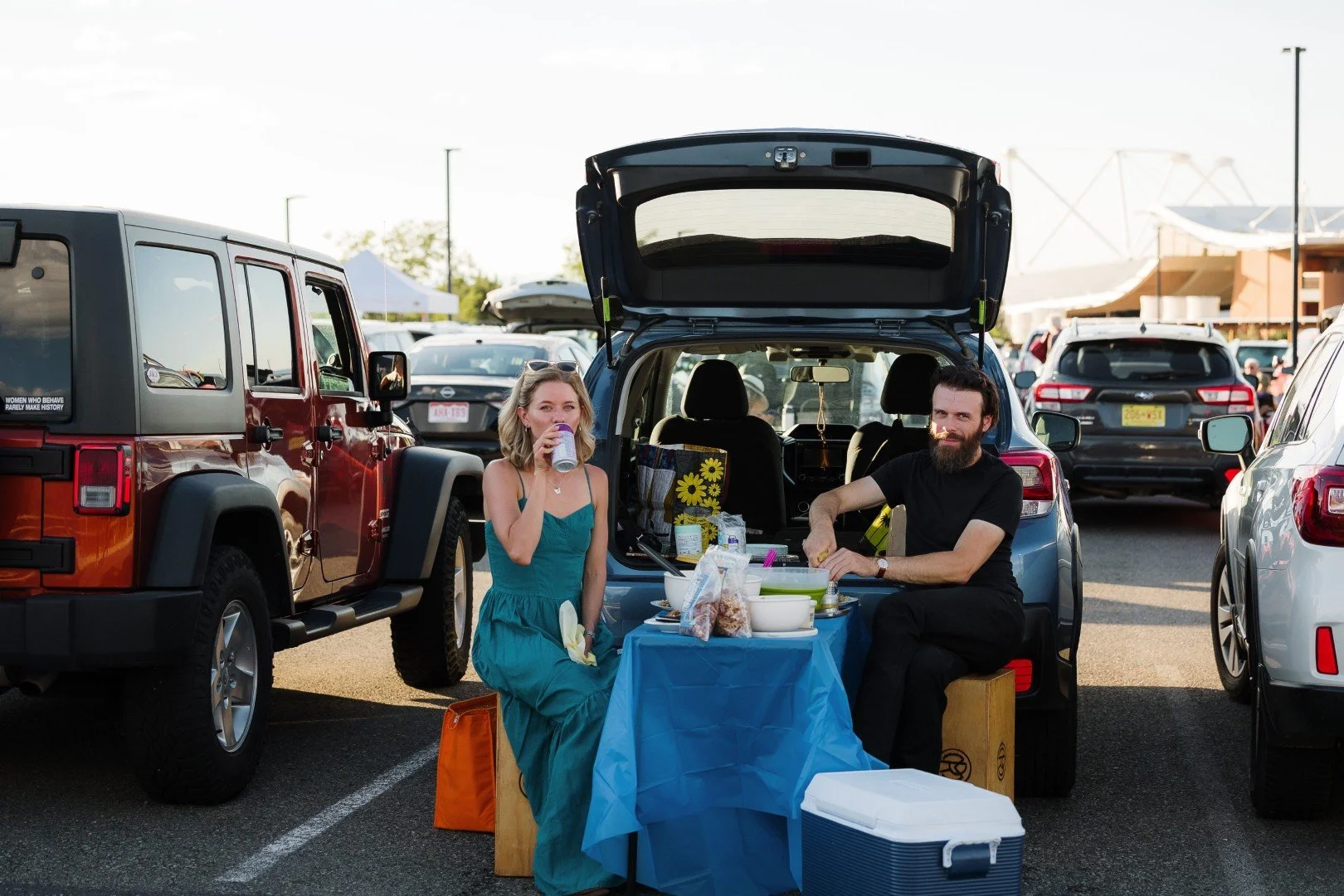
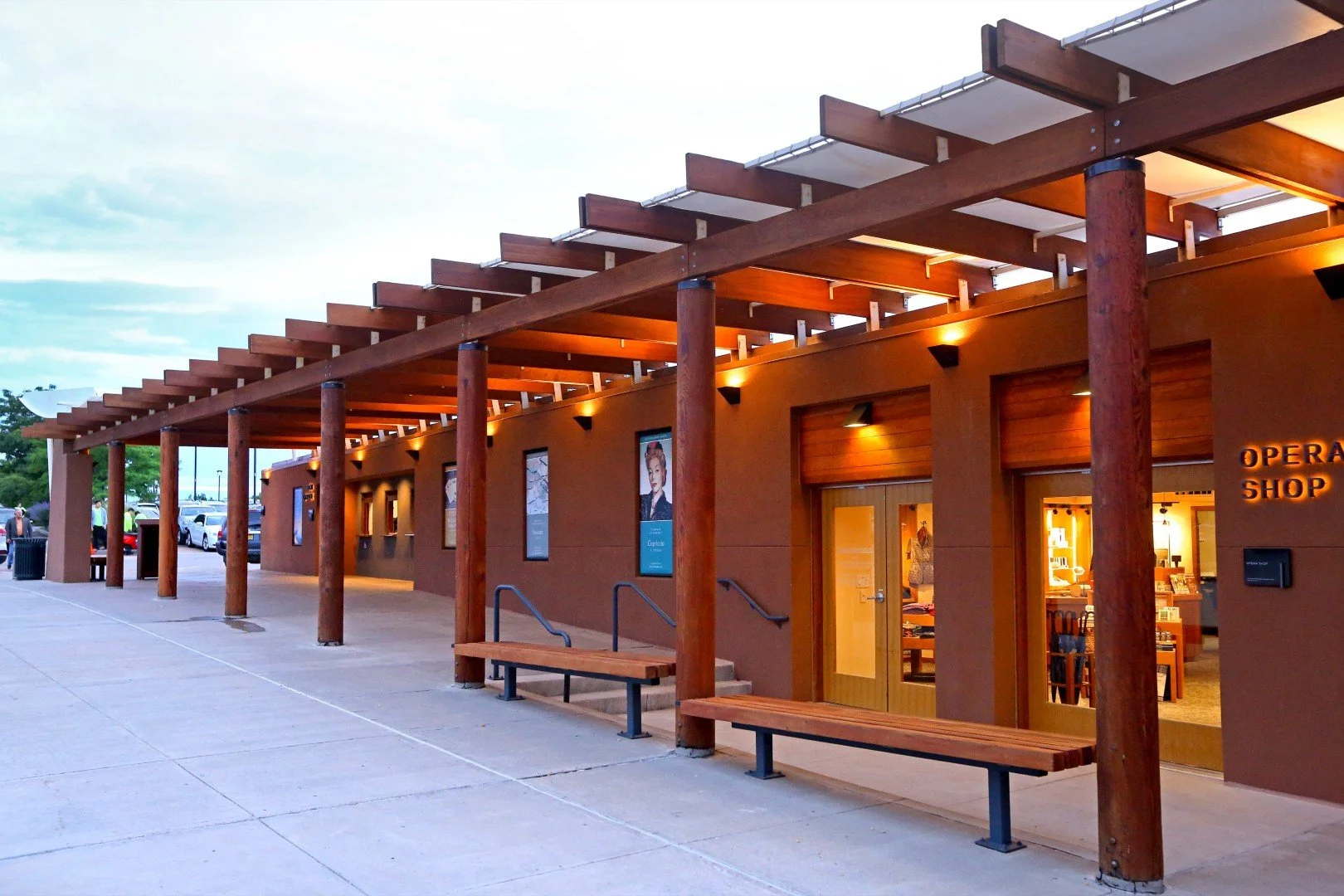
There was lots of activity on the terraces around the opera house prior to the performance, ranging from tailgate parties with elaborate set-ups that reminded me of the sometimes lavish spreads at Opera in the Park in San Francisco, to less formal picnics at large tables where sharing space with others is the norm, to boxed plates served on the terrace just outside the box office area. We tried the last two and enjoyed them both (tailgating in the parking lot in the late afternoon heat didn’t seem too appealing).
Night One: Lili Elbe, August 5
The second performance of the American premiere of Tobias Picker’s 2023 opera Lili Elbe (libretto by Aryeh Lev Stollman). Mr. Picker is a well-known contemporary American composer: some of his other operas include Emmeline, An American Tragedy, Dolores Claiborne and Awakenings. Lili Elbe had its world premiere in Switzerland in 2023.
The opera is based on the true story of the Danish transgender artist Einar Wegener. A book, ’The Danish Girl’, written in 2000 and a film of the same name from 2015 preceded the opera. Einar (born in 1882) and his wife Gerda were both painters, he of landscapes, she of portraits, in Copenhagen. As Einar’s gender dysphoria surfaced and became more clearly articulated, the couple was troubled by their non-acceptance in the traditional society of Denmark. They moved to Paris where they lived more openly, but continued to struggle with the changing parameters of their marital relationship. Through a contact in Paris, they met a German doctor, Kurt Warnekros, who performed a series of gender reassignment surgeries on Einar/Lili, until the doctor’s final effort to transplant a uterus from a living woman ultimately led to Lili’s death.
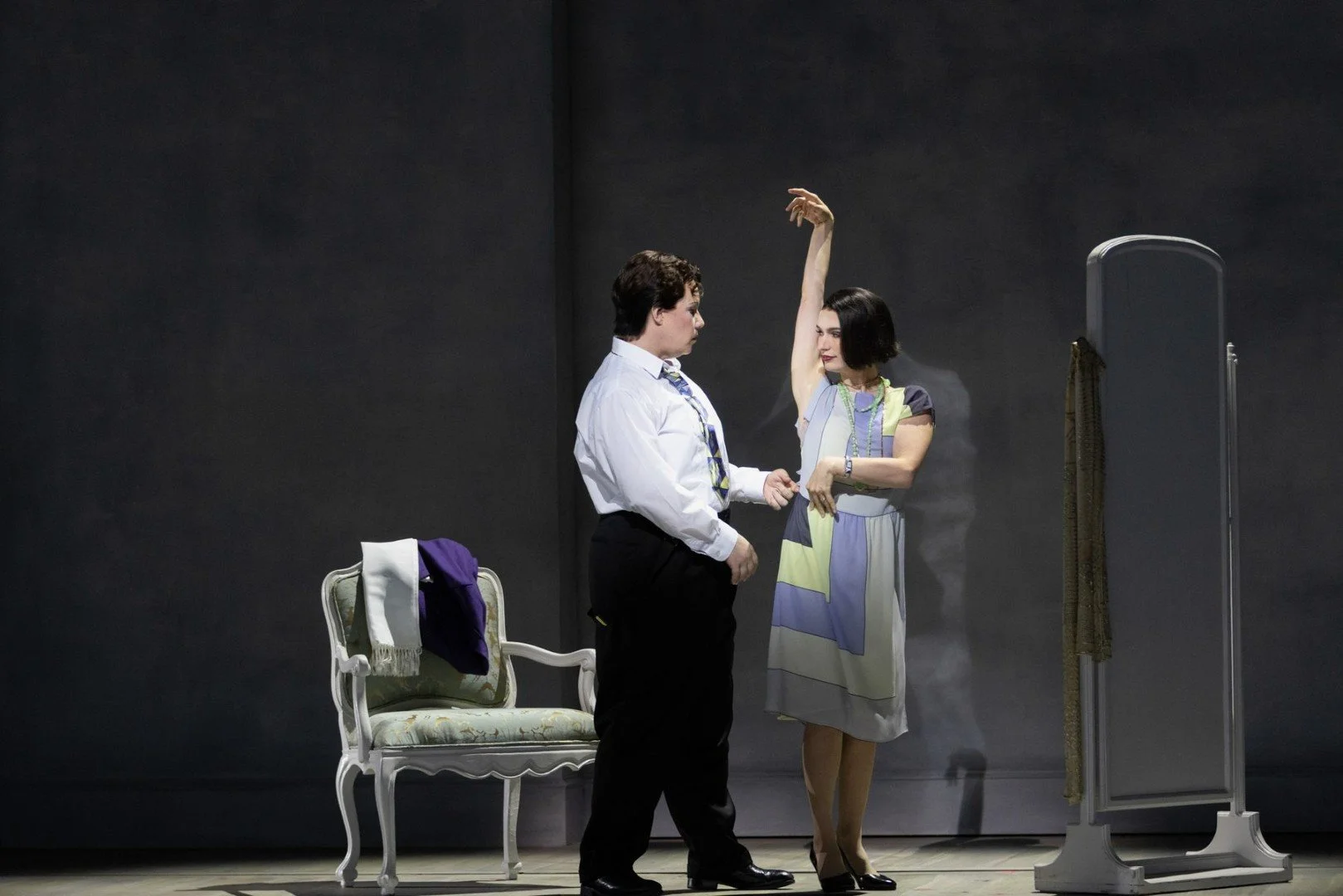
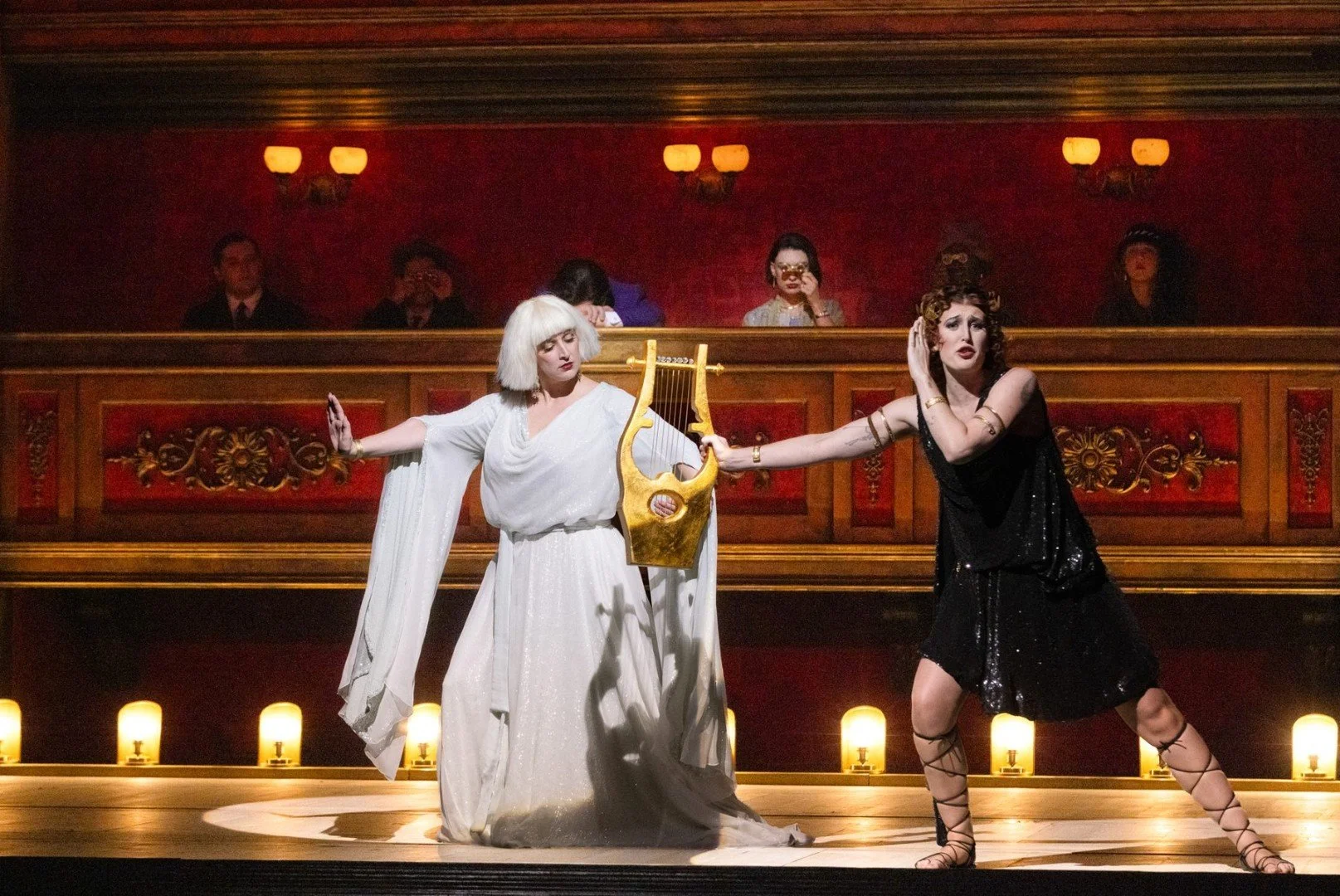
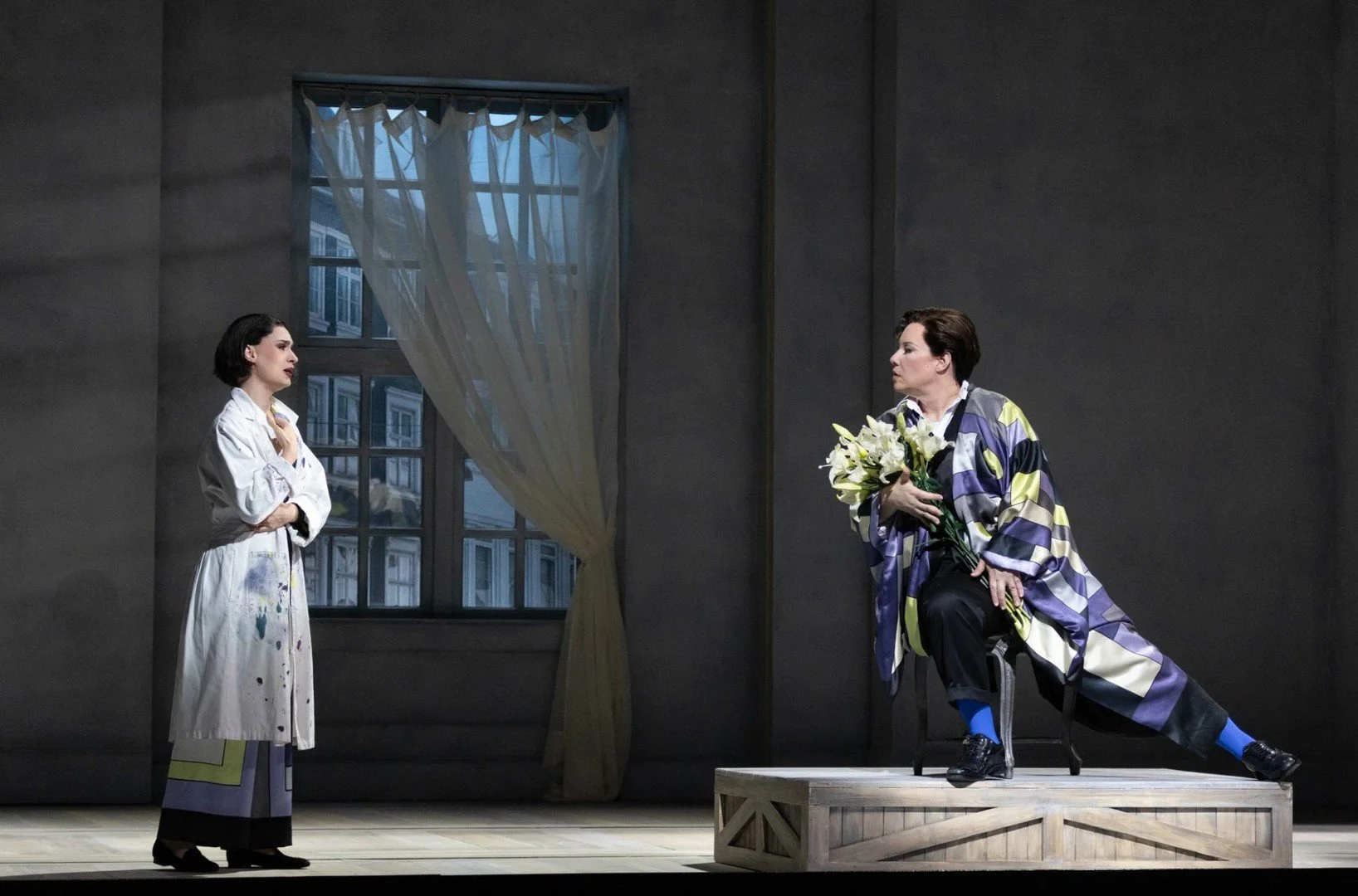
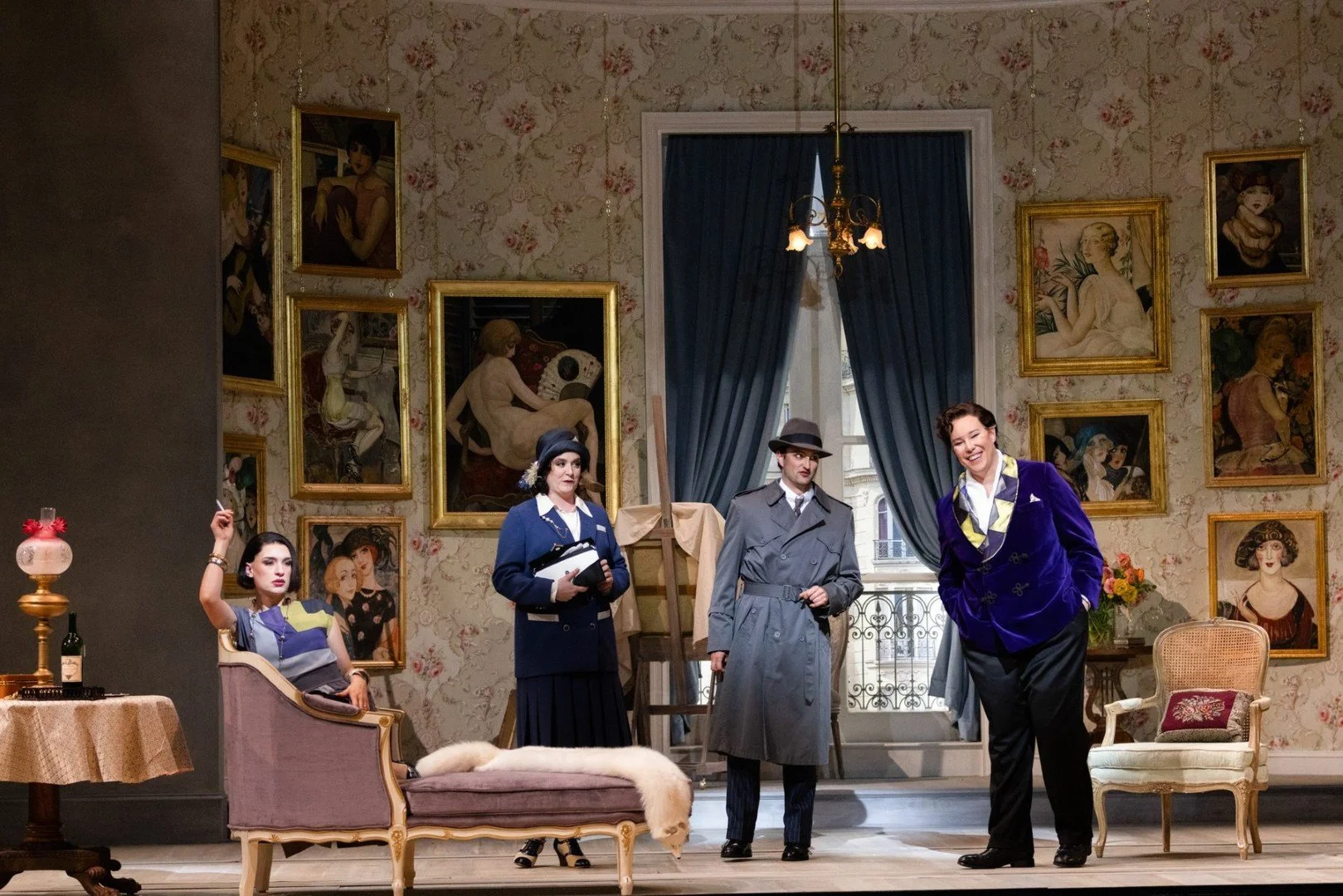
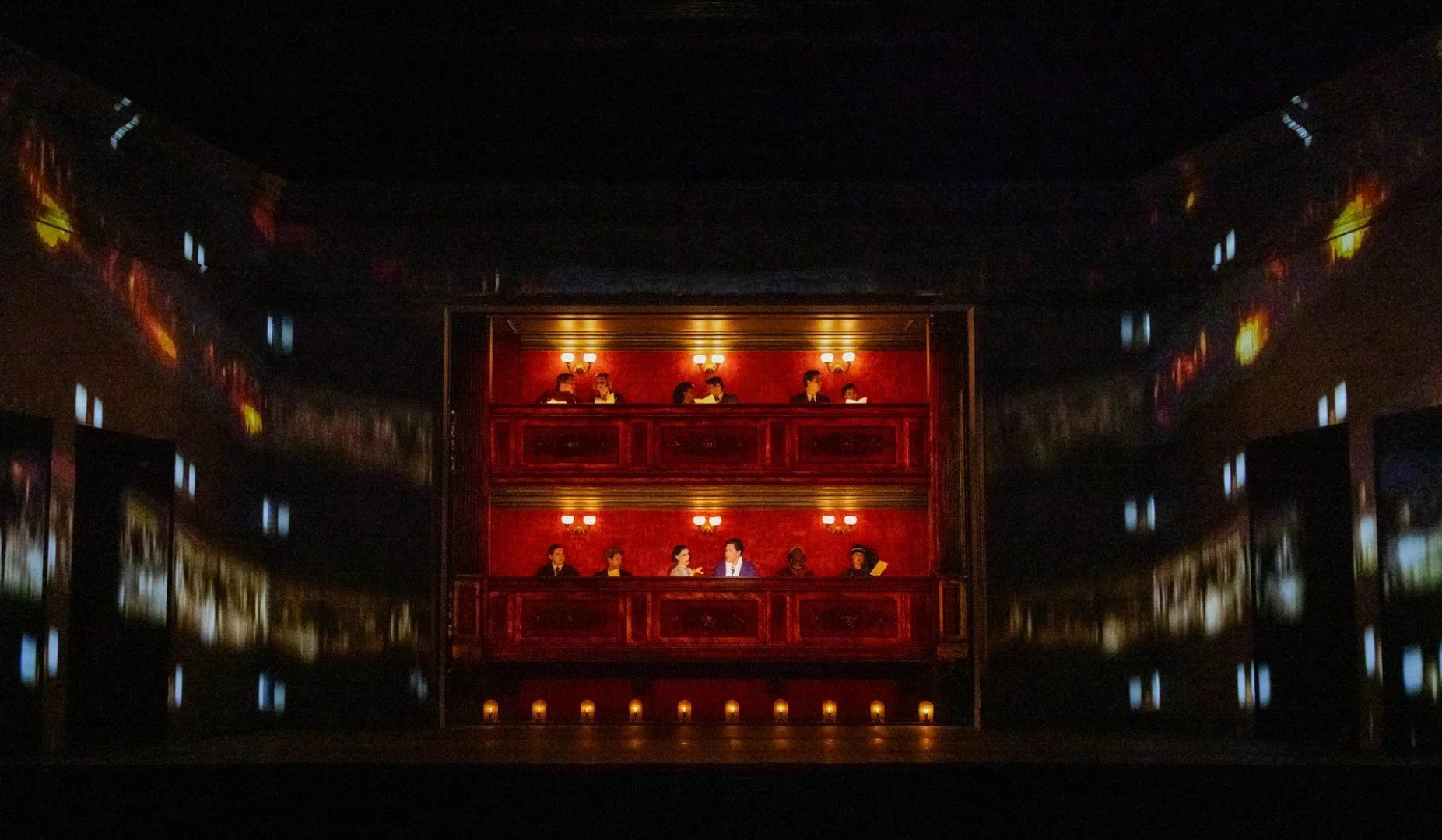
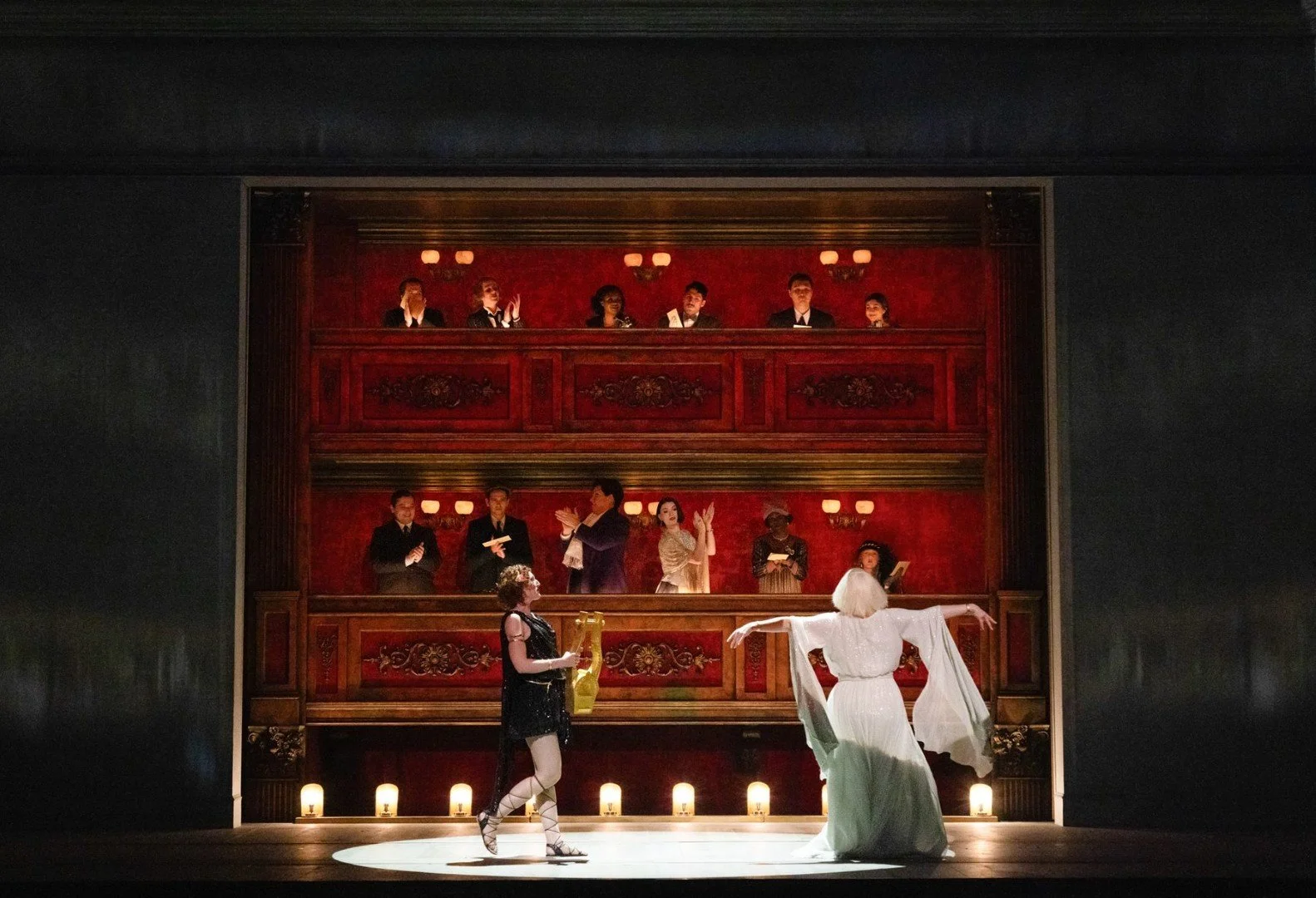
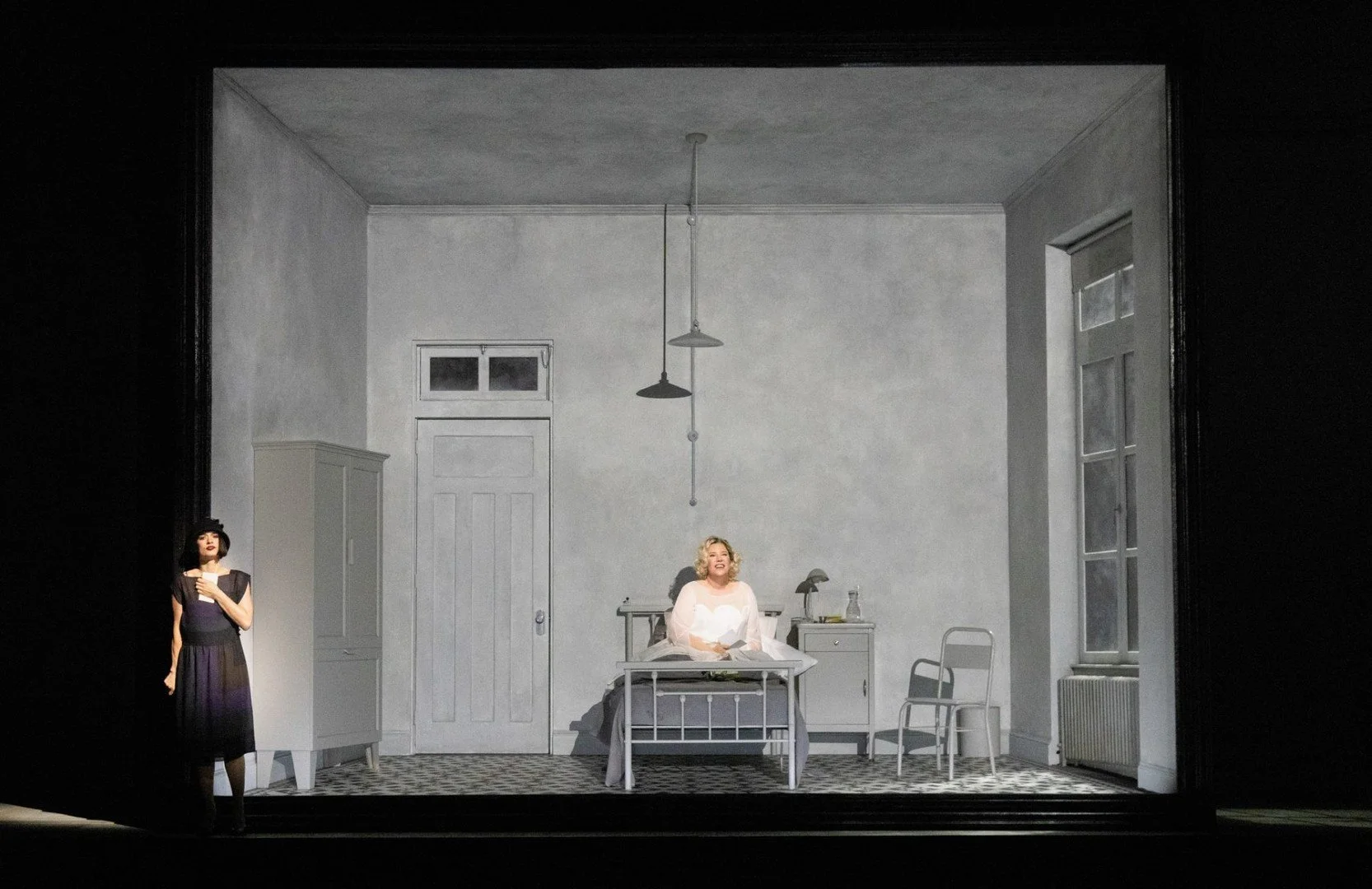
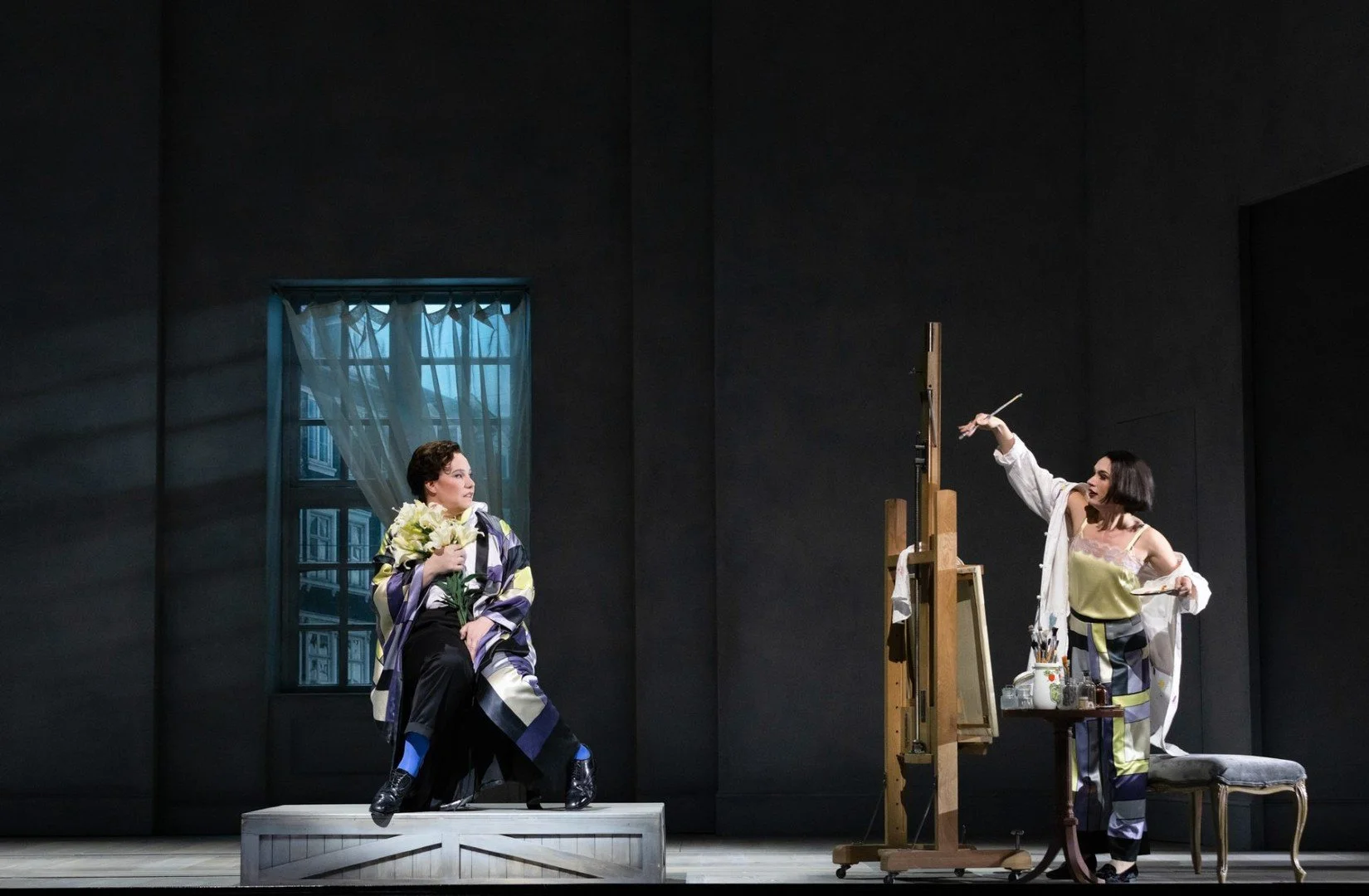
The title role was sung by the transgender baritone Lucia Lucas (a California native), for whom the role was composed. She collaborated with Mr. Picker and Mr. Stollman, drawing on her own experience through the process of transitioning to a woman. Lucas has a strong and clear voice, though it was a bit disconcerting to hear a woman with a baritone range. I noted that her upcoming roles include the title character in Rigoletto, kind of the opposite of a trouser role. Except for that element, she was very convincing as the shy but strong Lili. Her wife Gerde Wegener, Texas soprano Sylvia D’Eramo, sang with equal fervor and was well matched both vocally and psychologically.
The German doctor who helped Lili was sung by bass Andrew Harris (from West Virginia). Dr. W. skillfully convinces Lili to allow him to perform experimental surgeries on her by promising to make her a ‘real’ woman, while simultaneously communicating to the audience that he is doing it for his own self-aggrandizement. In reality, Dr. Warnekros went on to do much worse things as a doctor in the the Nazi regime. I was very moved by Lili’s assertion that to be a real woman one had to have a baby—that was the accepted role for women at the time—hence the need for a uterus. This belief is somewhat refuted by her wife Gerda who is thriving as a portrait painter. Later in the opera, after Lili and Gerda’s marriage was annulled by none other than the King of Sweden in a brief but clever scene, Gerda does marry again, as does Lili herself. Their second husbands were sung by Canadian tenor Josh Lovell as Claude LeJeune (in love with Lili) and Joshua Klein (a baritone apprentice from Texas) as Fernando Porta, who marries Gerda. Well sung, well acted, both of them.
Lili’s mother was sung by mezzo-soprano Lindsay Ammann (from South Dakota). Her voice was powerful and the emotion shone through. It was so hard for her to accept the change that Lili presented and this showed in her music and her singing.
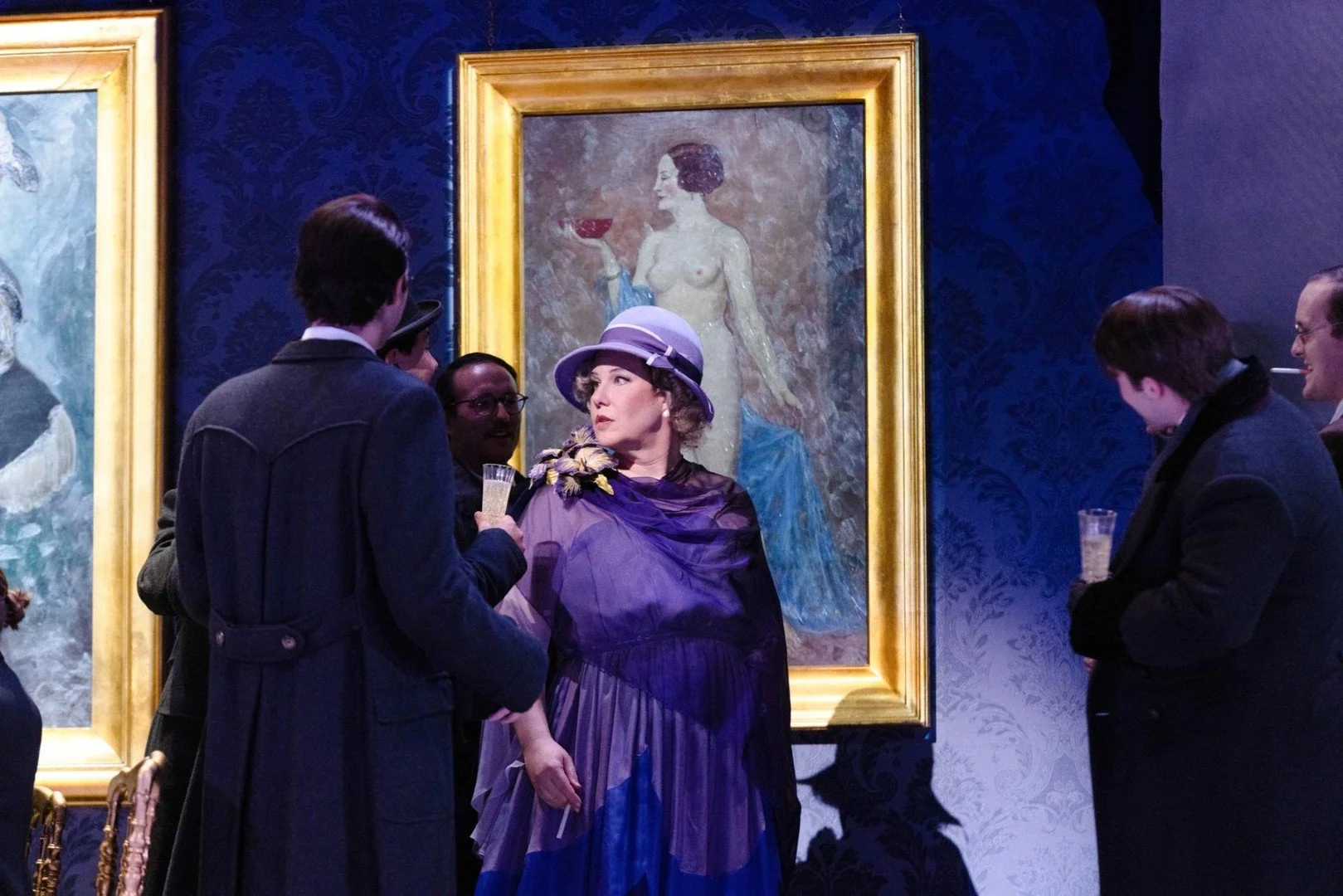
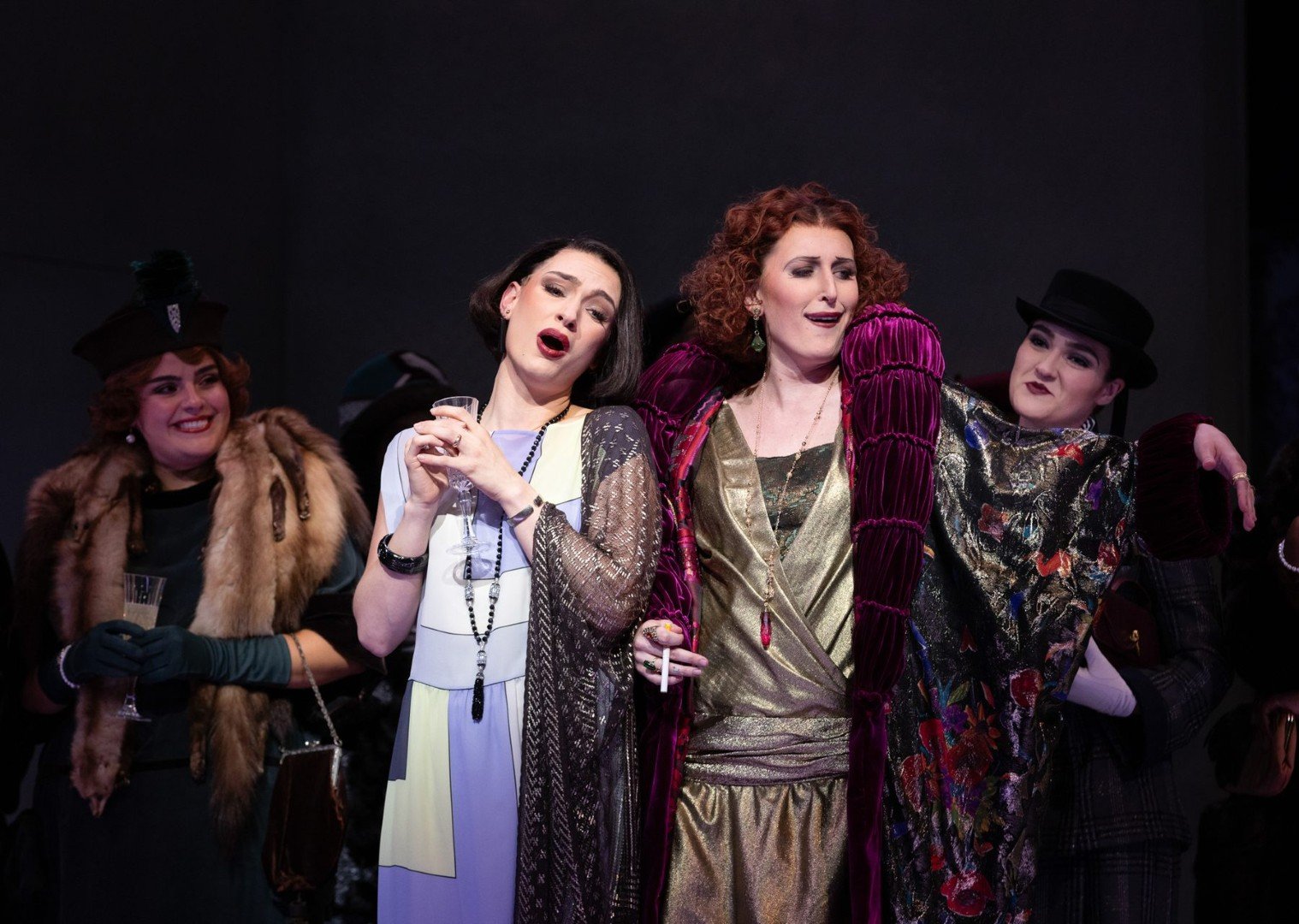
Of the many smaller roles, that of the young woman who, albeit unwillingly, gave up her uterus for Lili’s final surgery, resonated the most with me. Even without a name in the opera , mezzo-soprano Audrey Welsh (another Texan) gave an emotionally charged performance. She is currently an apprentice at Santa Fe Opera and I will be following her career with interest.
The staging and overall production were very creatively put together. Director James Robinson, Scenic Designer Allen Moyer, Costume Designer Marco Piemontese, Lighting Designer Marcus Doshi, Production and Video Designer Greg Emetaz and Chreographer Sean Curran deserve credit for an ‘all of a piece’ production. The stage at Santa Fe allows a lot of creativity, from a blank wall which opens up to reveal another backdrop behind, to lifts which bring objects up from below onto the center stage, and to sliders which allow objects to enter and exit the stage from the sides. This makes for quick scene changes without the need for a curtain or blackout. Several scenes, including those in Gerda’s studio, were filled with the paintings of the real Gerda Wegener. They were striking portraits, reminding me a lot of those of Tamara de Lempicka, whose work I have long admired. That added to the verisimilitude of the production. One aspect of the costume design, which was pointed out in an interview with the cast and composer beforehand, was the shift in color of Lili and Gerda. At the beginning of the opera Einar was in black and Gerda in white; they shifted directions through the performance so that at the end Einar (now Lili) was in white and Gerda in black. I’m not sure quite what this signified except for change. I had a few quibbles with the overall production: first, there was too much smoking or simulated smoking throughout; it became, after a while, an unnecessary leitmotif and cliché; and second, several characters wore the same costumes throughout the opera, even as time passed.
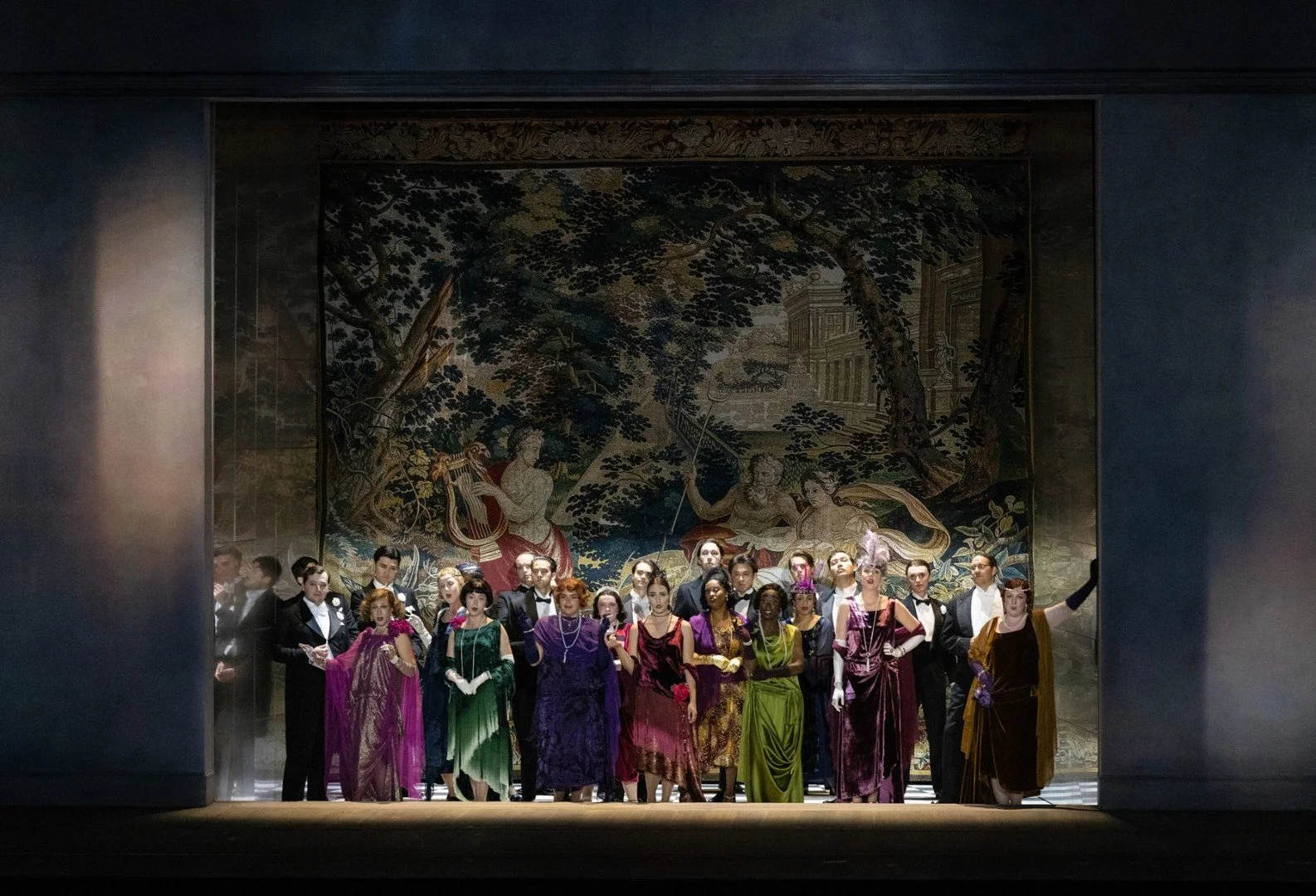
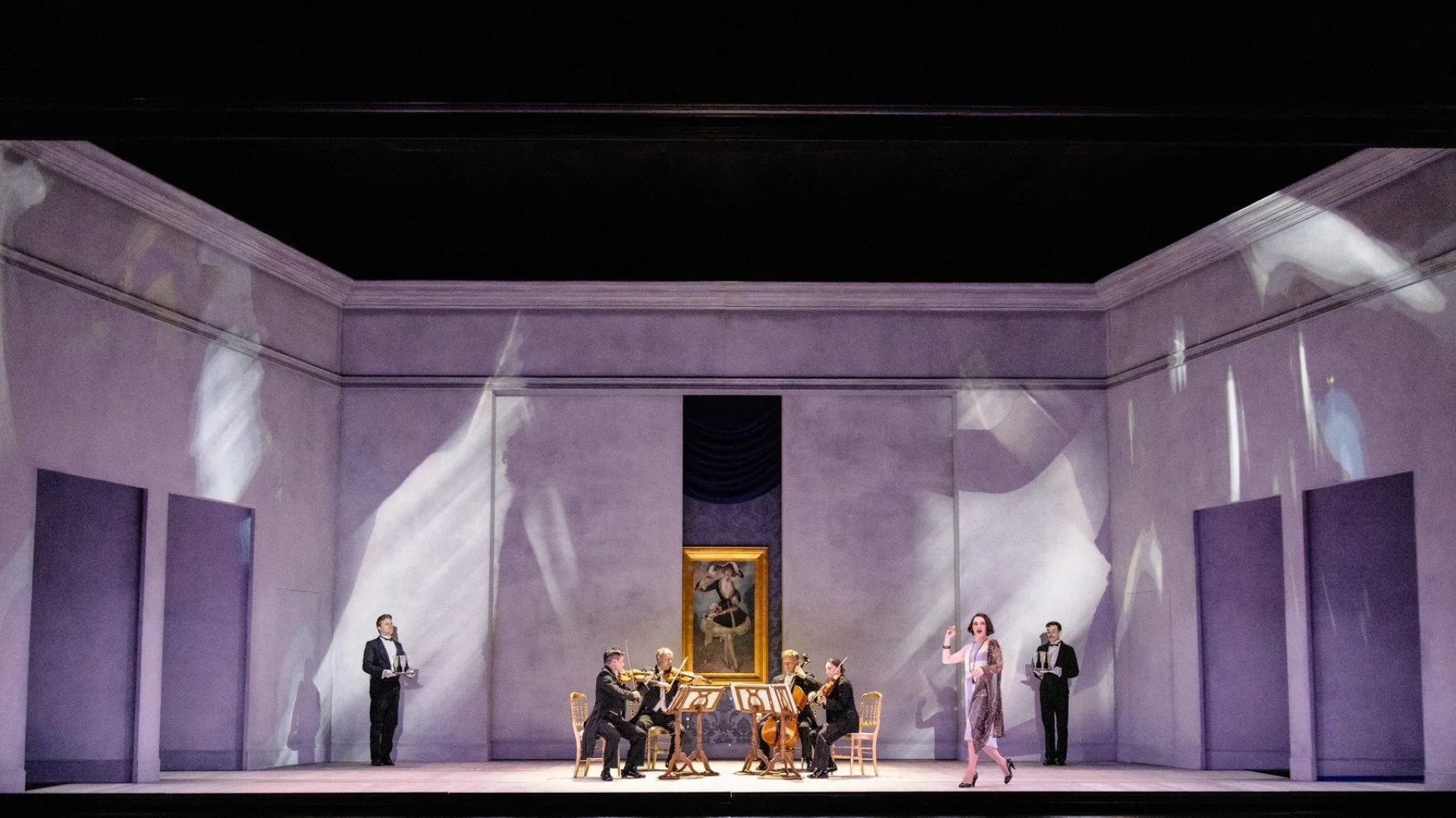
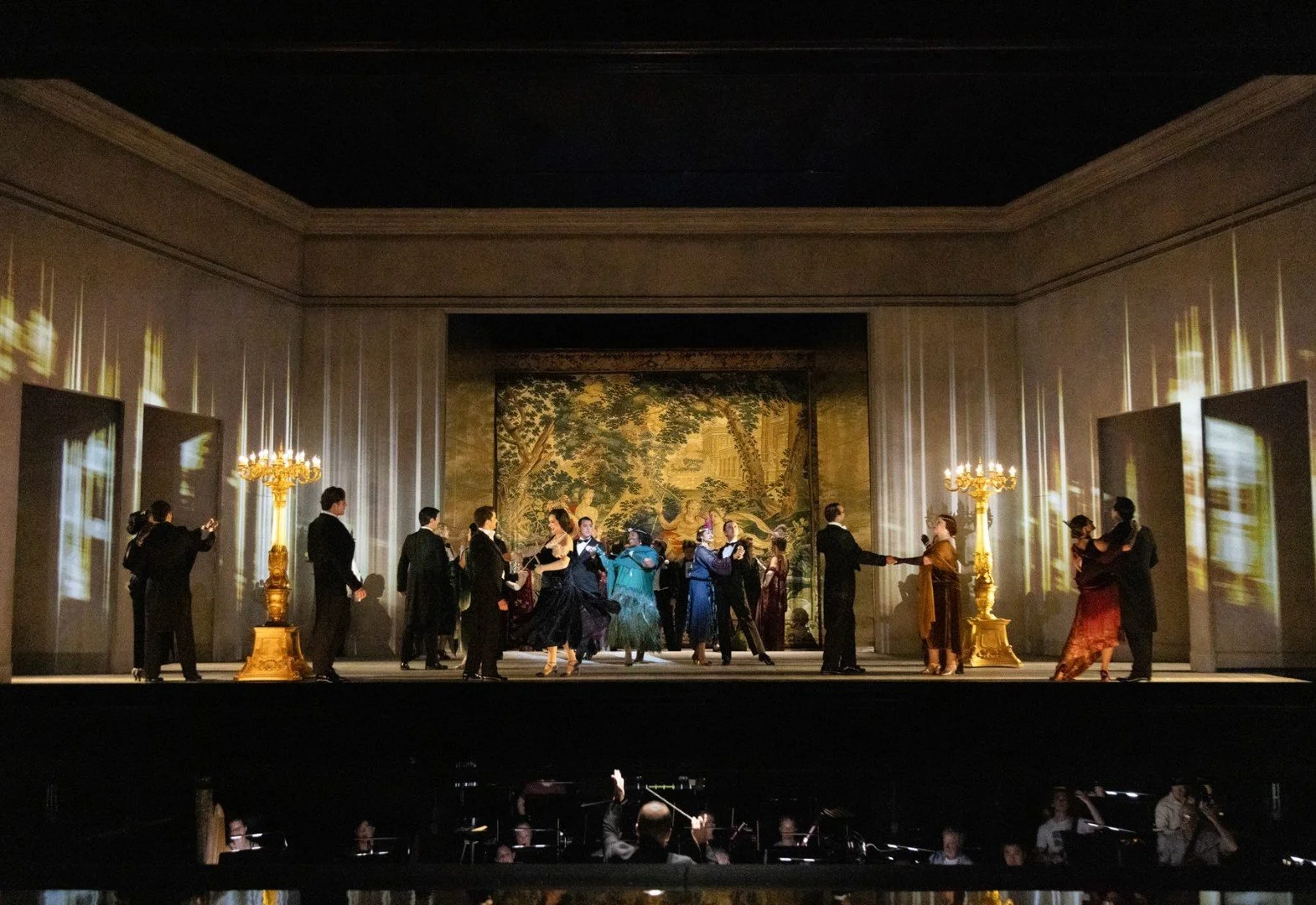
The music was a mixture of styles, from romantic, to jazz, to minimalist, alternating from scene to scene throughout. It matched with the dialog and expressed the emotions that were being sung. As with many modern operas, it seemed like there were too many words to set to music, so it was sometimes a little strained. While I didn’t go out humming any of it, I was quite taken with it and found it mostly very compelling.
The orchestra, under the direction of Mexican conductor Roberto Kalb, was excellent. Everything flowed well and the singers were able to be heard above the instruments without any trouble.
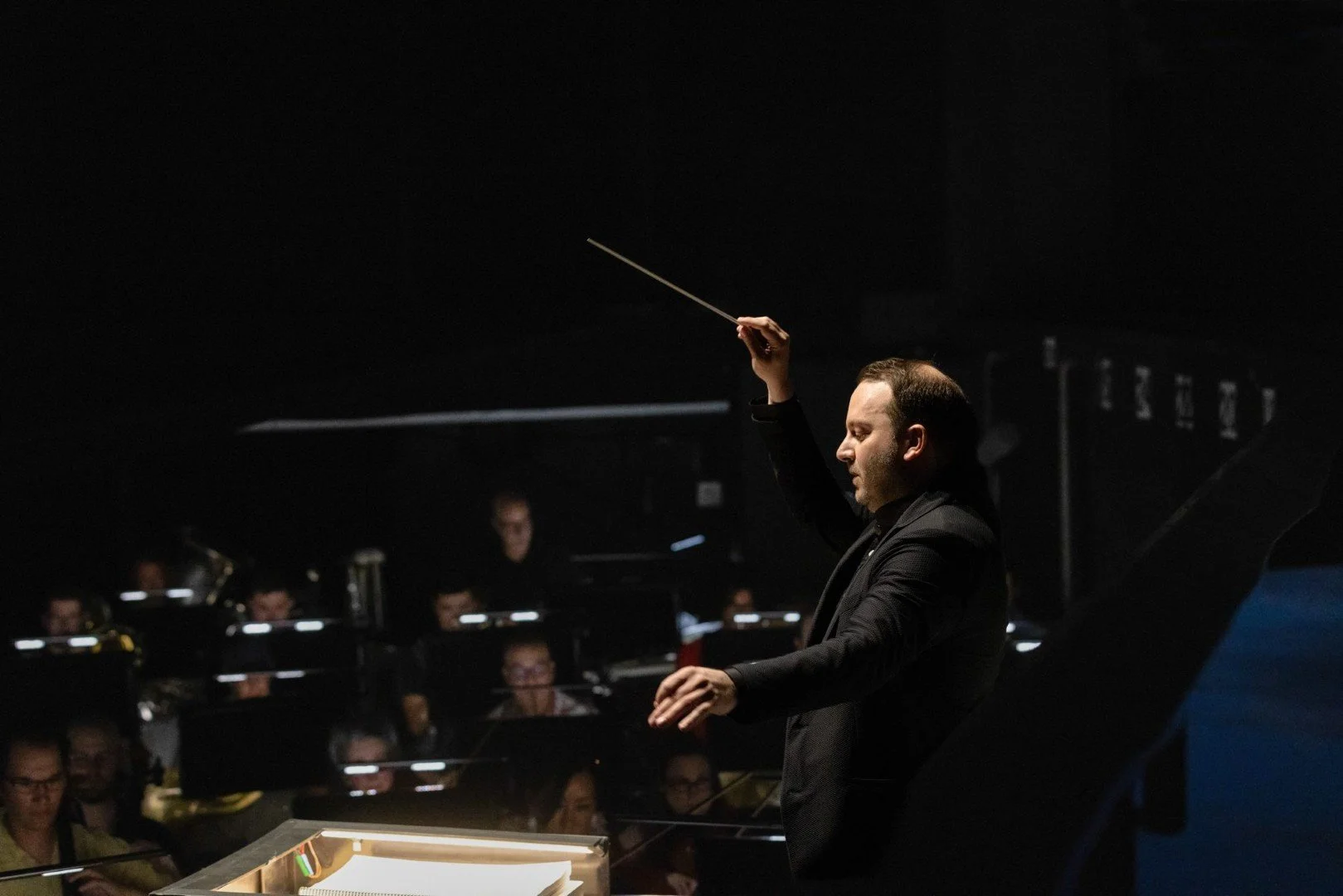
Conductor roberto kalb
The production team for Lili Elbe included Director James Robinson, Scenic Designer Allen Moyer, Costume Designer Marco Piemontese, Lighting Designer Marcus Doshi, Projection & Video Designer Greg Emataz, Chorus Director Susanne Sheston and Choreographer Sean Curran.
Overall, Lili Elbe was a successful performance of a well-rounded and thoughtfully creative production. It’s good that Santa Fe gave it this American premiere. Will it go on to other venues? It’s hard to say. I think the subject matter is one of great interest but whether that transfers from this stage to the stage in other places remains to be seen. I’ll be watching to see what happens next.
Night Two: Eugene Onegin, August 6
Composed by Pyotr Ilyich Tchaikovsky, who also wrote the libretto with some help from Konstantin Shilovsky. This popular romantic opera had its debut in 1879 at the Moscow Conservatory, performed, at the request of the composer, by students. Tchaikovsky based the opera on Alexander Pushkin’s famous 1833 novel-in-verse of the same name. He was looking for a story based on real people with real emotions, not kings and queens and uprisings and revolutions in society. Thus he prefigured the Italian verismo movement which came just after that.
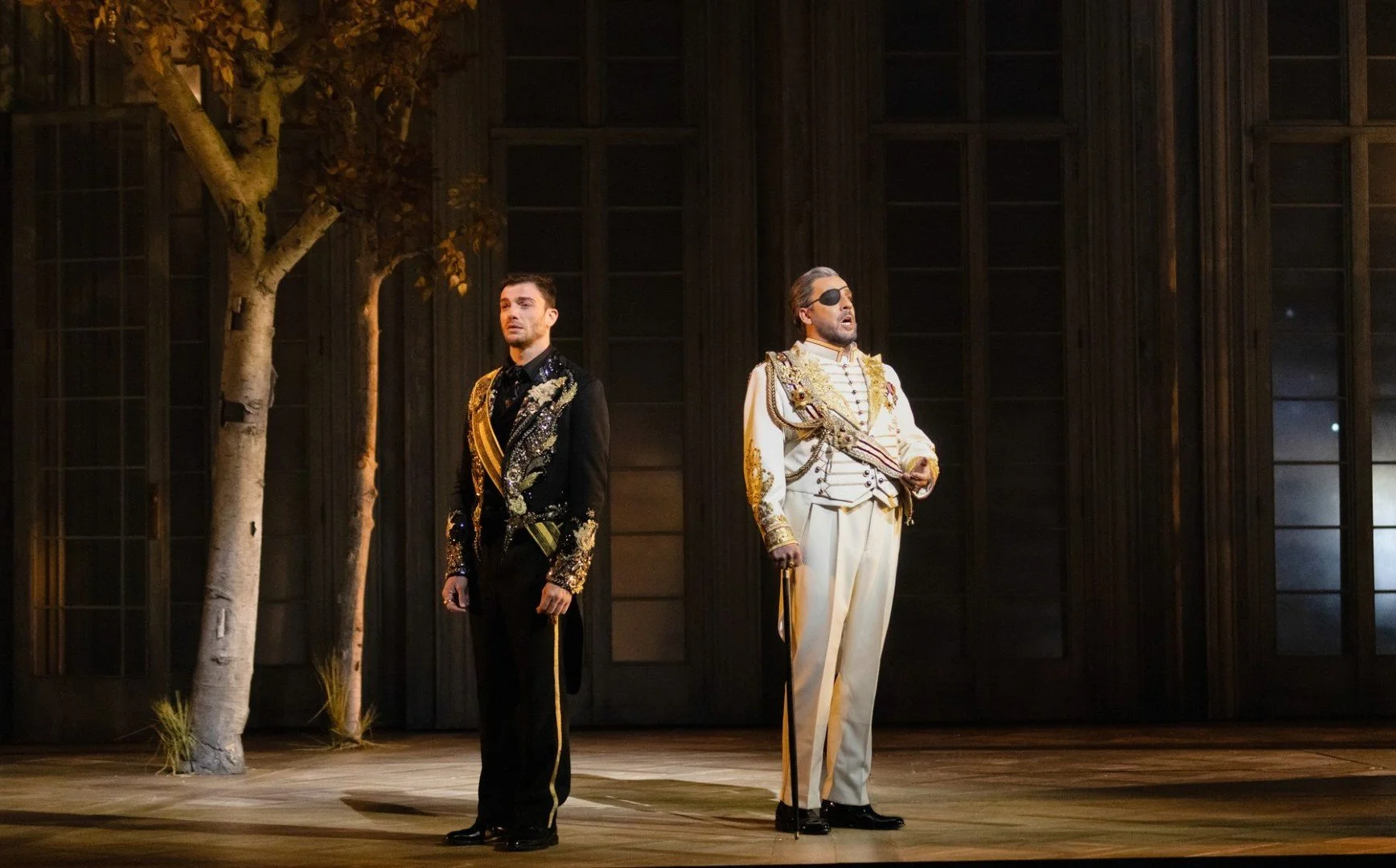
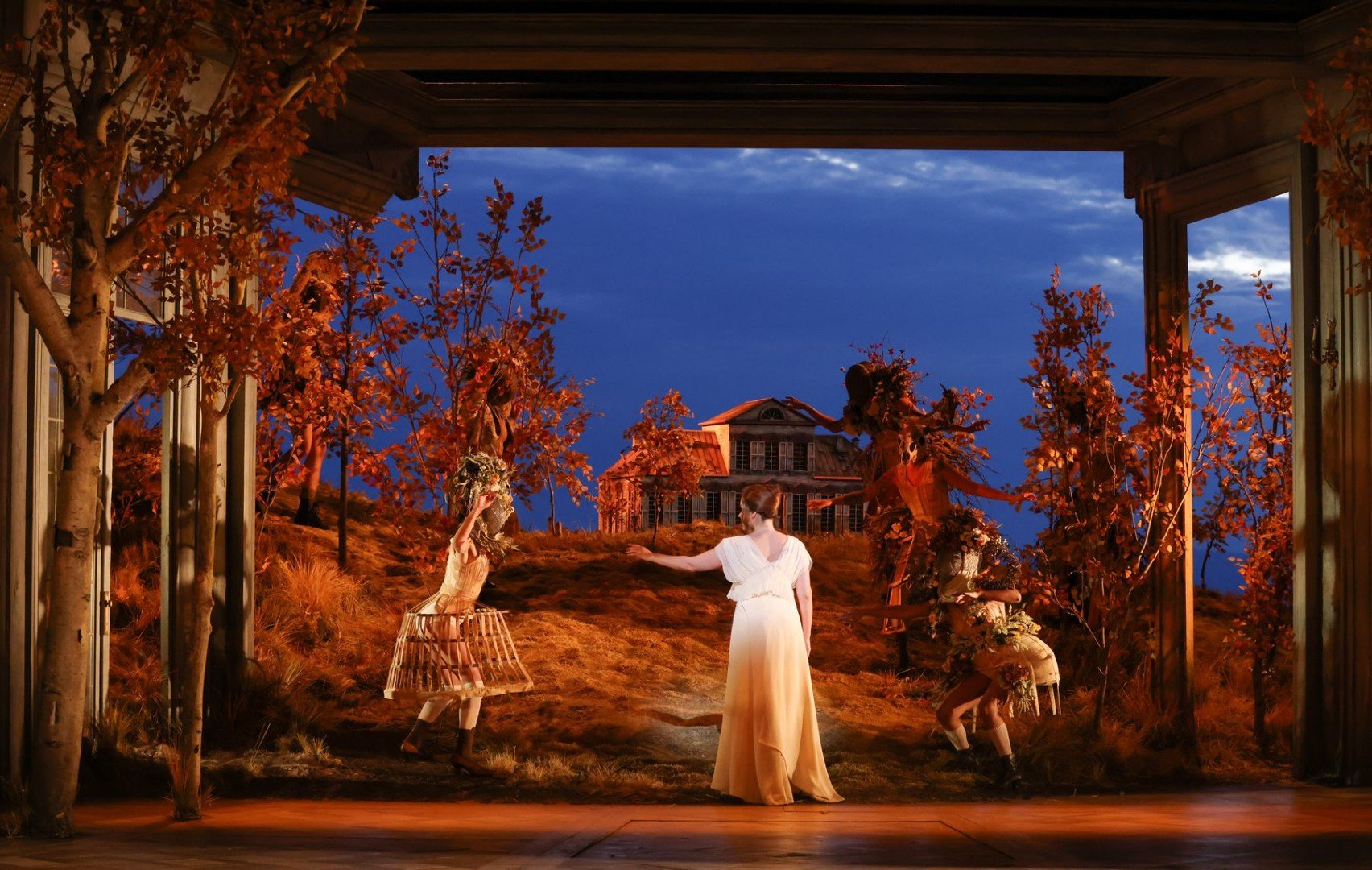
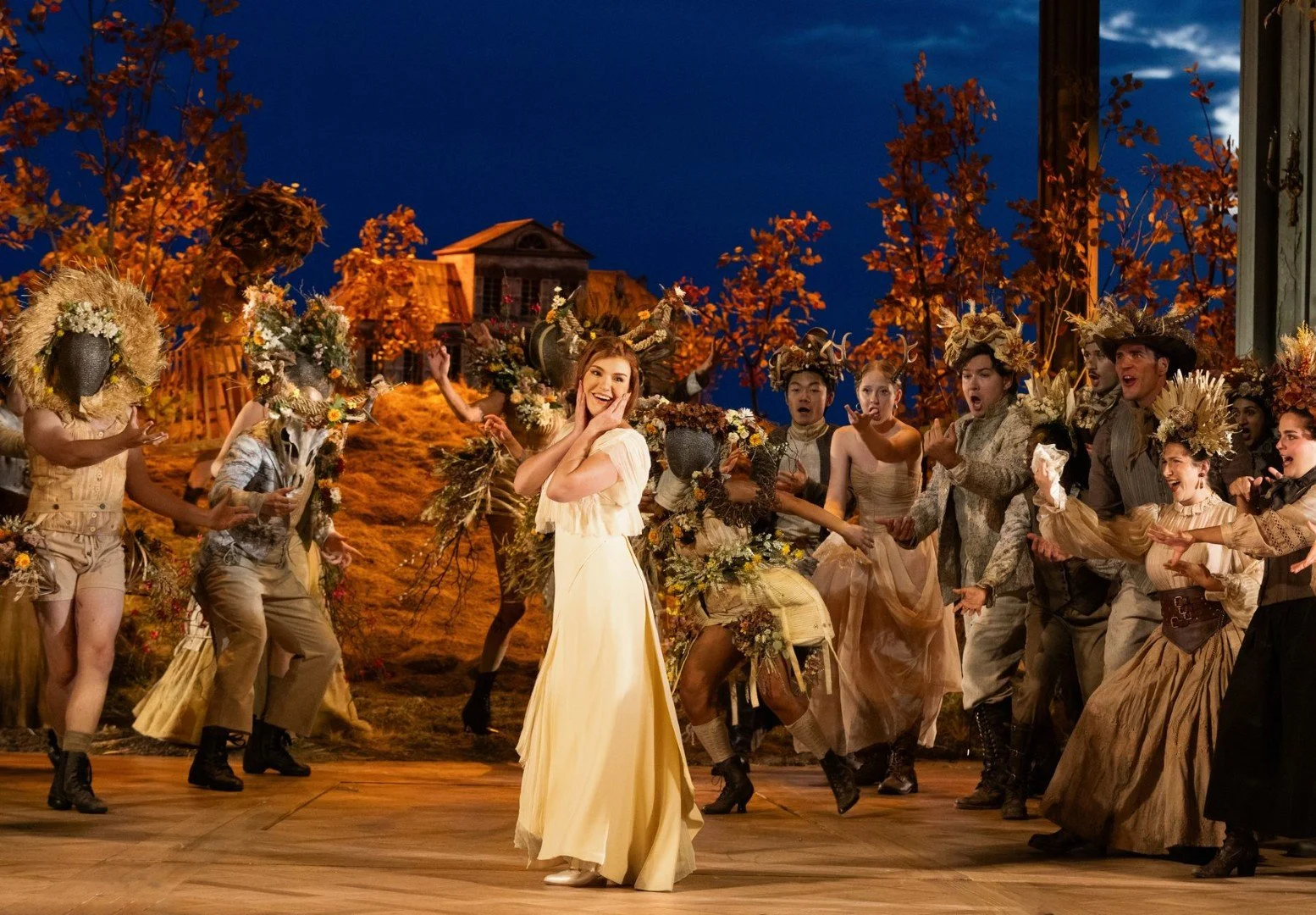
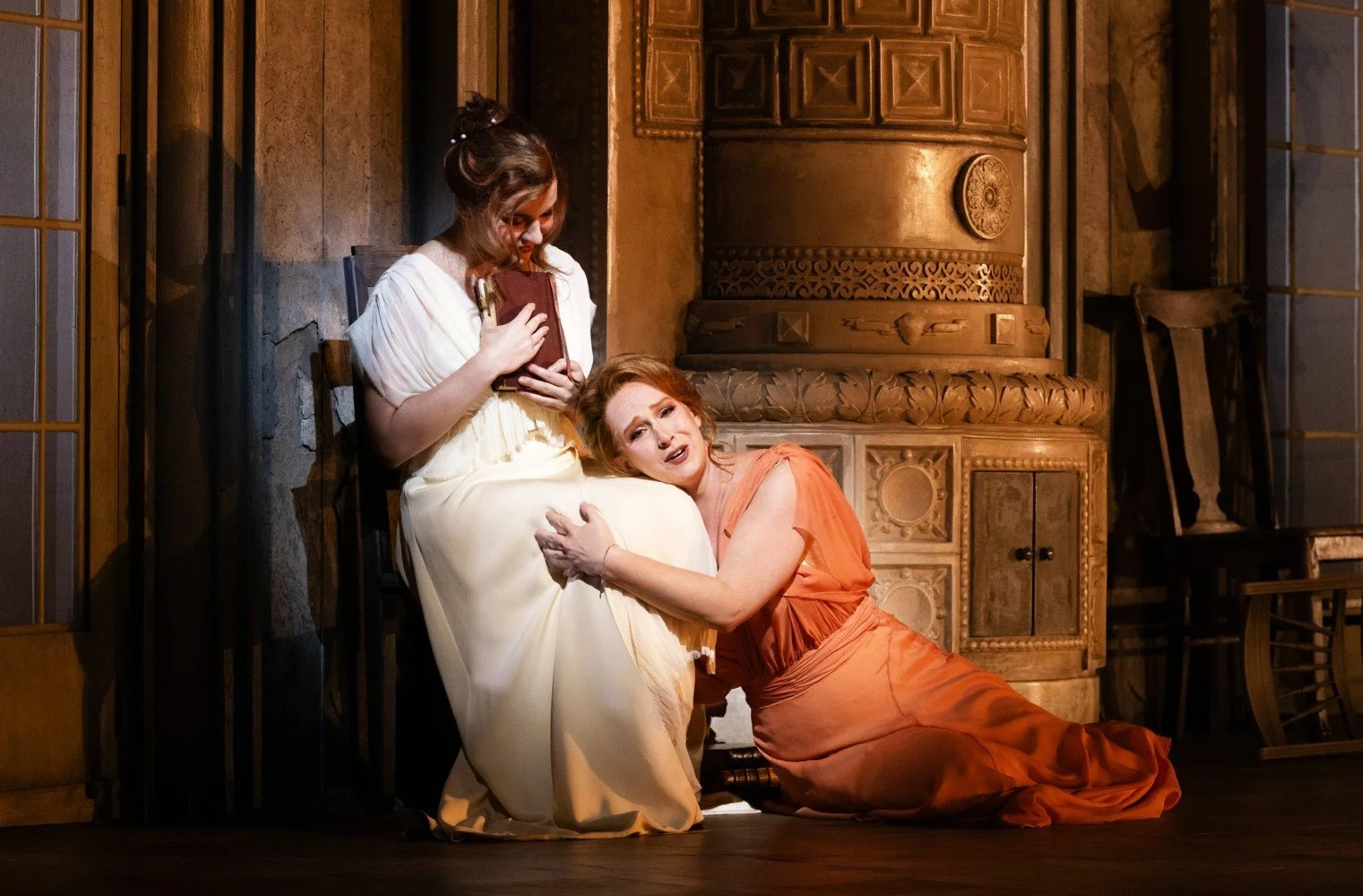
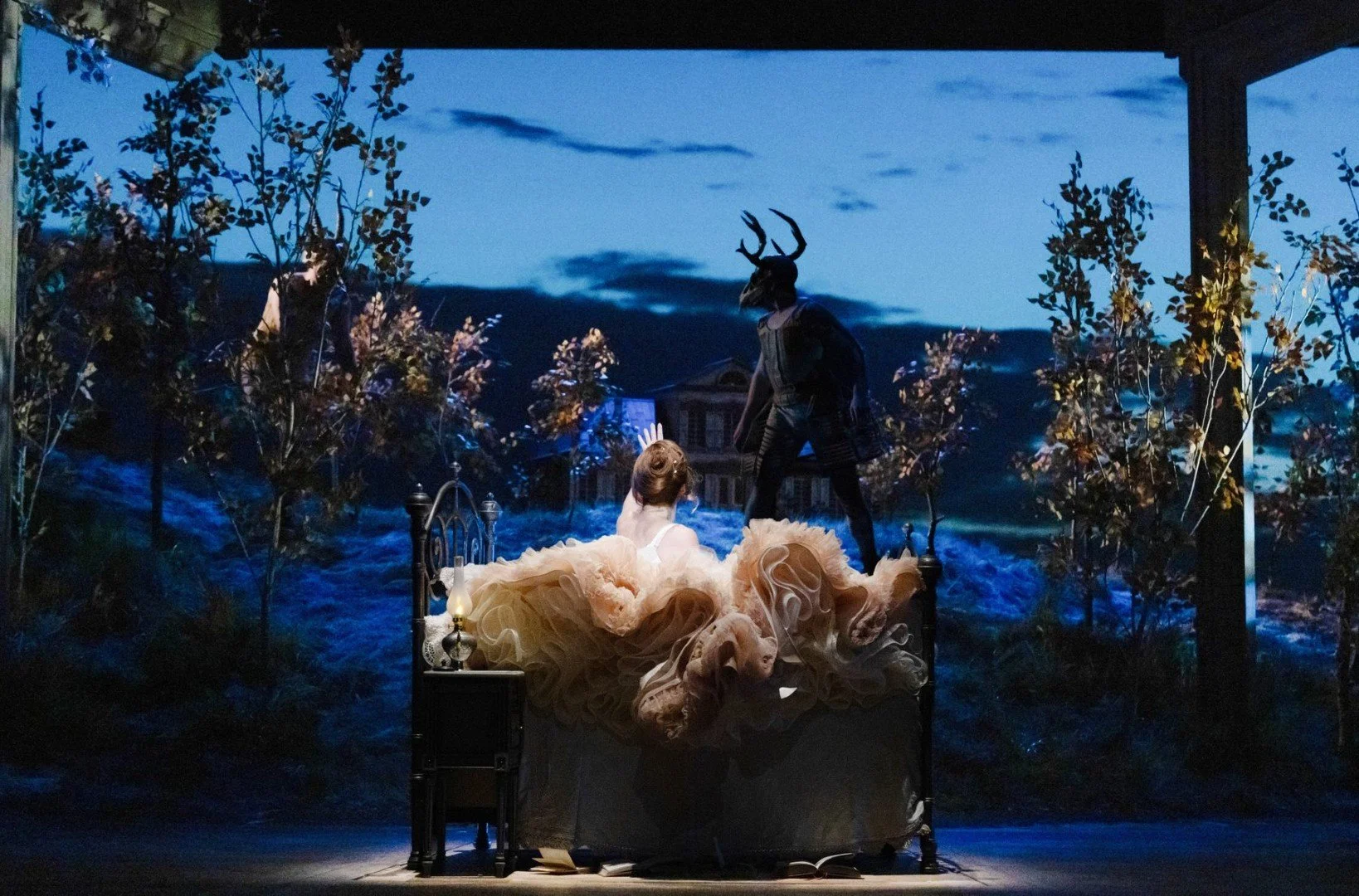
The story concerns upper-class aristocrats, their dissatisfaction with society and its constraints and the distinction between the roles of men and women at the time. Quoted at the beginning from the original, and so appropriate, was the following: “Habit is heaven’s gift to us as a substitute for happiness.”
Beginning in a country home outside St. Petersburg, the young Tatyana, a dreamy and introverted member of the local gentry, is smitten with the visiting Onegin, and she declares her feelings for him in a passionate letter. However, he responds that he is not the marrying kind and rebuffs her. In the meantime Tatyana’s outgoing older sister Olga is engaged to Onegin’s friend Lensky, who has loved her unreservedly since childhood. Onegin shows his disregard for convention and his ennui by flirting outrageously with Olga, mortifying Tatyana and angering Lensky. This breach leads to a duel in which Lensky is killed by Onegin, leaving everyone devastated. Onegin flees: in despair?, remorse?, fear? We’re expected to believe it’s remorse, but I’m not so sure. Year later he returns and in a reversal of roles, is smitten with the very sophisticated and now-married Tatyana. Although they confess their love for one another, she is true to her husband and refuses to run away with Onegin, leaving him devastated. This all makes for a sad ending but some beautiful music. I was expecting him to kill himself at the end—it would certainly have been appropriate—but then realized that happens in another Tchaikovsky opera, Pique Dame, the Queen of Spades!
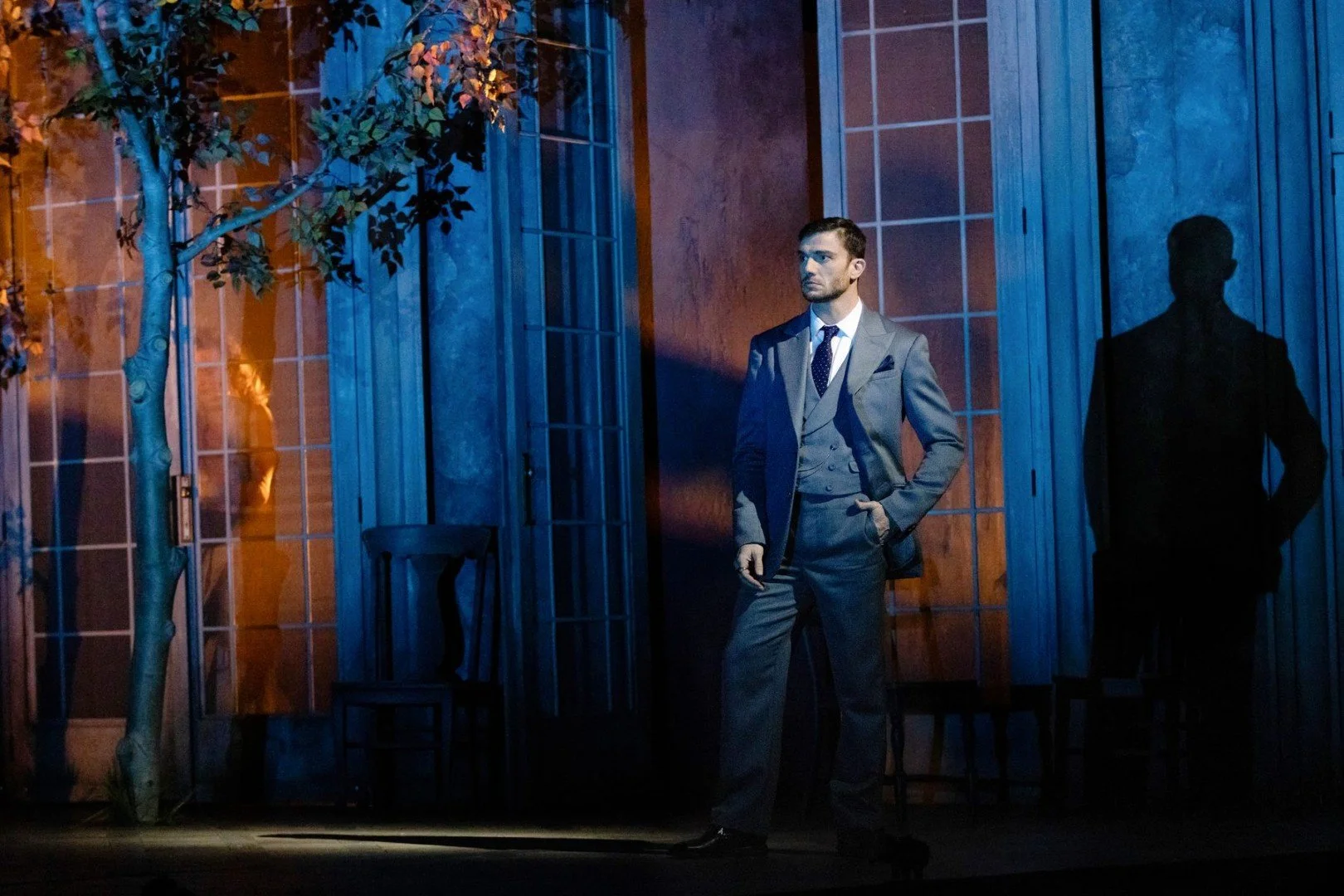
In the title role was Italian baritone Mattia Olivieri. I did not find him compelling physically, emotionally or vocally although he sang well enough. In my mind I’m always comparing the Onegin of the day to the amazing Dmitri Hvorostovsky—a very tough act to follow.
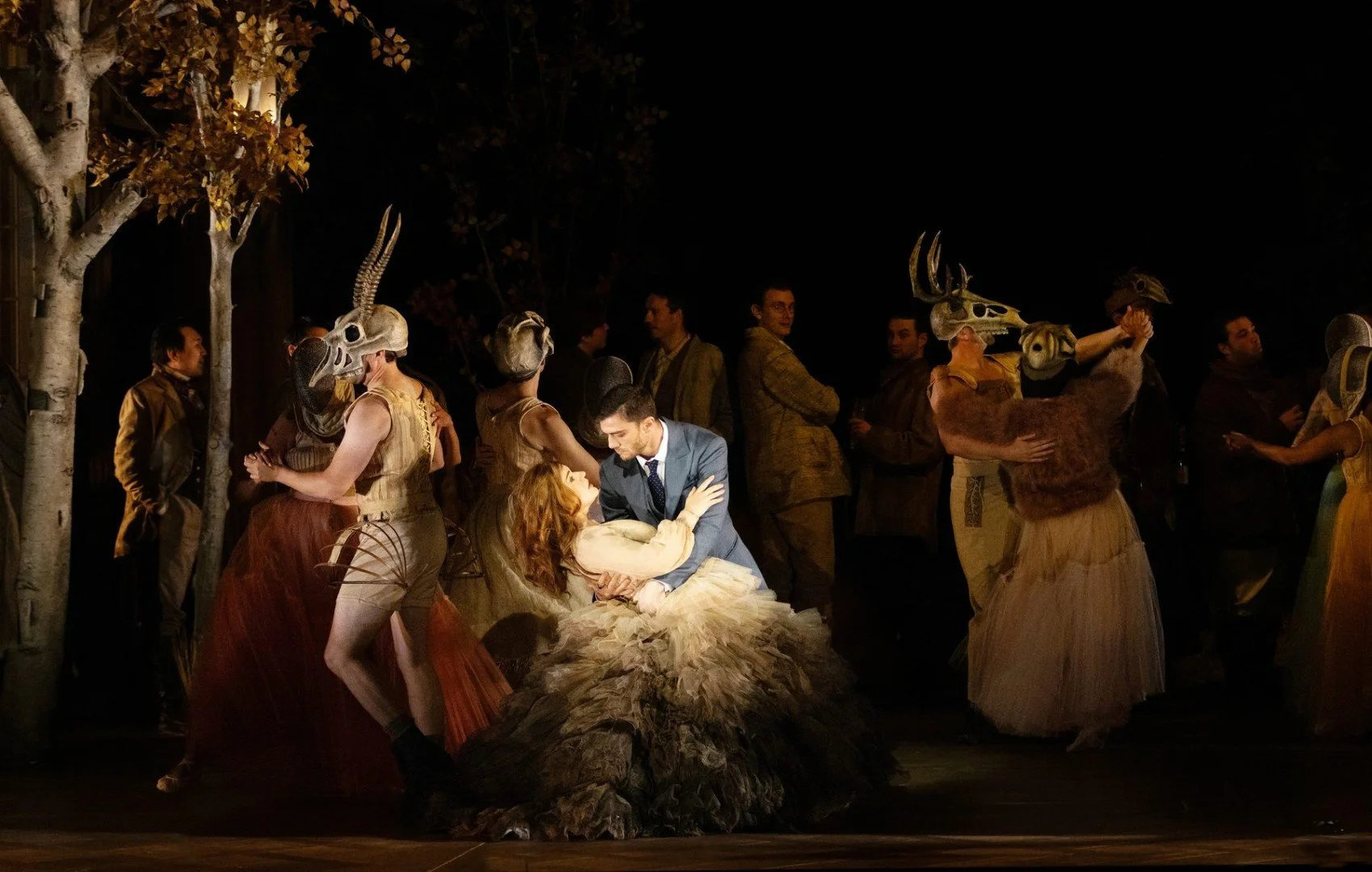
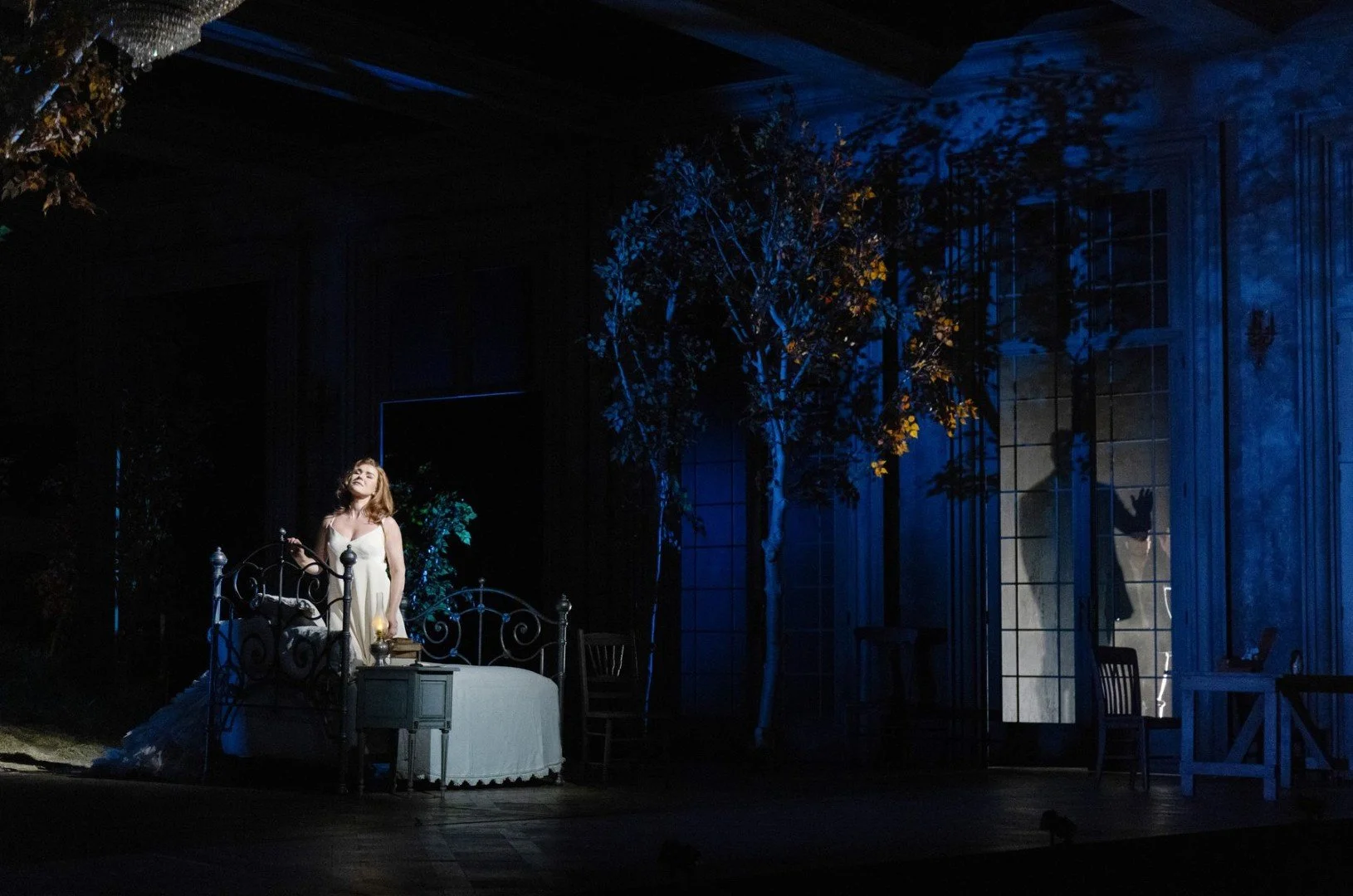
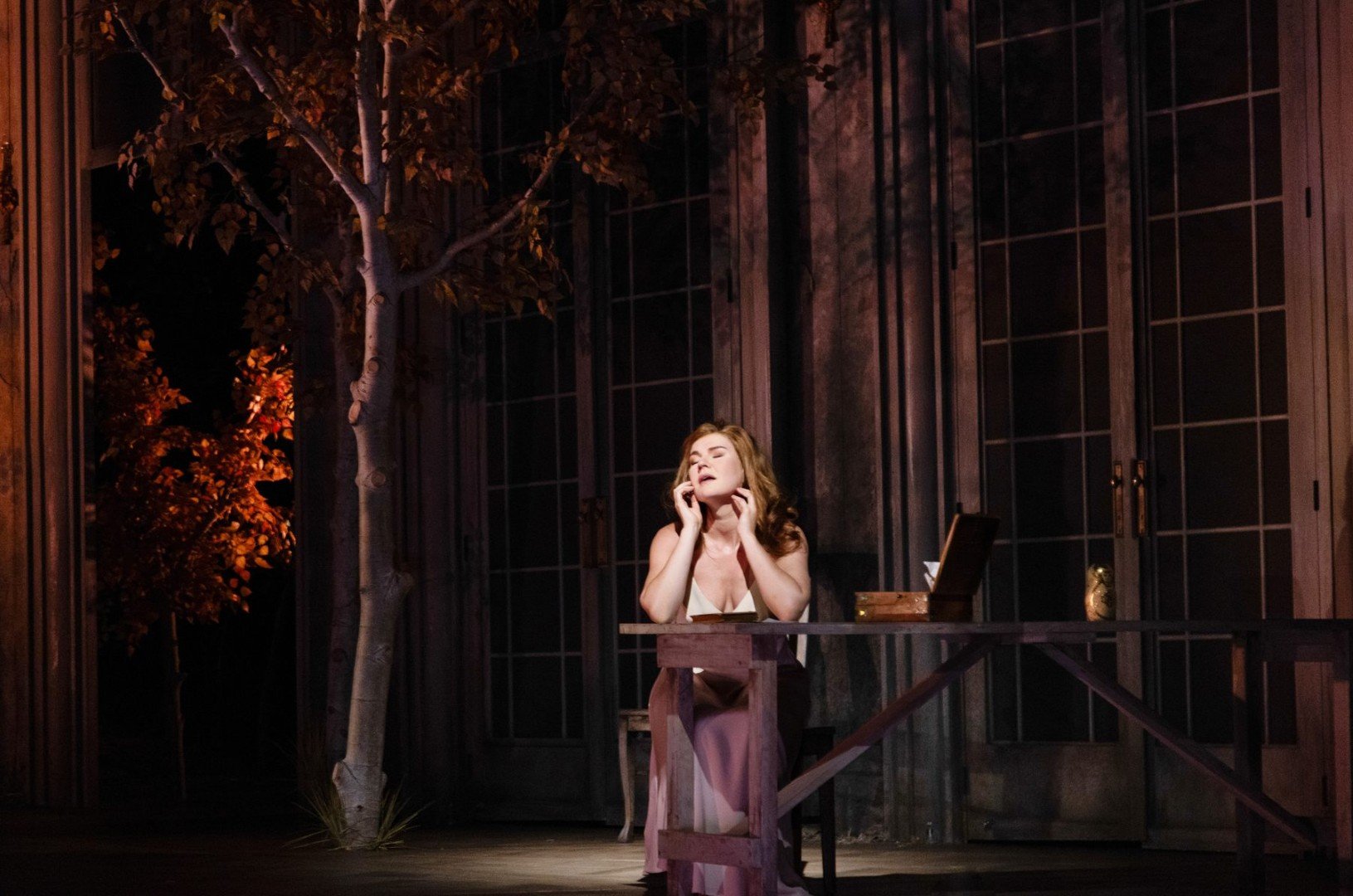
Ukrainian soprano Olga Kulchynska was a charming, beautiful and somewhat subdued Tatyana; her voice was clear, though again not always quite strong enough, and her acting was first-rate. I didn’t sense a lot of chemistry between the two of them—as though she agreed with me that her Onegin wasn’t the gorgeous Mr. H!! She matured appropriately between the first and third acts and was very believable.
As her older sister Olga, the sunny one, Lindsay Ammann, the mezzo from South Dakota who was the mother in Lili Elbe, was again terrific, sprightly, chirpy—quite a different role. Her fiance Lensky was sung and acted with strength and ferver by Peruvian tenor Ivan Ayon-Rivas. The most exciting character for me was mother Larina, sung to great effect by the splendid world-renown New Mexican mezzo Susan Graham, who is always excellent. Taiwanese tenor Ya-Chung Huang was effective in his comic turn as Monsieur Triquet; another standout was Prince Gremin, the elderly husband of Tatyana. He has one powerful and emotional aria at the end, and Romanian bass Alexander Kopeczi did a terrific job in that part.
The music is lush and tuneful and so very Russian—the arias poignant, evocative and thrilling. Even the recitatives were flowing and melodic. It’s always a pleasure to listen to this opera.
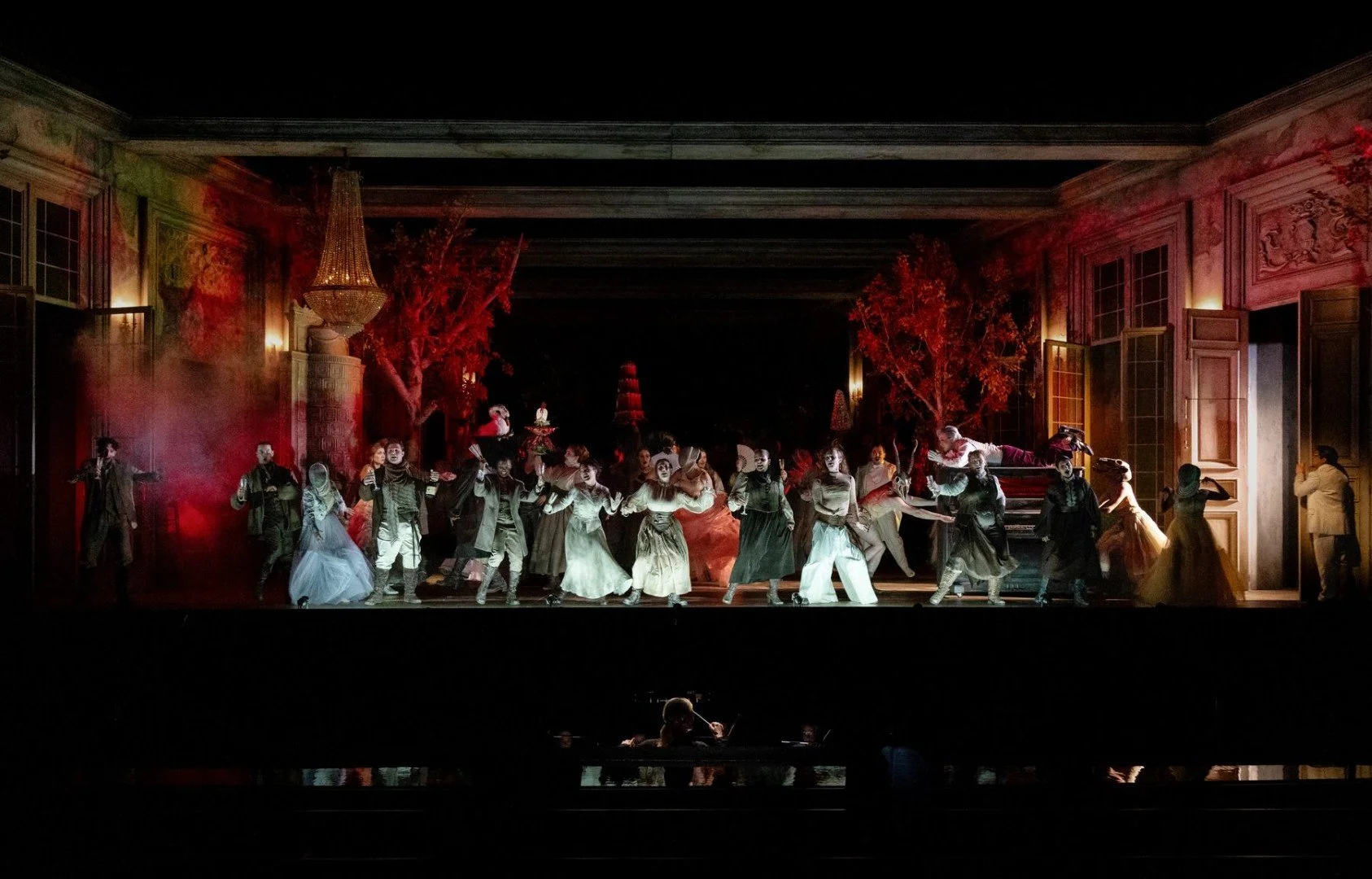
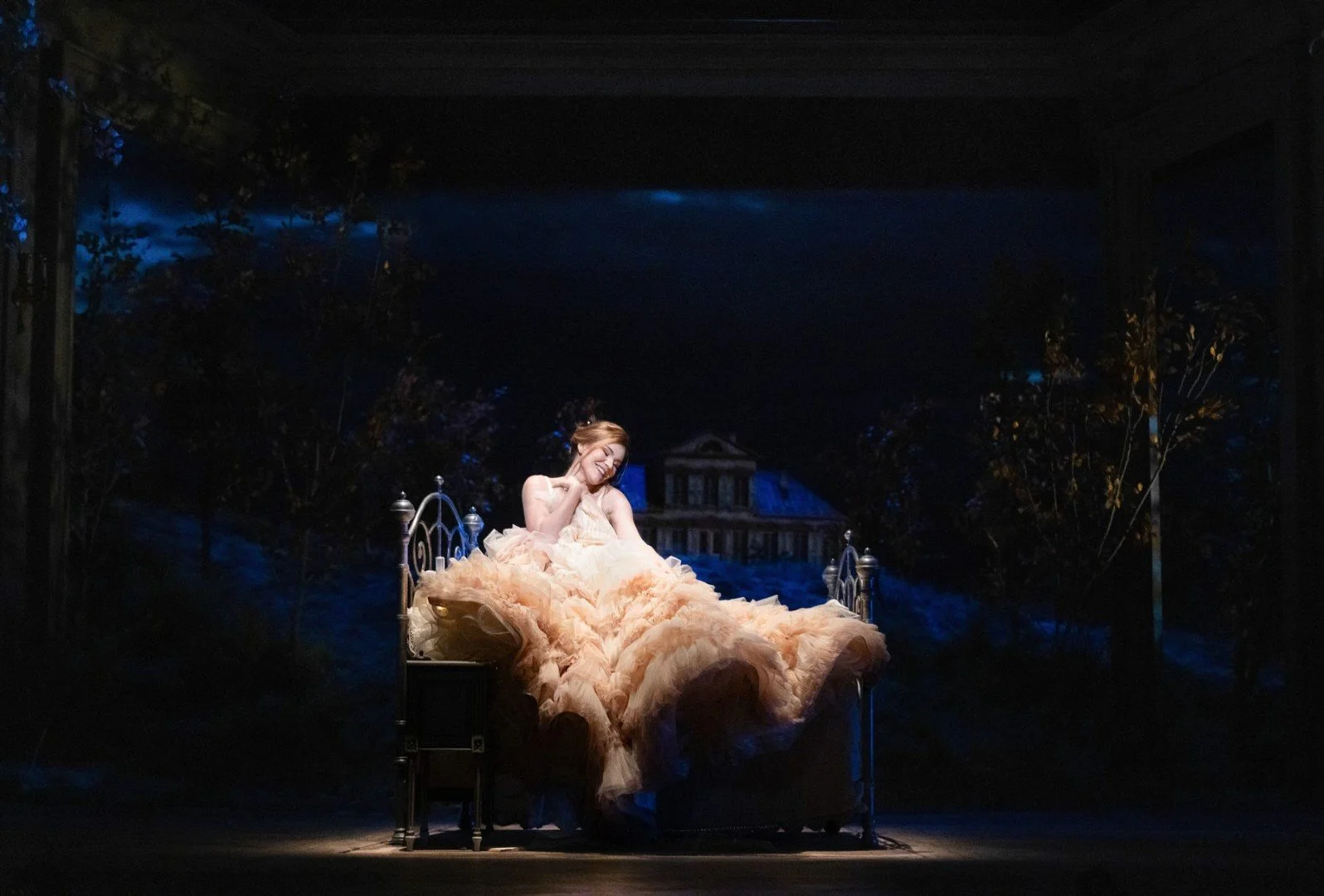
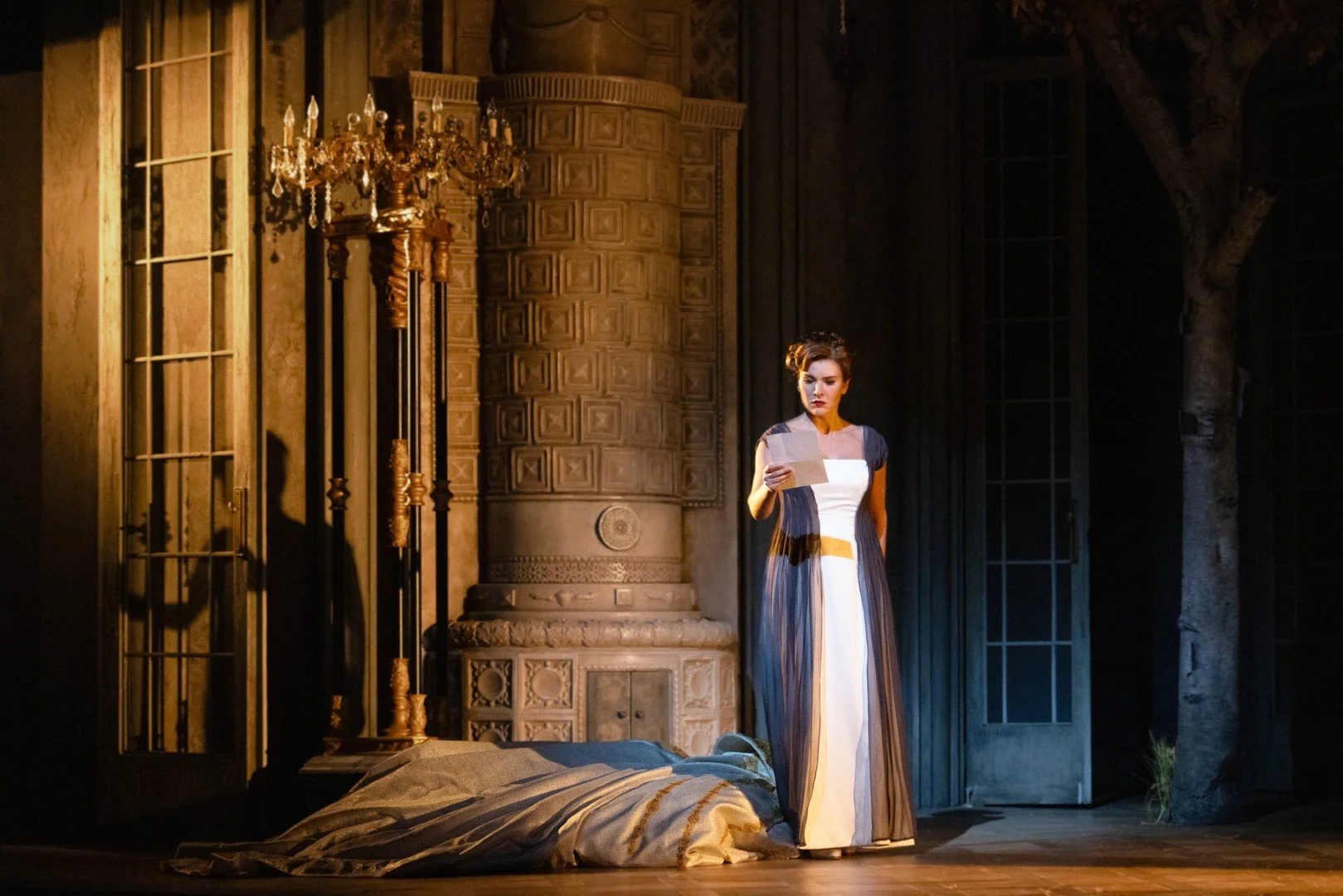
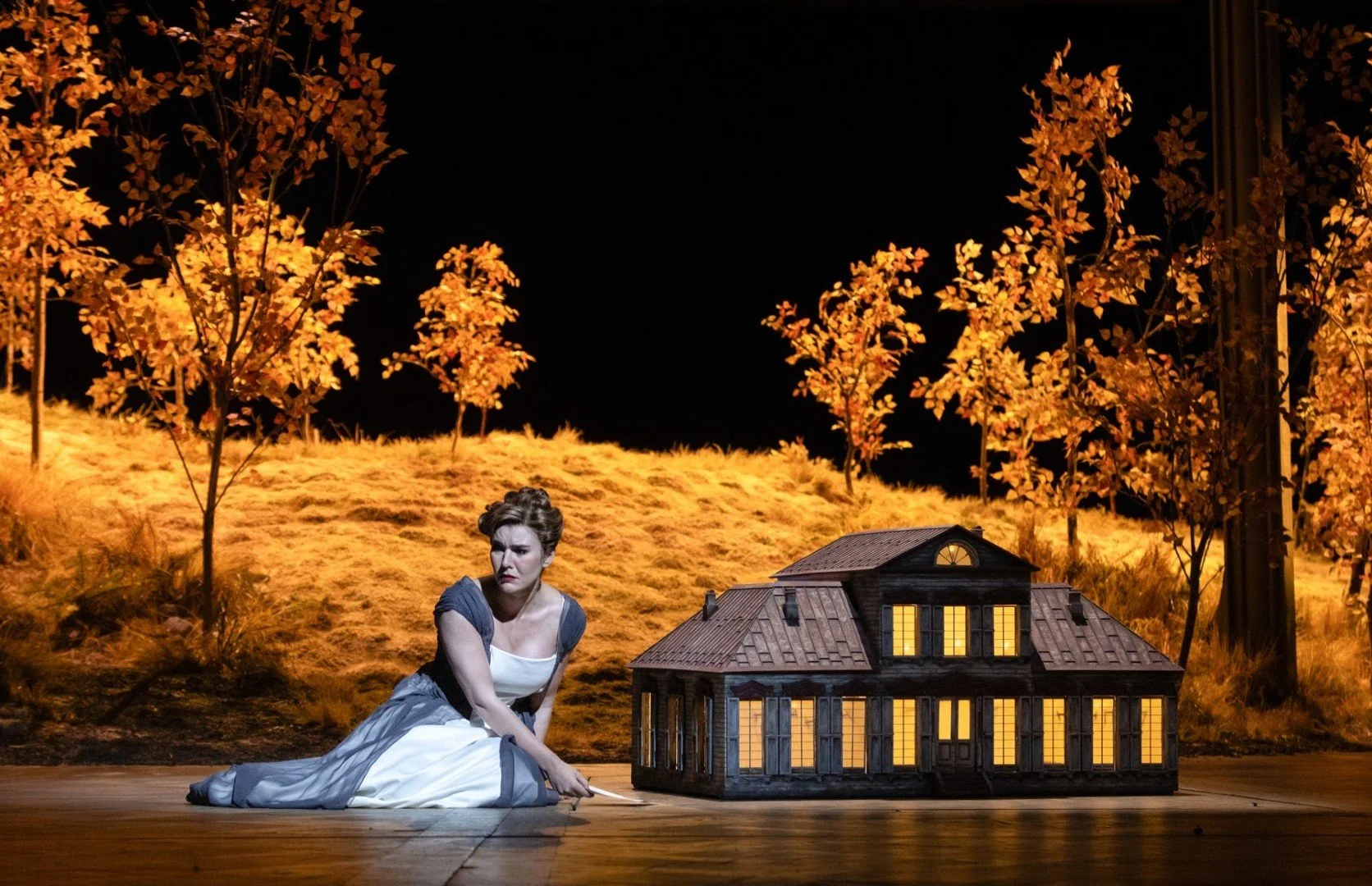
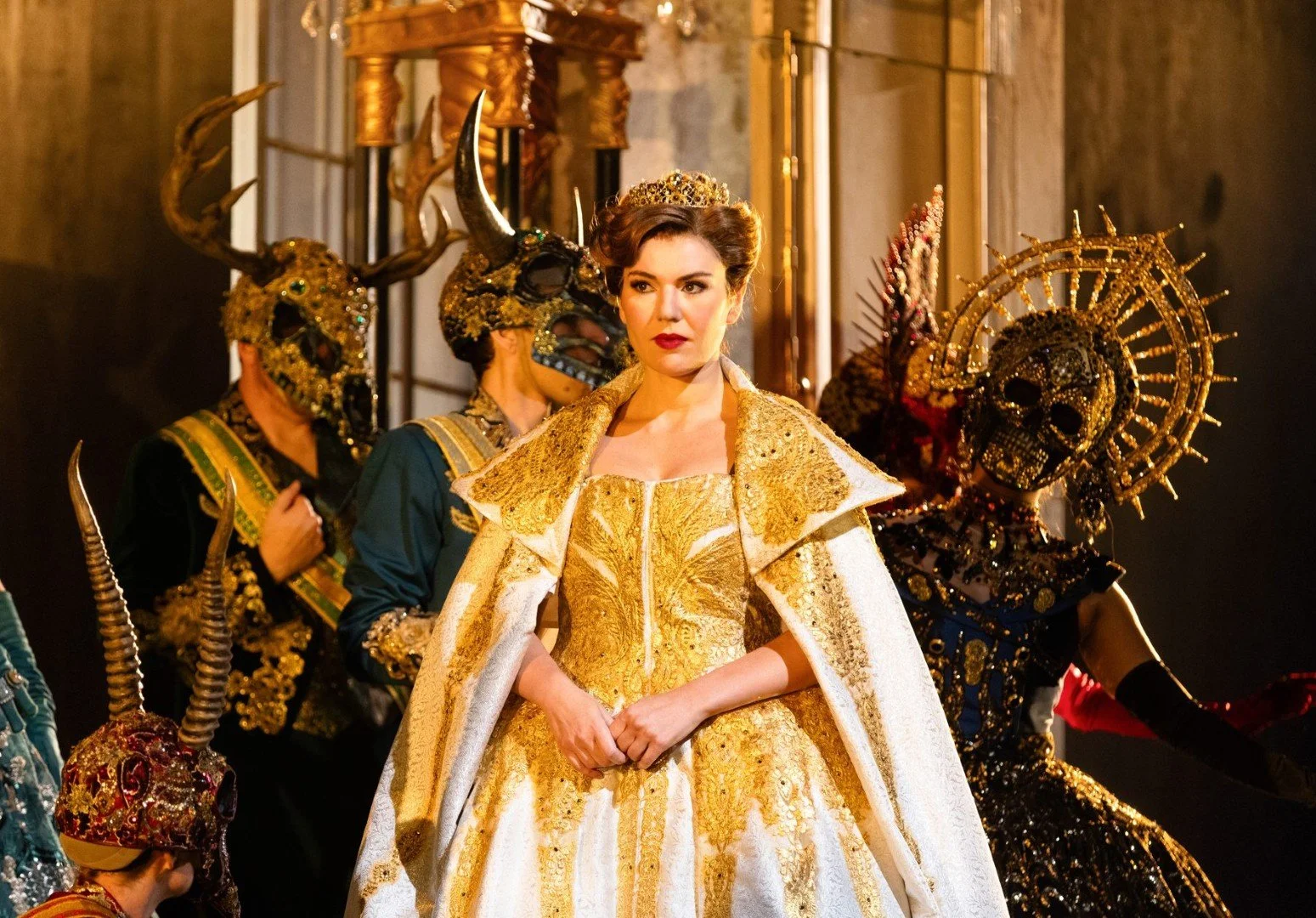
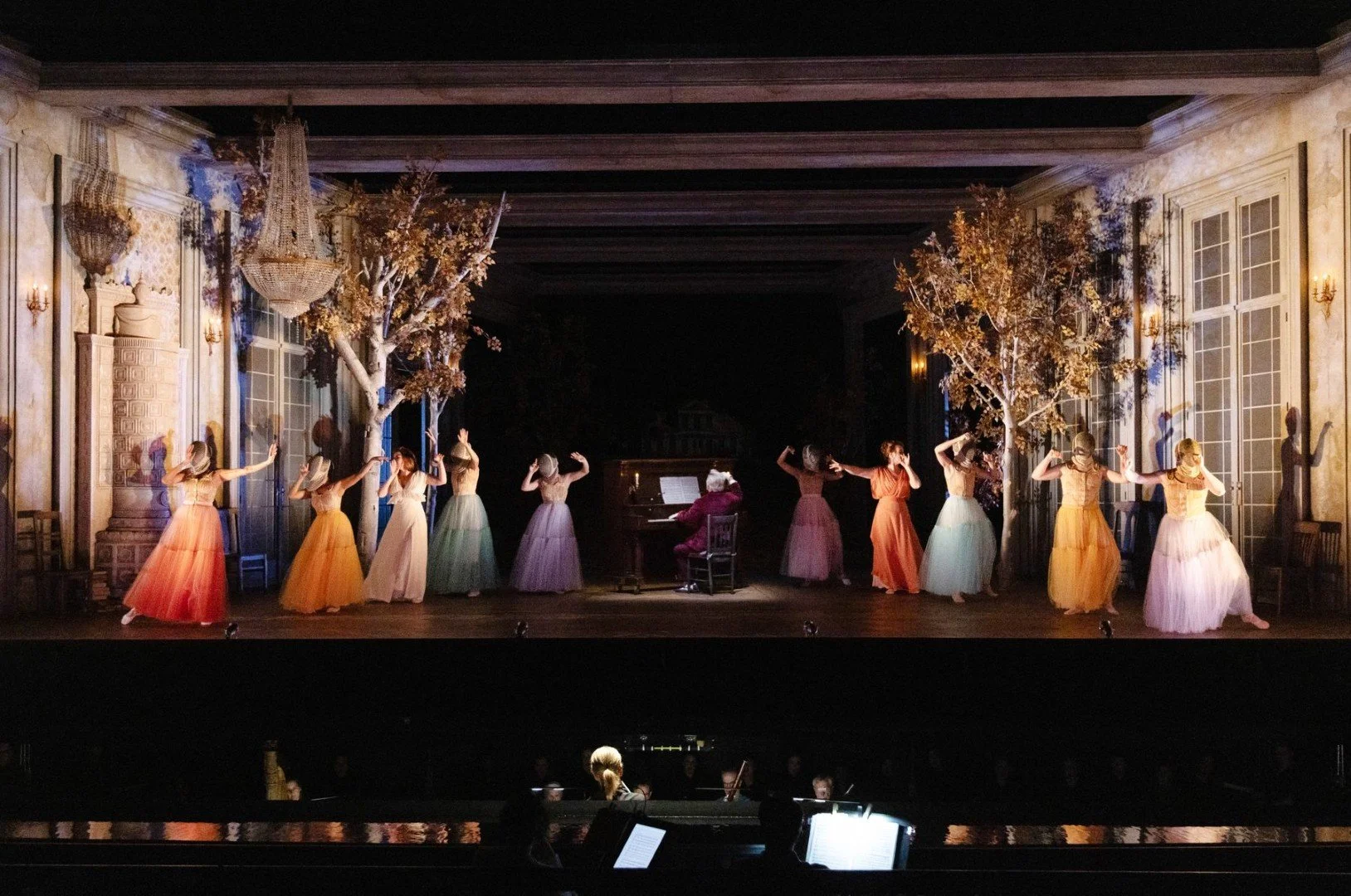
The production was a mixed bag for me. The stage sets were stunning, including opening the back of the stage to reveal the Santa Fe sky at twilight. I noticed that the performances earlier in the season started at 8:30, while ours started at 8:00. I wonder if that is to take advantage of the quality of the light just after sundown. We were treated to some dry lightning in the third act to add to the drama. On the other hand, costuming was not as successful in my opinion. Olga and Tatyana wore the same outfits for the first, daytime, scene and then again for the evening’s formal gathering. Onegin and Lensky were dressed in more modern appearing suits, which didn’t work too well either. And the dancers were overly lavish in their strange gaudy costumes with animal head masks and later fencing masks. That was off-putting when listening to the lush music of the score.The beautiful waltz music, so associated with this opera, was danced in an odd contemporary style which didn’t seem at all appropriate. Another oddity involved almost every character falling to the ground at least once, sometimes more than once, creating a somewhat tiresome motif. Otherwise, the staging and lighting were varied and appropriate.
The people responsible for all this included the Director Alessandro Talevi, Scenic and Costume designer Gary McCann, Lighting Designer Rick Fisher, Chorus Director Susanne Sheston and Choreographer Athol Farmer. The orchestra was ably conducted by the enthusiastic and energetic Keri-Lynn Wilson (from Wisconsin), who was a delight to watch at the podium.
Overall, the music carried the day and it’s impossible not to leave the theater on an emotional high, having had a special experience of timeless storytelling through music. It’s a reminder of why opera is such a perfect combination of all aspects of theater.
Bravo to Santa Fe for continuing to provide outstanding musical events like this year after year.
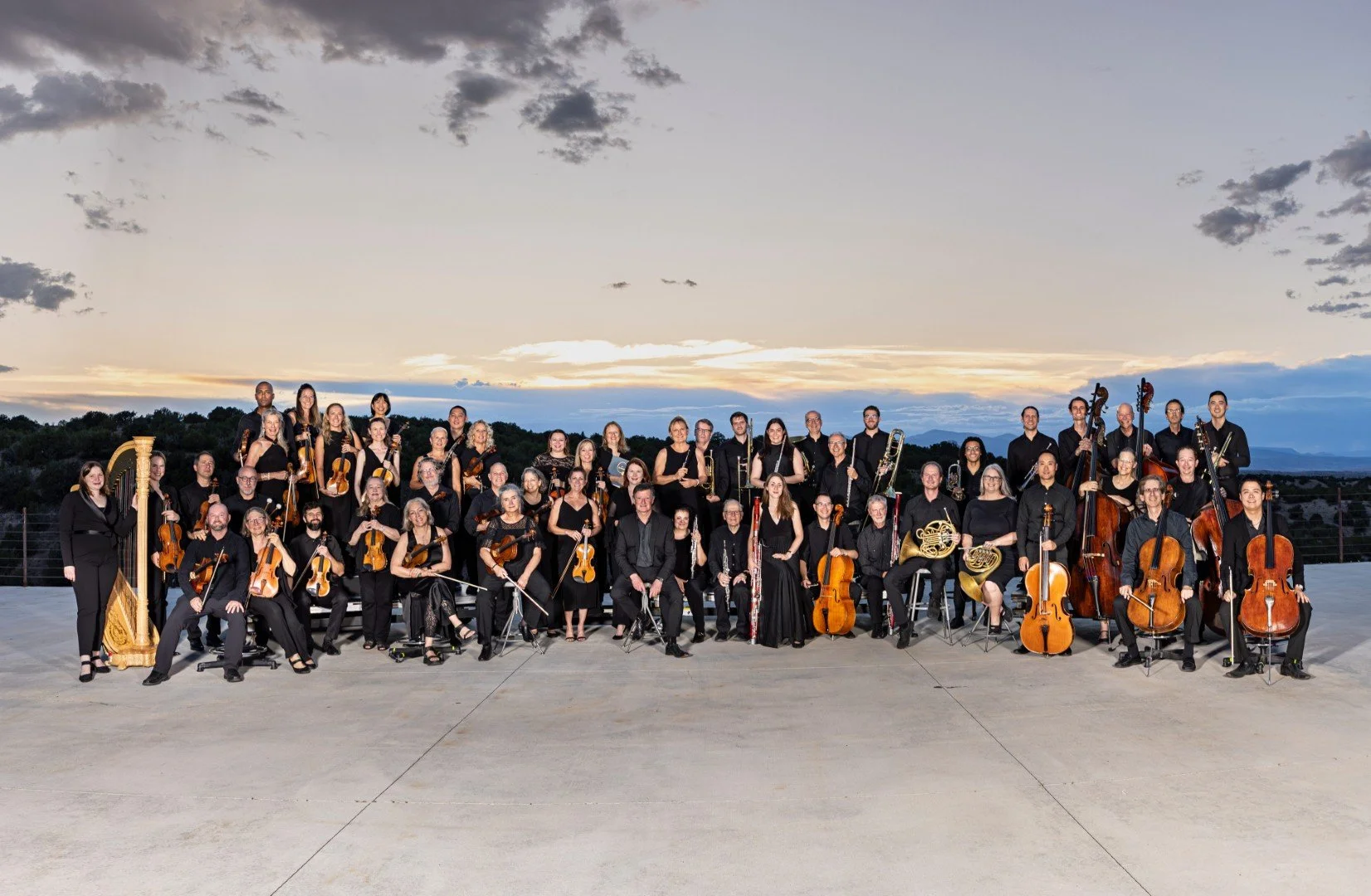
santa fe opera orchestra



Elsa Tranter is a Bostonian who has lived in Berkeley for over 50 years and has been an opera goer for most of those years. She worked as a graduate student adviser at UC Berkeley and still attends Cal Performances regularly. Her favorite composer is Wagner and her favorite opera is Les Troyens.