
LA Opera’s new ‘Carmen’ is an Artistic and Musical Triumph
/By Truman C. Wang
10/19/2026
Photo credit: Cory Weaver
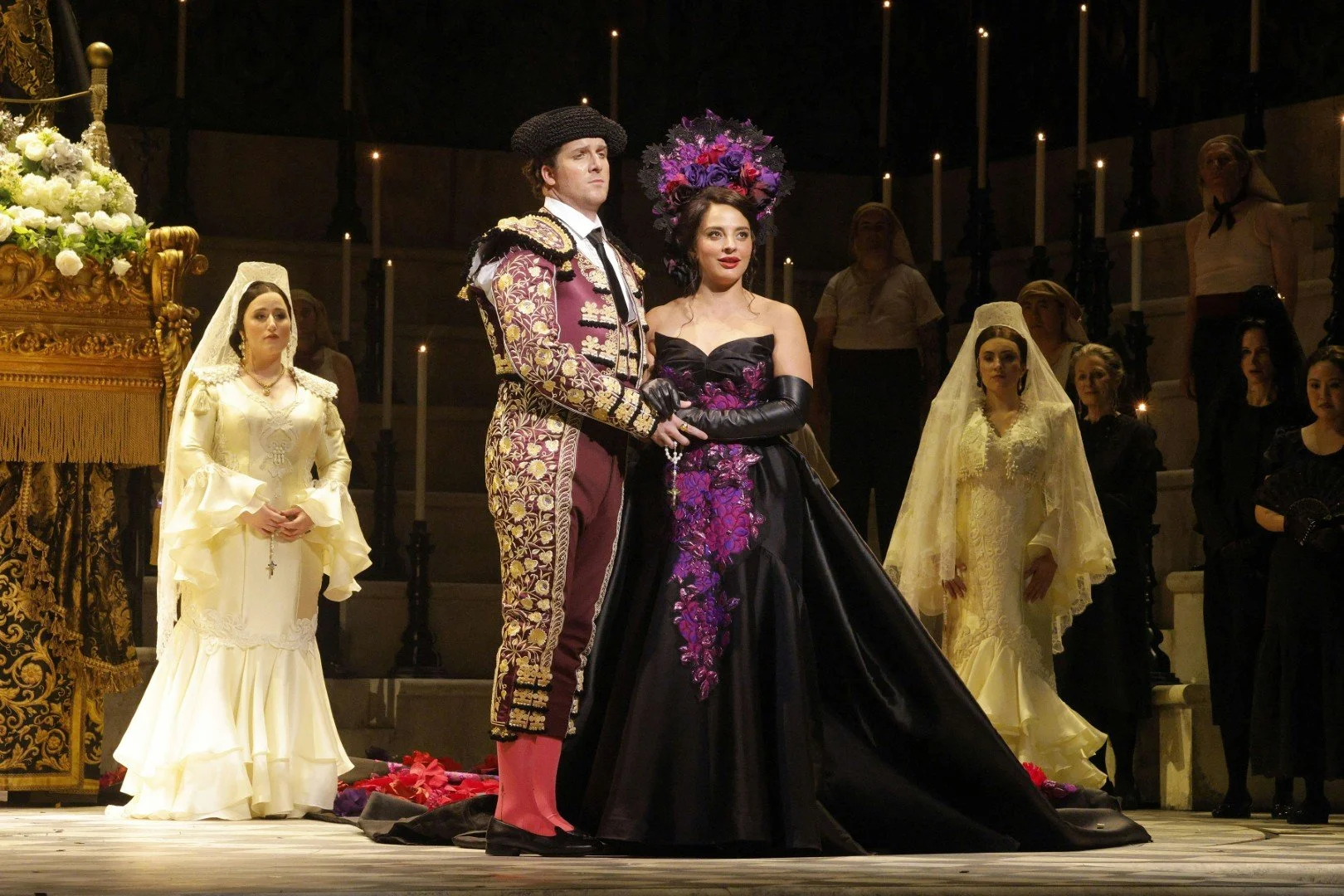
LA Opera’s new staging of Carmen, its first in nearly thirty years, with Rihab Chaieb as its heroine, designed and directed by Thaddeus Strassberger, and conducted by Domingo Hindoyan, is an artistic and musical triumph.
In his program note, Strassberger describes the new Carmen as “a procession of the sacred and the profane.” The stage picture is dominated by towering wrought iron Gothic gates that are not only an important architectural element in Seville, but are “bars of a psychological prison, evoking the crushing weight of a society bound by dogma, tradition.” The smugglers in Act 3 do not climb a rugged mountain pass, but enter into a gated cemetery and mausoleum. Above the gates are thousands of flickering candles, “symbols of both devotion and entrapment.” The visuals are inspired by Spanish photographer Cristina Garcia Rodero’s España Oculta (“Hidden Spain”). In essence, the production ‘concept’ explores the uneasy coexistence of the sacred of the profane in 1950’s Spain that was at a crossroads of tradition and modernity. It sounds depressing and foreboding on paper, but the actual stage pictures presented are anything but. It is so brilliantly costumed, beautifully lit and colorfully choreographed (toreador and flamenco dancers in almost every big number and even the small numbers) that there was never a dull moment in the whole three-hour show.

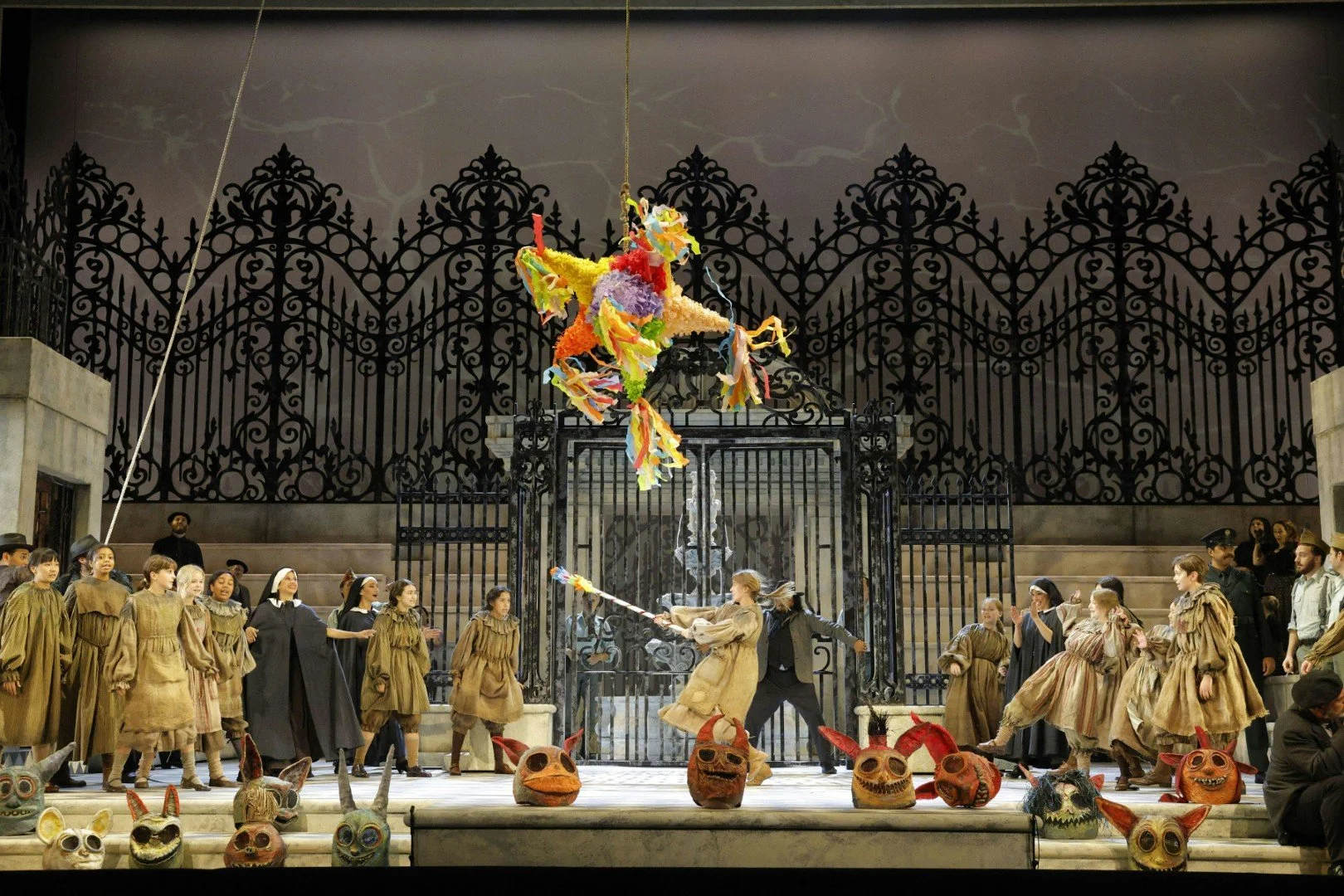

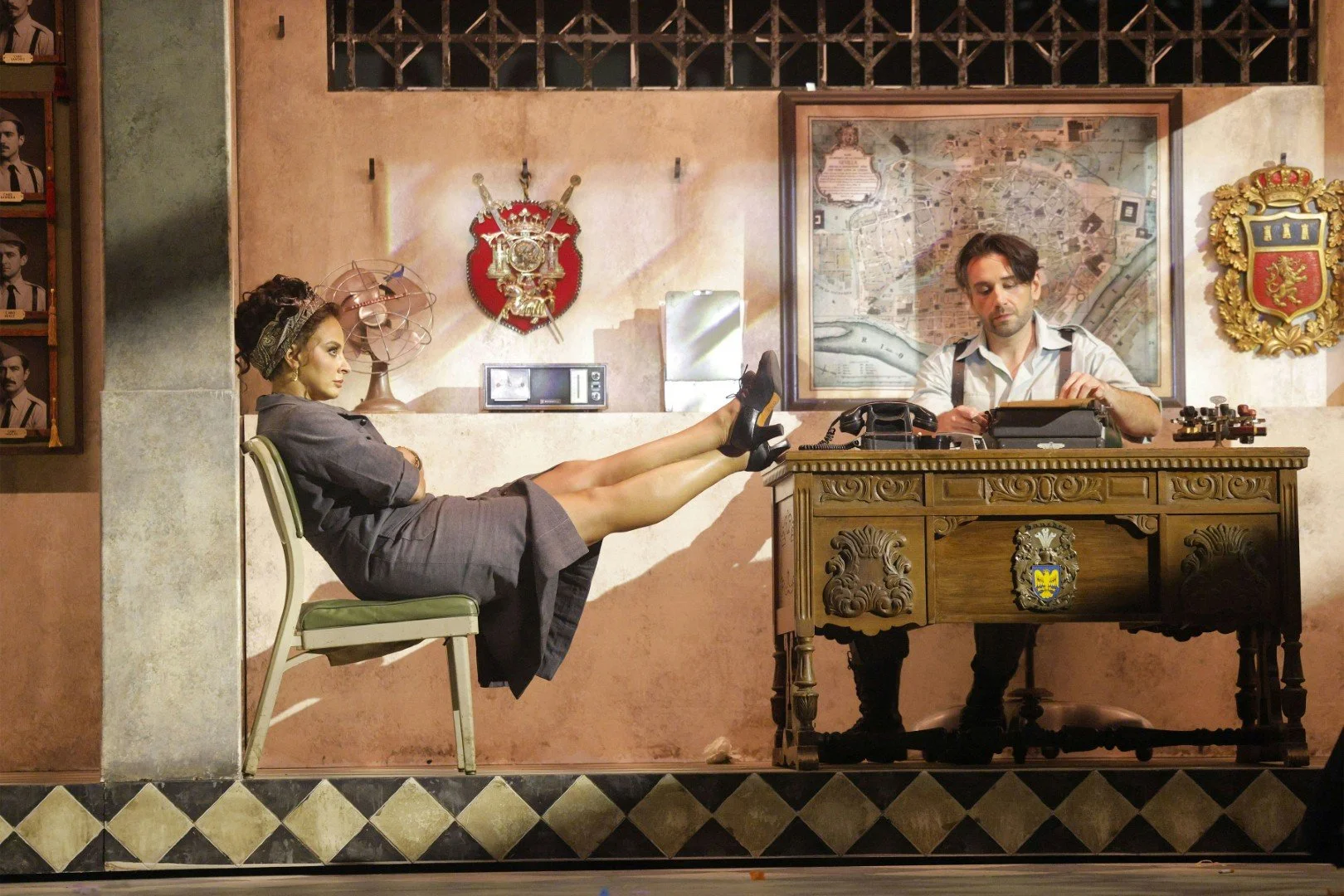


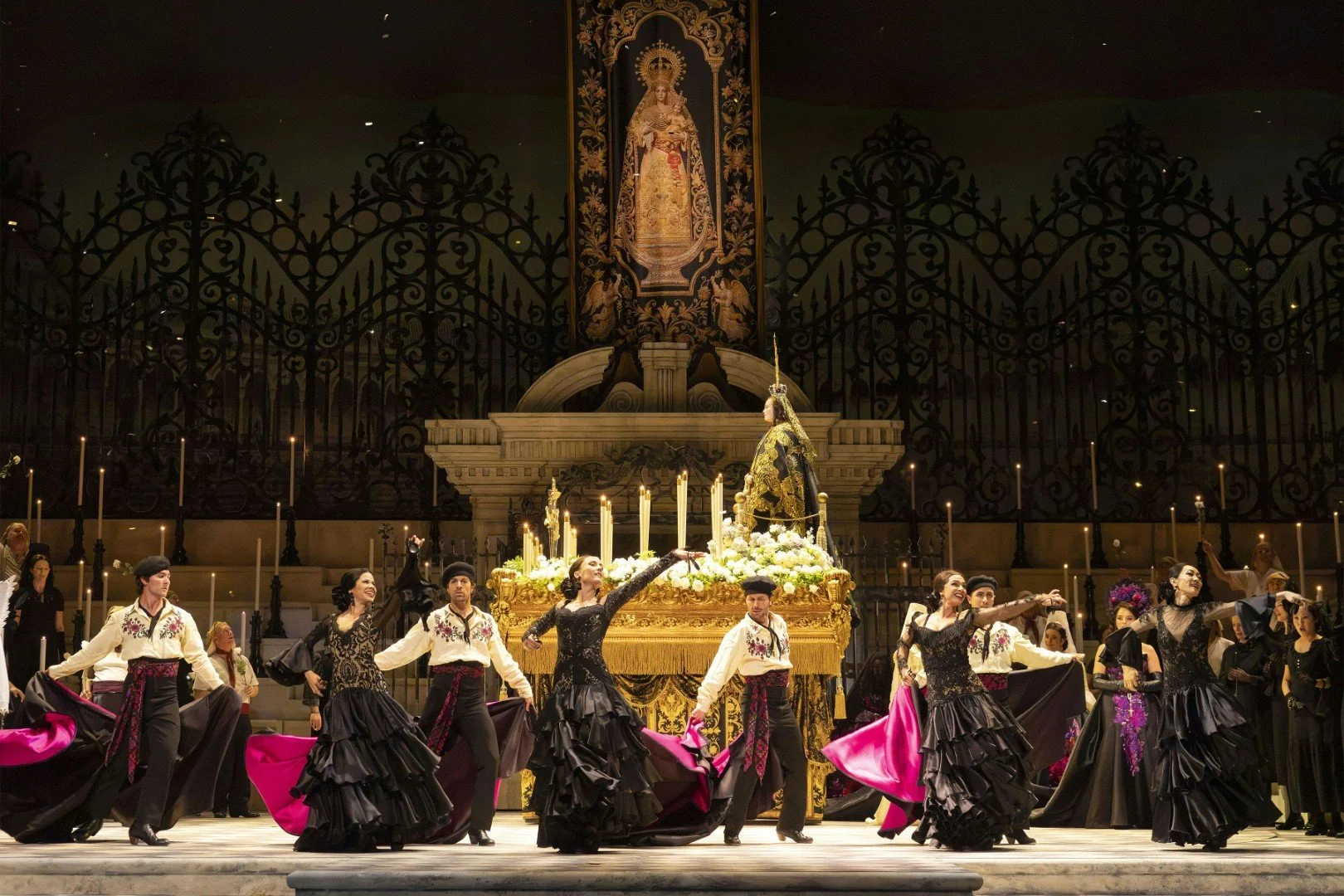
Texturally, this is not your grandparents’ Carmen – gone are the spoken words and dialogs of the Opéra-Comique version, as well as most of the sung recitatives of the standard Guiraud version. Instead, the director opts for loudspeaker playback of spoken words (José’s mother reading her letter, Carmen pleading with José to let her out of prison.) I counted only one spoken line by Carmen when she asks José in Act 2, “Where are my castanets?” But even without the spoken words, the show did not get any shorter. Various ‘directorial elements’ are interpolated into the Bizet score, to mostly good effects, including an epic ten-minute recreation of Seville’s La Semana Santa Holy week procession, awash in vivid colors and splendid pageantry. The religious procession is inserted, appositely and dramatically, in between the news of José’s dying mother and the Act 4 festivities.
LA Opera assembled a winning cast for this Carmen extravaganza. Joshua Guerrero sang Don José as a young romantic, a plausible magnet for Carmen’s charms, and a tormented neurotic in the end. His Flower Song was inexplicably sung in half-voice throughout, robbing it of much-need passion. Kathleen O’Mara’s Micaëla was lively and purely sung. Liam James Karai, the Escamillo, was virile, dashing and made an auspicious LA Opera debut. The smaller parts were all well played and sung, including bass Vinícius Costa as Zuniga, soprano Gabrielle Turgeon as Frasquita, mezzo-soprano Katie Trigg as Mercédès, tenor Samuel Wallace as Le Remendado, baritone Mario Manzo as Le Dancaïre, and baritone Ryan Wolfe as Moralès.


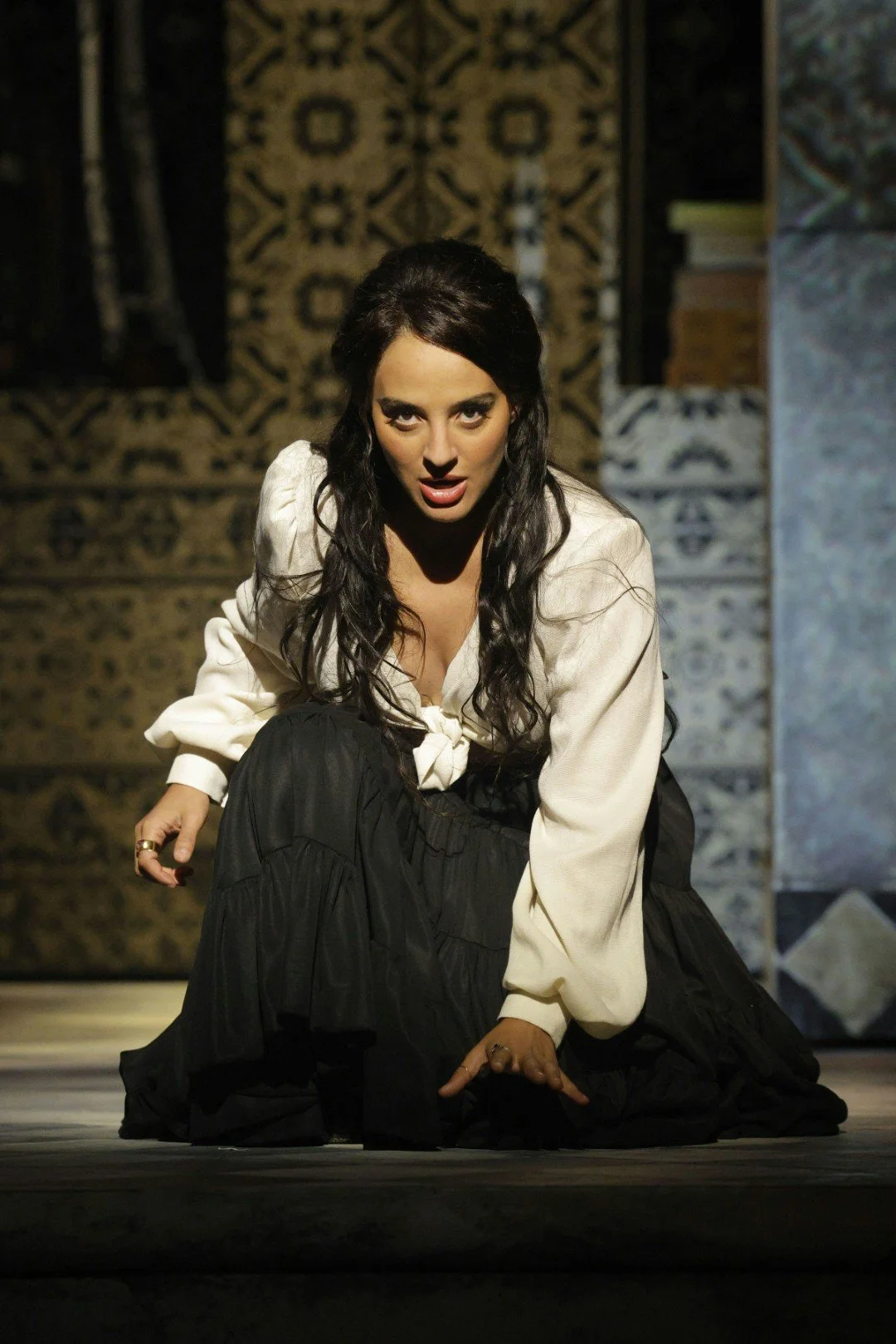
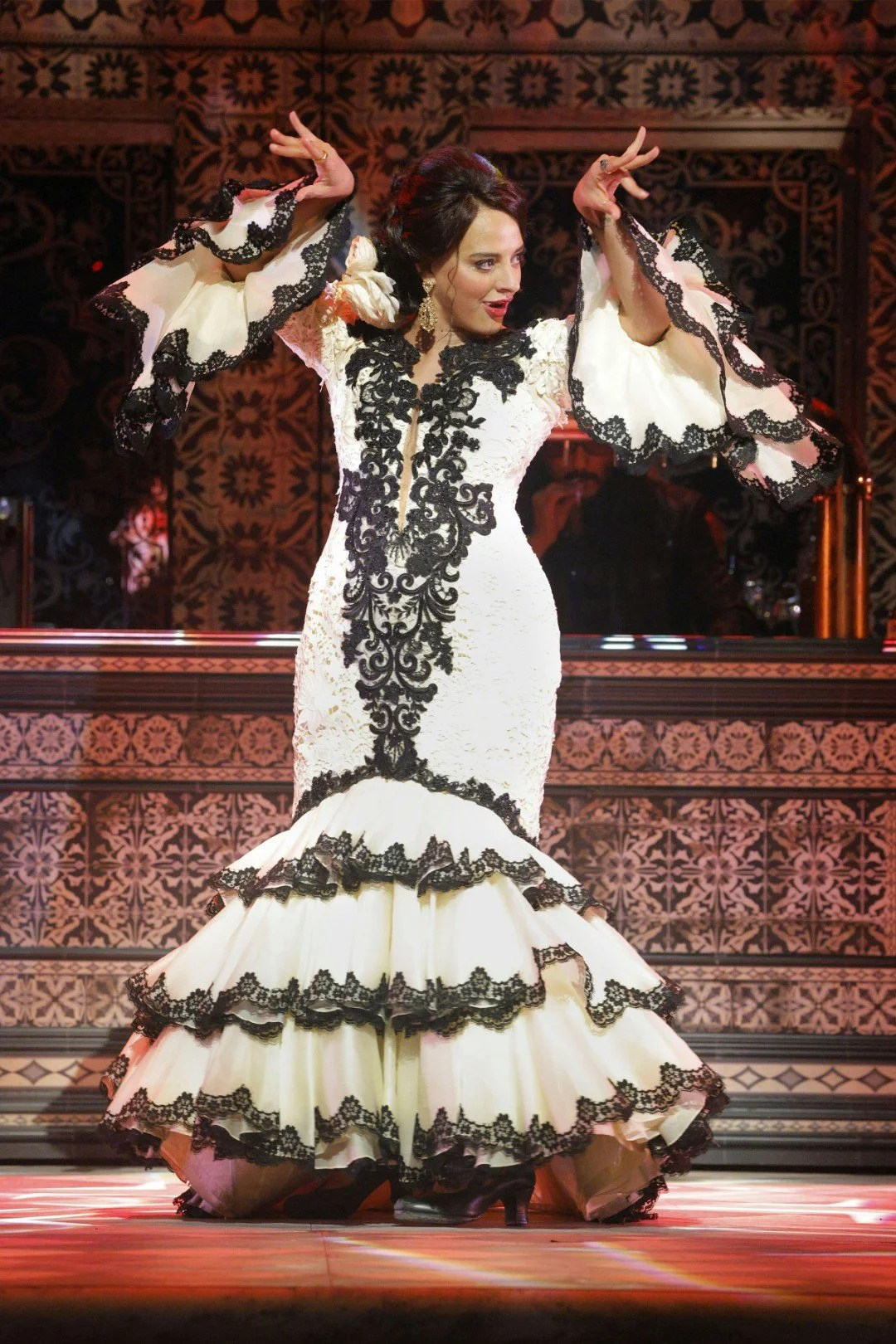

Rihab Chaieb, a Tunisian-Canadian mezzo-soprano who made her marks in L.A. as Cherubino and Dorabella, has sung Carmen widely in leading opera houses of Europe and America. Here, as L.A.’s Carmen, Miss Chaieb gave a performance untouched by any hint of routine, quick in reaction to each turn of the action around her. She also looks great – strong, beautiful, with lustrous Latin features. Her eyes, her mouth, her abundant black hair, her body are eloquent. She danced and moved magnificently, combining animal grace with intelligence and dignity. She sang French fluently, commanding the text, able to bend it to her bidding. Her voice was rich and colorful, the pitch never wavered, the grace notes, mordents, and small, flickering roulades of the role were all conveyed distinctly and seductively.
The new season also marks Domingo Hindoyan’s debut as LA Opera’s new Music Director and he was in top form. His affinity for French opera was evident in the Roméo et Juliette that I saw in 2024, as well as in this Carmen. The orchestral playing combined delicacy with brightness, and force with fineness. A good opera conductor must also be a good accompanist; he was sensitive to the heroine’s slightest breath and slightest inflection. The three entr’actes were exquisitely played. Bizet advised his pupil Edmond Galabert to make Mozart’s operas his constant inspiration — good advice that Mr. Hinodyan has clearly taken to heart.
Kudos also for the Opera Chorus and Children’s Chorus, who sang magnificently and acted credibly as street urchins, cigarette factory workers, smugglers and bullfight spectators. The show is so rich in spectacle and detail it rewards multiple viewings. I hope we won’t wait another thirty years before LA Opera revives Carmen.
Truman C. Wang is Editor-in-Chief of Classical Voice, whose articles have appeared in the Pasadena Star-News, San Gabriel Valley Tribune, other Southern California publications, as well as the Hawaiian Chinese Daily. He studied Integrative Biology and Music at U.C. Berkeley.