
Cav/Pag in San Jose, Old Favorites Still Bring That Thrill
/By Elsa Tranter
2/28/2026
Photo credit: David Allen | San Jose Opera
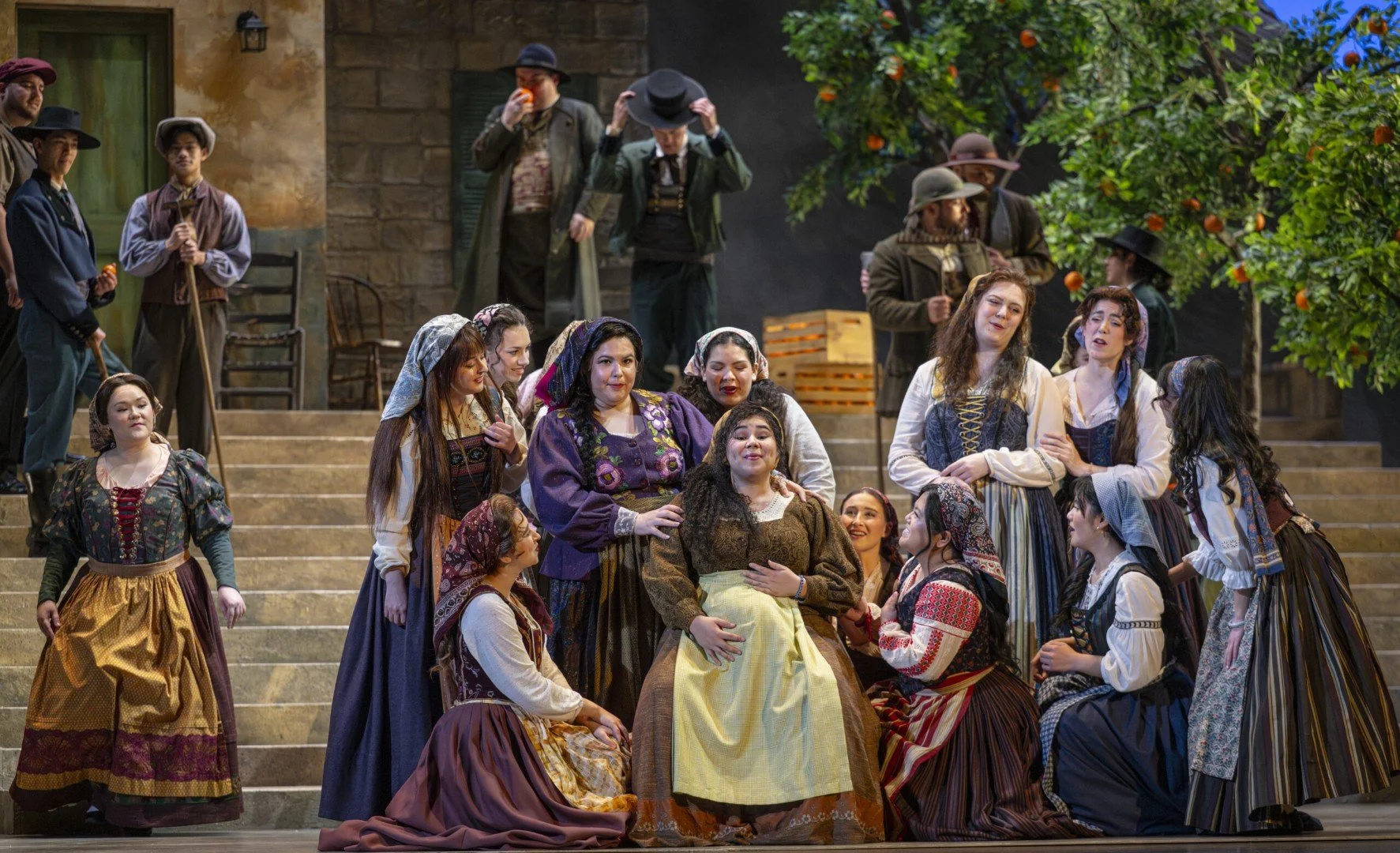
women villagers in cavalleria rusticana, san jose opera
On Sunday, February 22, I paid my first visit to Opera San Jose for a performance of the double bill Cavalleria Rusticana and Pagliacci. It was quite an adventure.
We were warmly greeted at the entrance to the elaborate and elegant California Theater by none other than General Director Shawna Lucey, who couldn’t have been more welcoming. The theater was built in 1927 and beautifully restored in 2001. Inside there were costumed clowns posing for pictures and a short nostalgic organ recital in the main lobby as theater-goers arrived. We were oohing and aahing over every decoration and each light fixture. It was such an unusual and heart-warming start to the afternoon and all this before a note of the opera!!
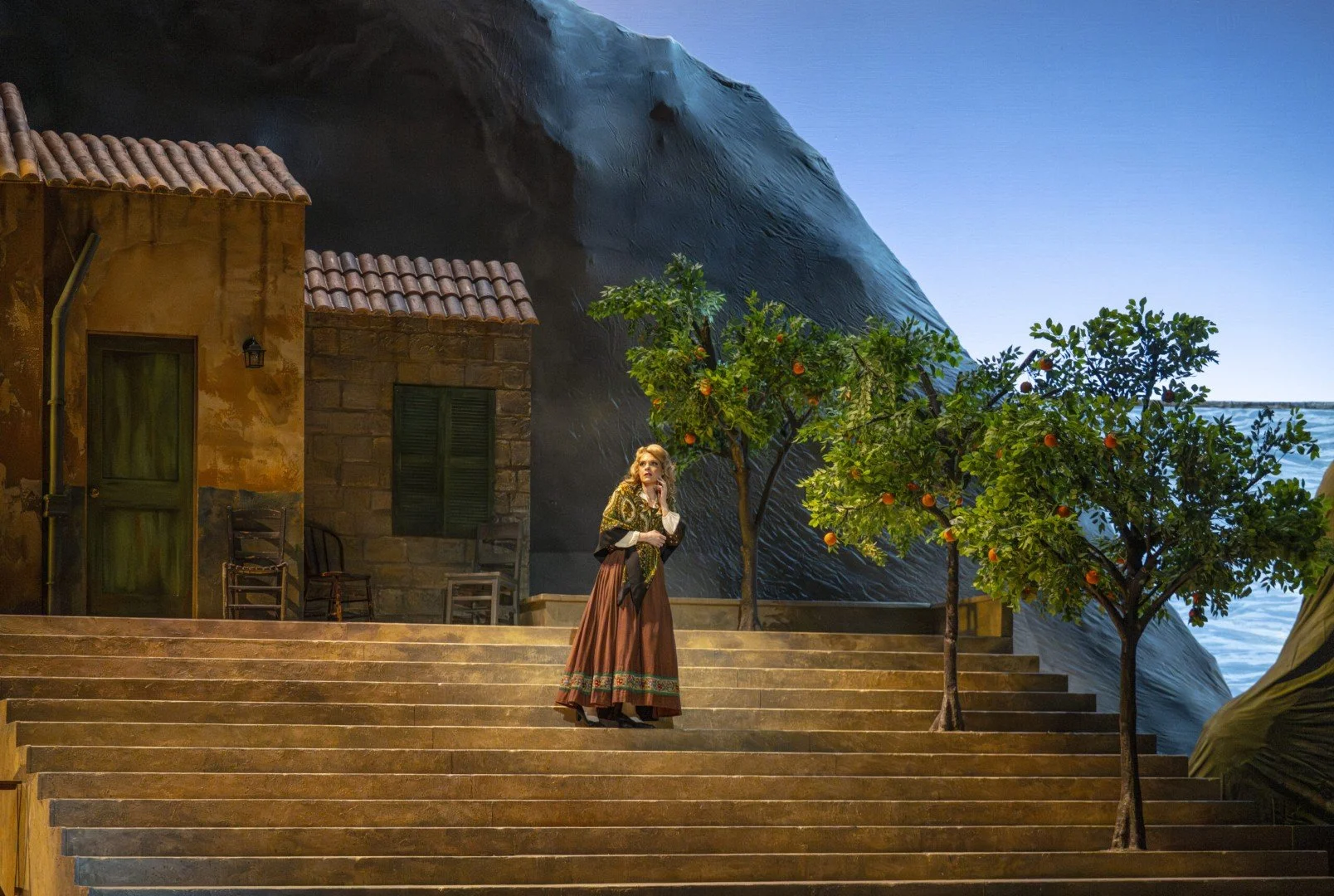
Santuzza (Maria Natale) in cavalleria rusticana, san jose opera
Cav/Pag are quintessential examples of Italian verismo, so popular at the end of the 19th century. They were written within two years of each other: Cavalleria Rusticana in 1890 by Pietro Mascagni and Pagliacci in 1892 by Ruggero Leoncavallo. Interestingly, each of these operas is the only one by its composer to remain in the repertoire. Each has a stereotypical set of characters playing their parts in everyday life with themes of love, jealousy, betrayal and death. This production accentuated that by setting them in the same Sicilian village, Cavalleria first just before World War I, and Pagliacci just after the war. The single set was a pleasing almost realistic rendering of the village square. Adding to the continuity of place, some of the singers from the second opera were onstage as extras in the first. The director Shawna Lucey has given a feminist interpretation to them both, accentuating the power differential between men and women which was so typical in that time. I thought it worked very well and seemed very natural and obvious without screaming out at us.
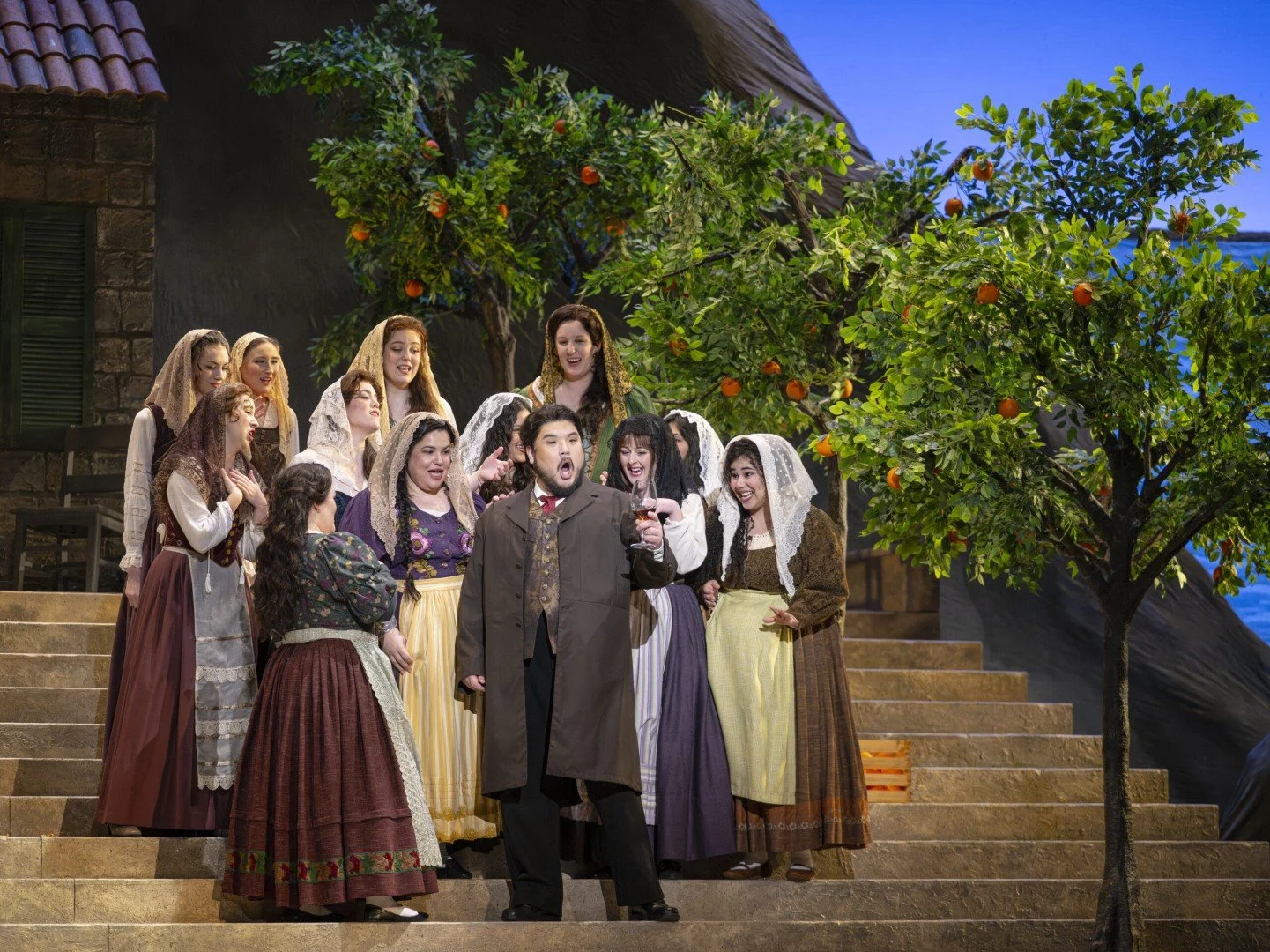
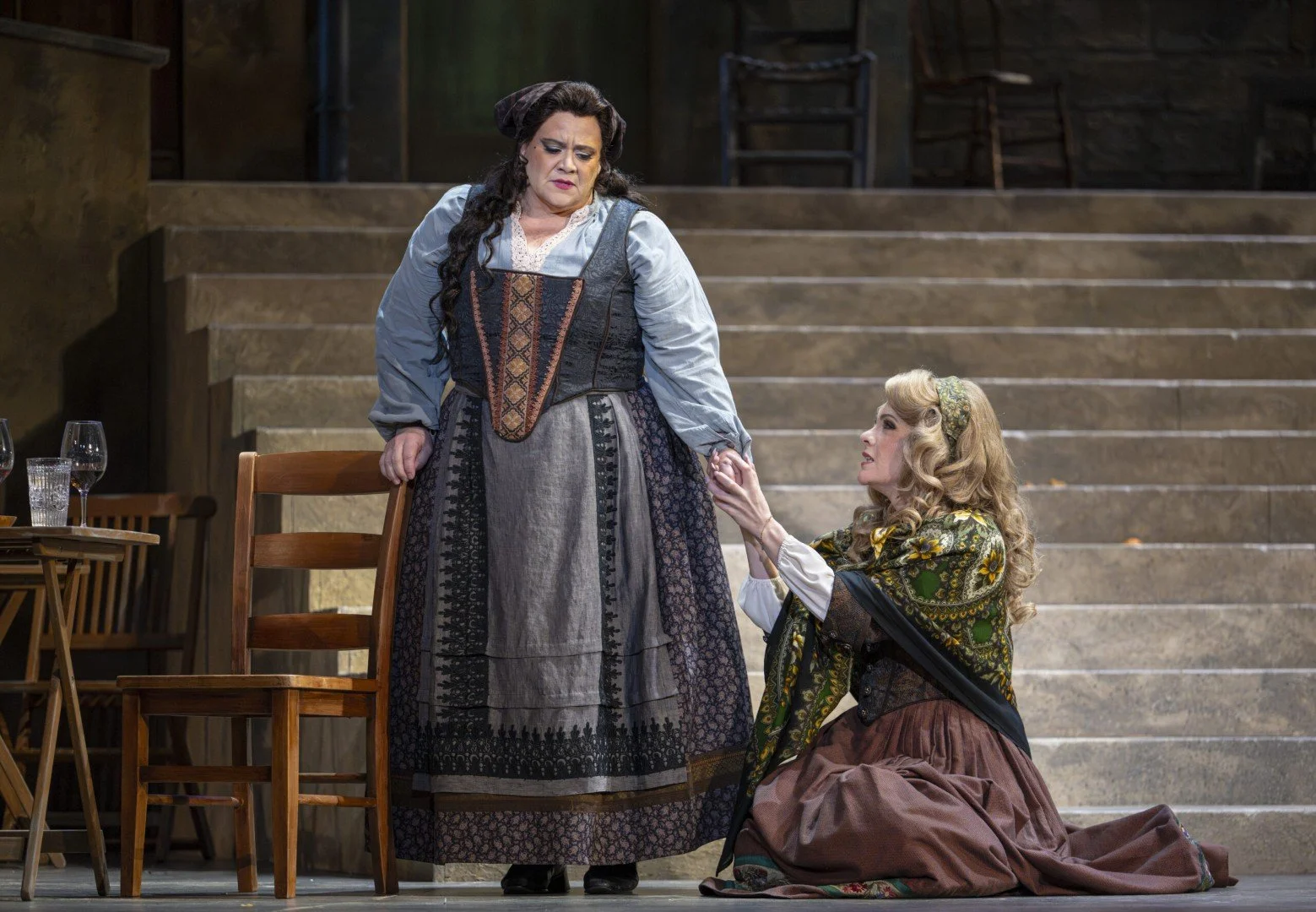
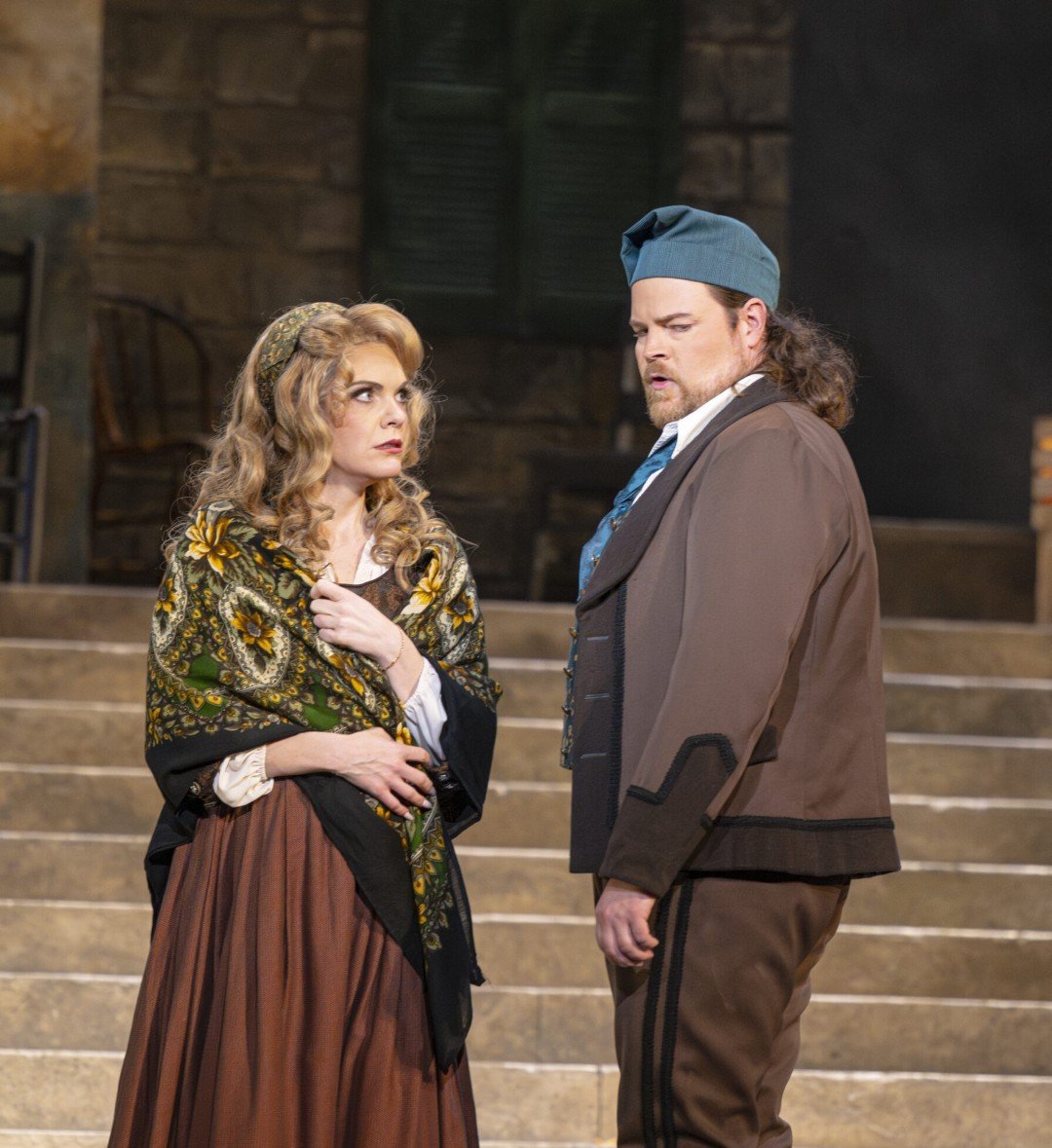
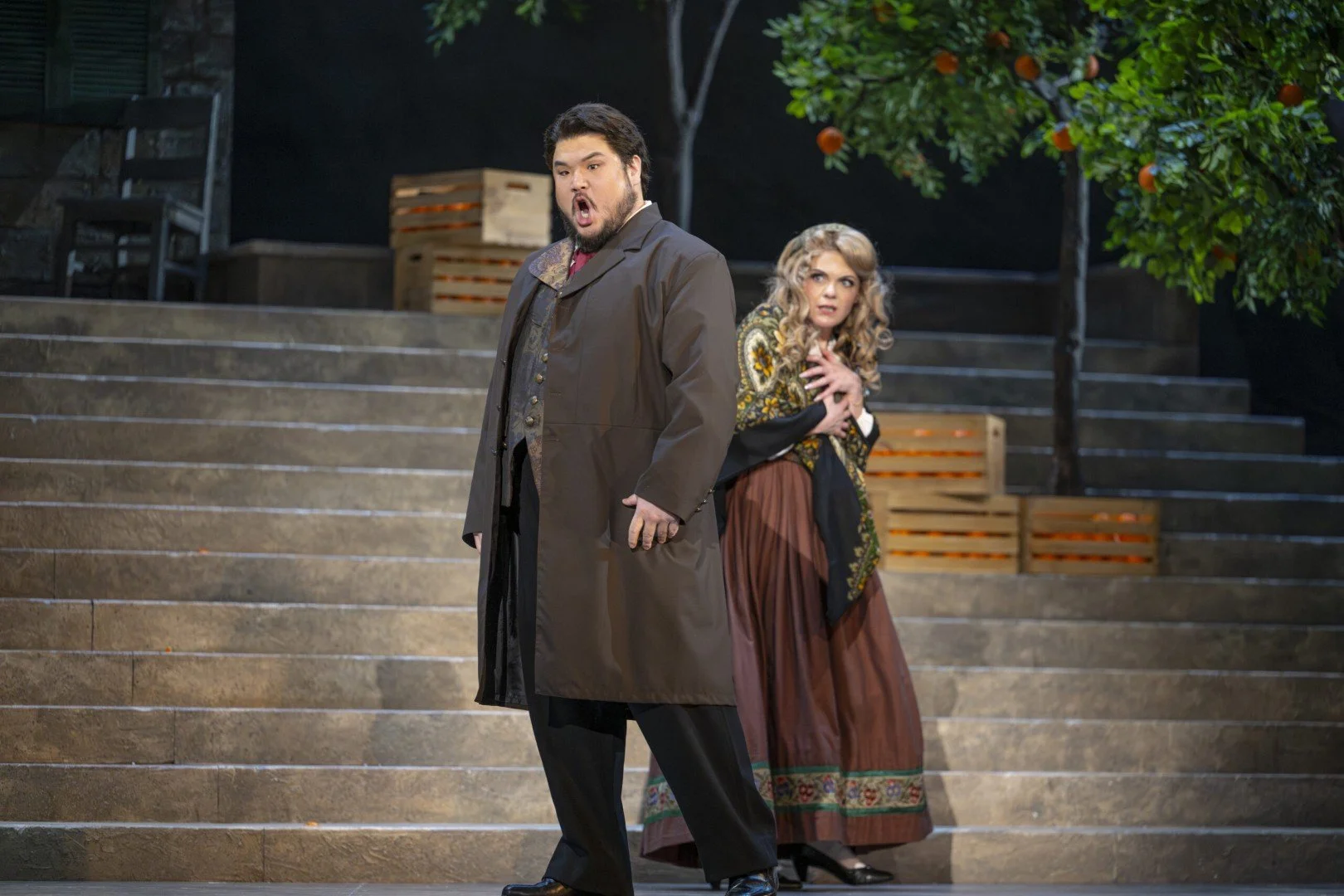
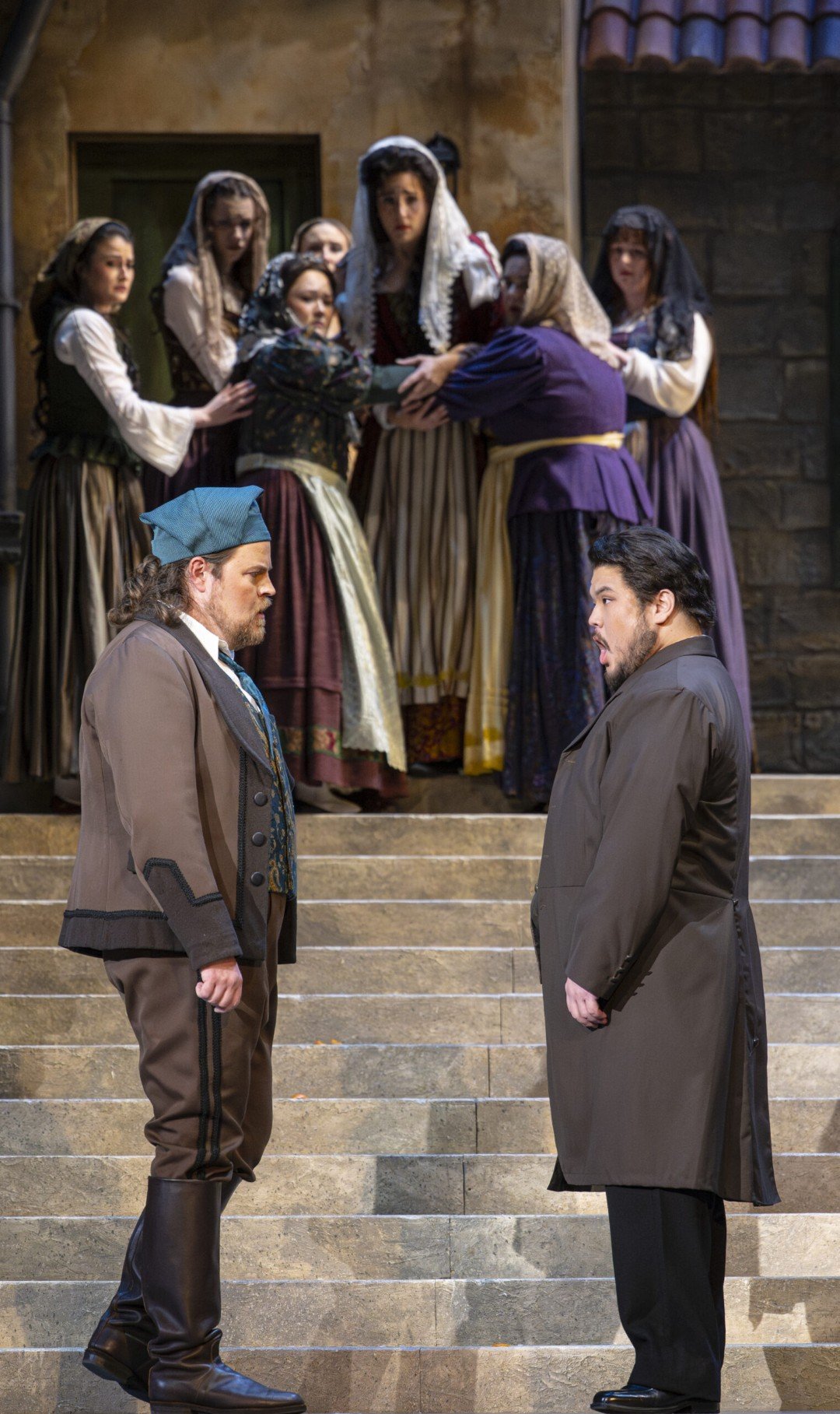
The stories are very familiar in these two operas, most often performed as a double bill (each is about one hour long). In the first, set on Easter Sunday in front of the church, Santuzza bemoans the fact that her lover Turiddu has left her (pregnant of course) to return to his previous love, Lola. Lola married another man while Turiddu was off in the army and he, to make her jealous, took up with Santuzza but couldn’t stay away from Lola. Of course it doesn’t end well, but there’s a lot of beautiful melodic and sentimental music along the way. Santuzza was sung powerfully by soprano Maria Natale; she gave a winning performance as the good girl done wrong. The blonde hair fit in well with the stereotype of the innocent one (I always think of Micaela in Carmen with her blonde braids) though her particular hair style was not especially flattering. Her sometime boyfriend Turiddu was sung by tenor Christopher Oglesby. His voice seemed underpowered to me and that cut into his strength as the lead singer, though his acting was genuine and appropriate. Lola, the other woman, was sung capably but not overly dramatically by mezzo-soprano Courtney Miller and her husband Alfio by baritone Kidon Choi. Longtime favorite mezzo Jill Grove played the part of Mama Lucia (mother of Turiddu) who runs the local tavern and takes Santuzza under her wing.
The orchestra was under the very capable baton of the rising superstar Alma Deutscher (who turned 21 just last week!) Looking back at the resume of her brief life, I was astonished at how much she has accomplished. How I wish I’d been to a performance of her own opera Cinderella at OSJ a few years ago. I was very pleased that the whole opera is available to watch for free on Youtube.
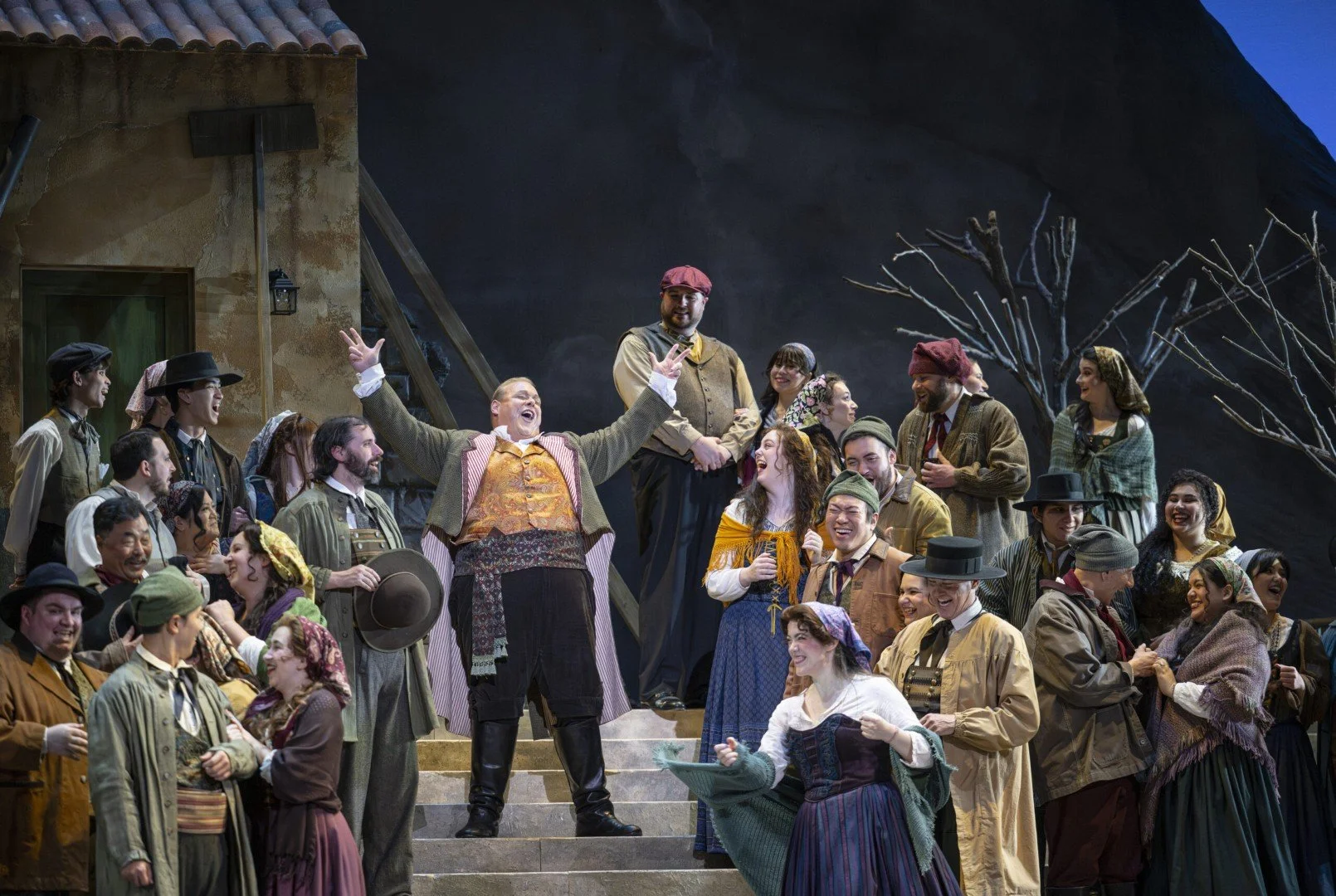
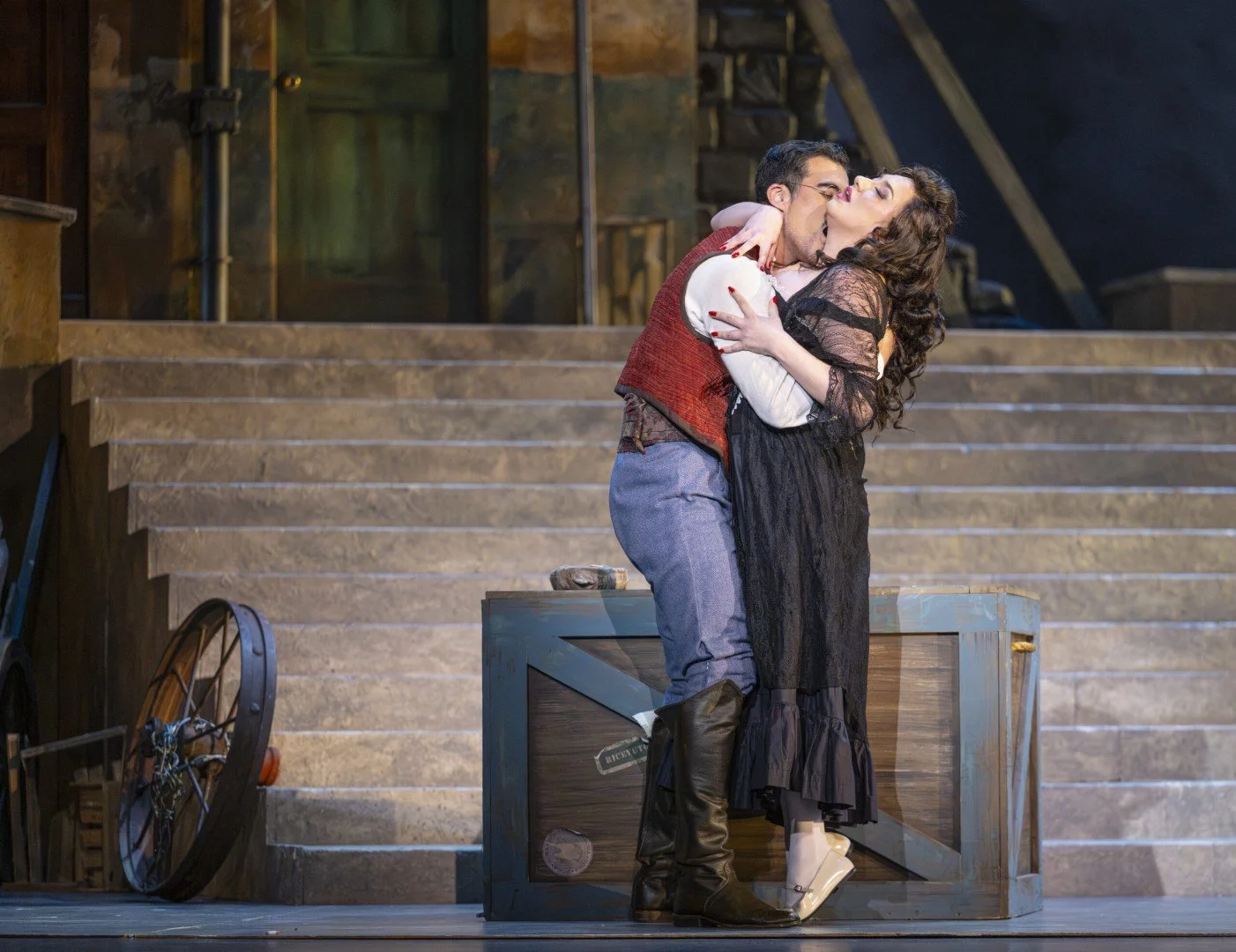
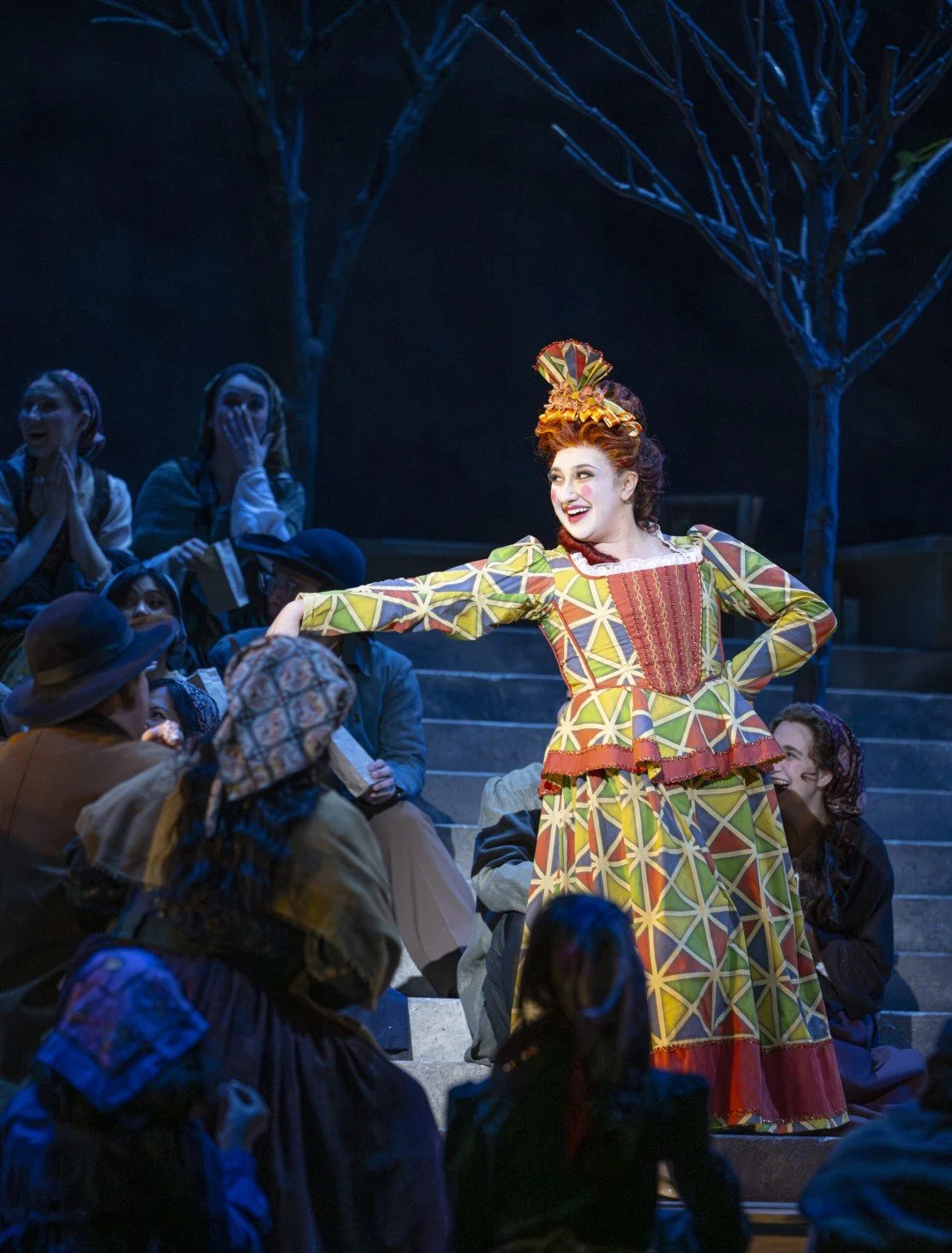
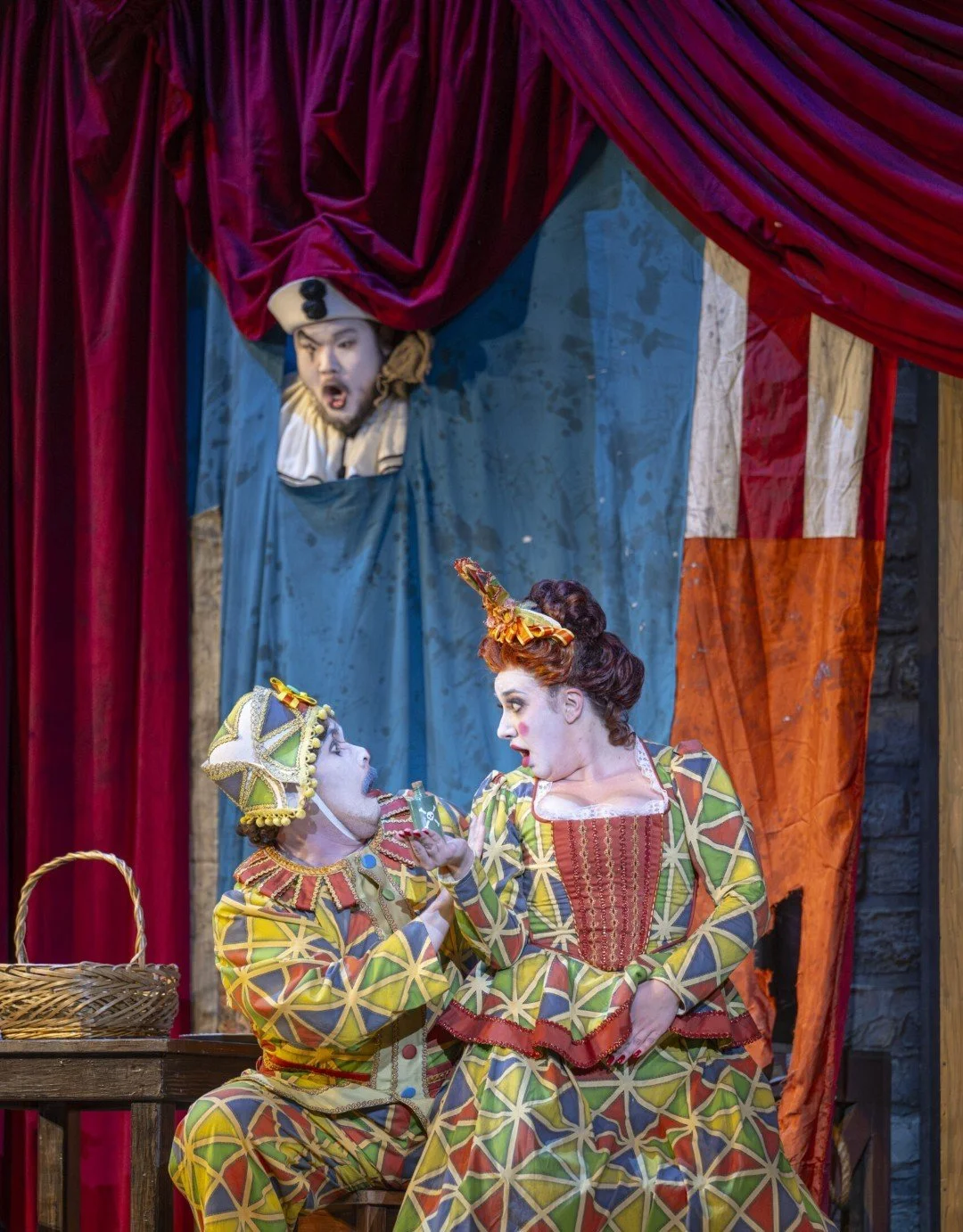
On to Pagliacci, the second of the two operas. Here is a story within a story as a commedia dell'arte troupe comes to town; again it’s love, jealousy, betrayal and death. Canio/Pagliacci was performed with great energy, appropriate pathos and excellent voice by tenor Ben Gulley. The dual role of his wife Nedda/Colombina was sung to great beauty, clear tones, and excellent acting by soprano Mikayla Sager. (A side note: I met Mikayla in January at the Ferry Building in San Francisco when she and her partner asked me to take their photo by the water. I was thrilled to learn she was an opera singer and thus my visit to OSJ this week. She more than lived up to my expectations and I’m happy to be a fan.) Kidon Choi appeared again in the role of Tonio, Nedda’s would-be seducer. He sang well and was credible in the role. He was joined by his sidekick Beppe (sung by tenor Micah Perry and again well-acted.) Tenor Luis Alexandro Orozco had the good fortune (at least temporarily) to play the role of Silvio, Nedda’s lover and potential savior. She longed to escape her abusive husband and potentially abusive seducer for the gentle Silvio, but again it did not turn out well for either of them. The ensemble members were very well balanced and the staging/costumes/acting was all of a piece. The final line is sung by Tonio (but in other performances sung by Canio) – “La commedia è finita!” (The comedy is finished; the violence of the world remains.) This never fails to move the audience. It certainly affected me and that is what draws me to opera—the emotional catharsis that comes with beautifully sung tragic arias to end a musical performance.
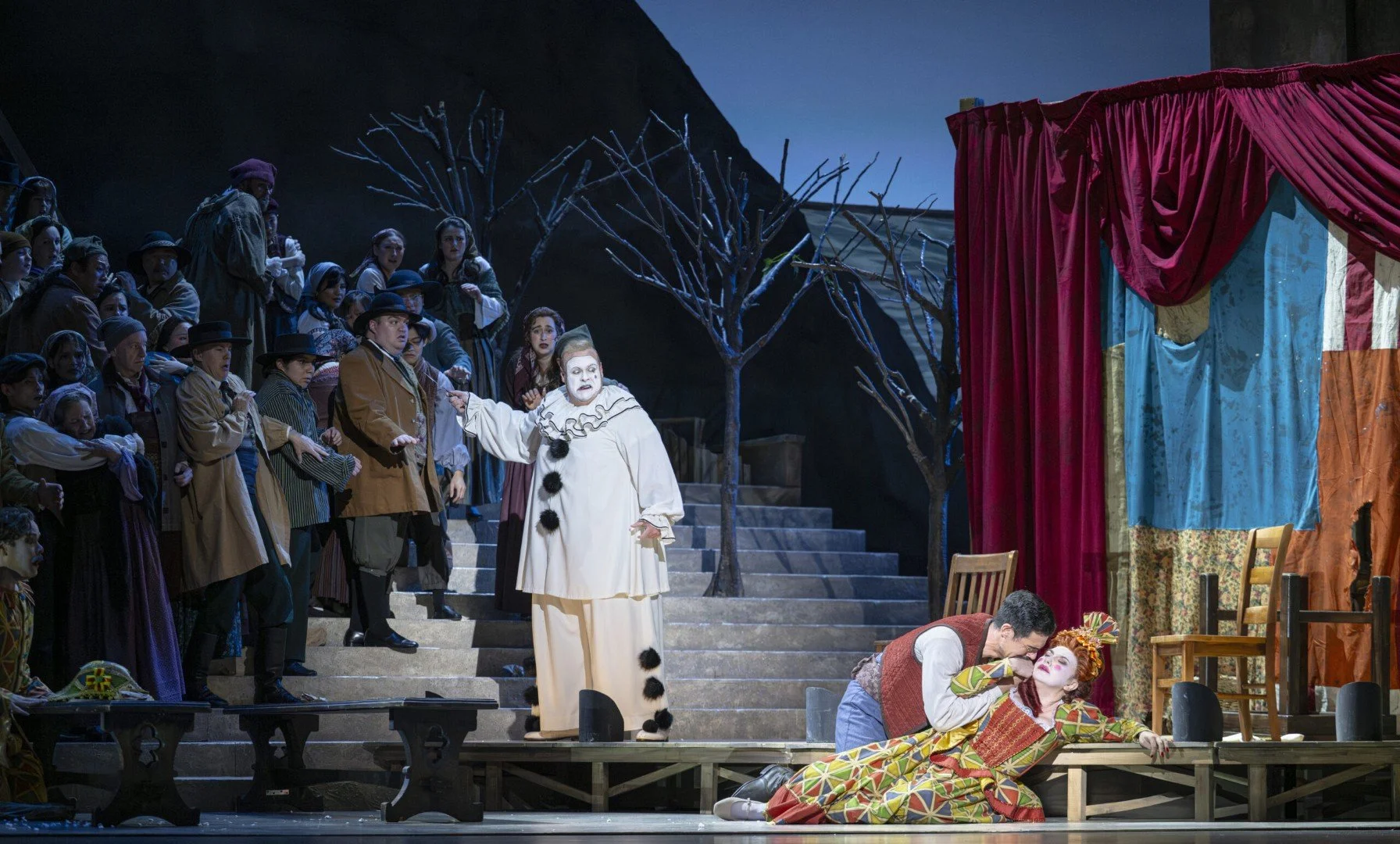
finale of pagliacci, san jose opera
A first for me was seeing supertitles in both English and Spanish. This was an excellent way to encourage opera-going by the large Spanish speaking population of the South Bay.
One performance remains: Sunday March 1 at 2:00pm. Go if you can—it’s an unforgettable opera experience.
Elsa Tranter is a Bostonian who has lived in Berkeley for over 50 years and has been an opera goer for most of those years. She worked as a graduate student adviser at UC Berkeley and still attends Cal Performances regularly. Her favorite composer is Wagner and her favorite opera is Les Troyens.