
Master Chorale’s Sunday Double-Bill Is a Musical and Spiritual Revelation
/By Truman C. Wang
4/22/2026
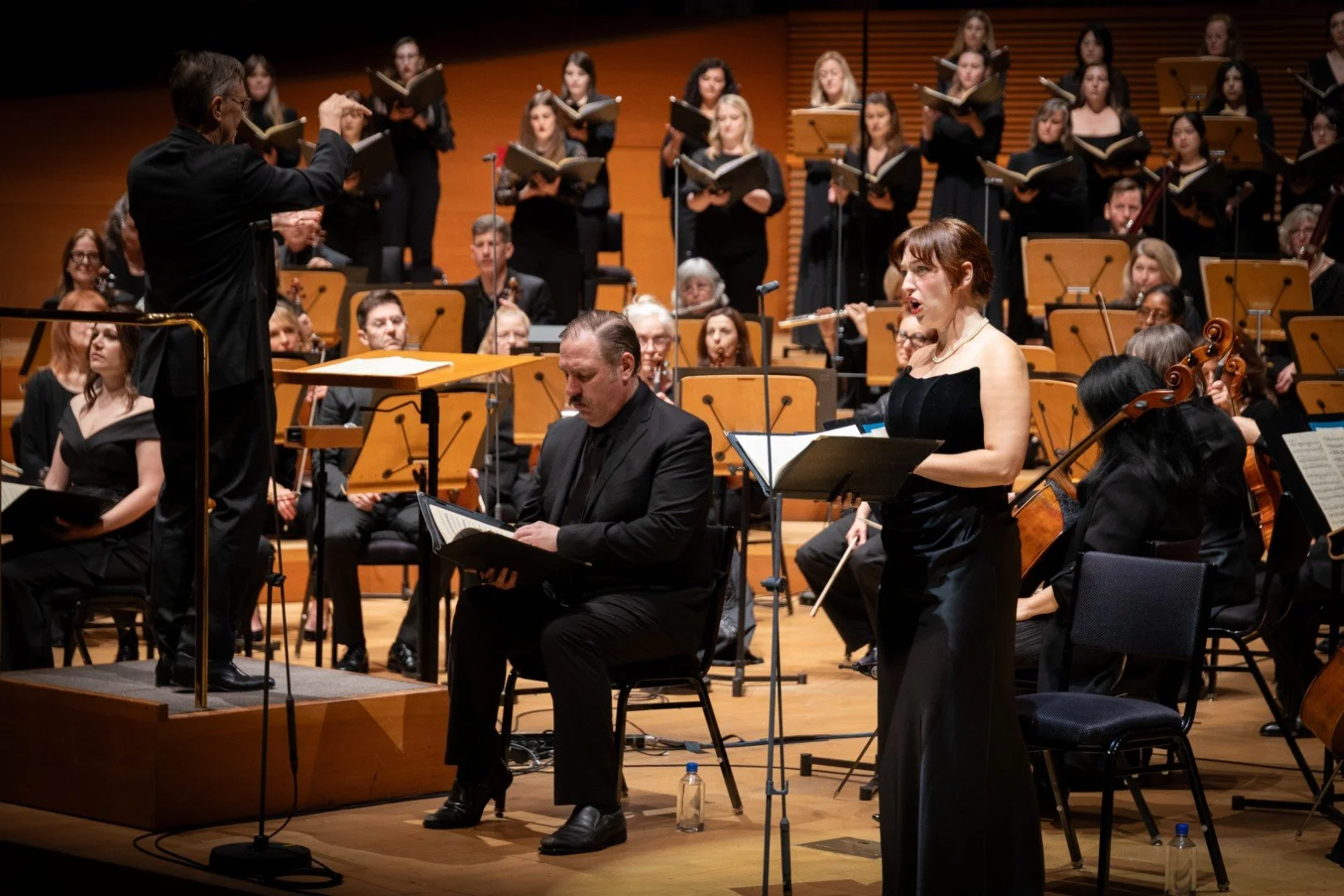
Photo credit: Gabe Zuniga, Los Angeles Master Chorale
Mozart’s Requiem received top billing in the Los Angeles Master Chorale’s Sunday program (April 19) at the Disney Hall. But I was more eager and excited to hear its double-bill companion, Fanny Mendelssohn's Oratorio on Scenes from the Bible, composed in 1831 (when she was just 26) during Berlin's catastrophic cholera epidemic, a work that has languished nearly two centuries in unjust obscurity. At nearly thirty minutes, it was also one of the more substantial pieces by a female composer I have heard recently, alongside Amy Beach’s forty-minute symphony at the Philadelphia Orchestra last month.
It’s been years since I last attended a LAMC concert. I was happy to re-acquaint myself with this excellent choral ensemble in one of its subscription concerts, outside of its many operatic and symphonic engagements. Grant Gershon is LAMC’s artistic director of 25 years – a rarity among today’s global jetsetting maestros – and has succeeded in honing the 62-strong chorus to achieve the blends, the exactness of intonation, the diction and articulation that were evident in Sunday’s concert. They performed the familiar Mozart and the unfamiliar Mendelssohn with the same rapt, eager artistry.
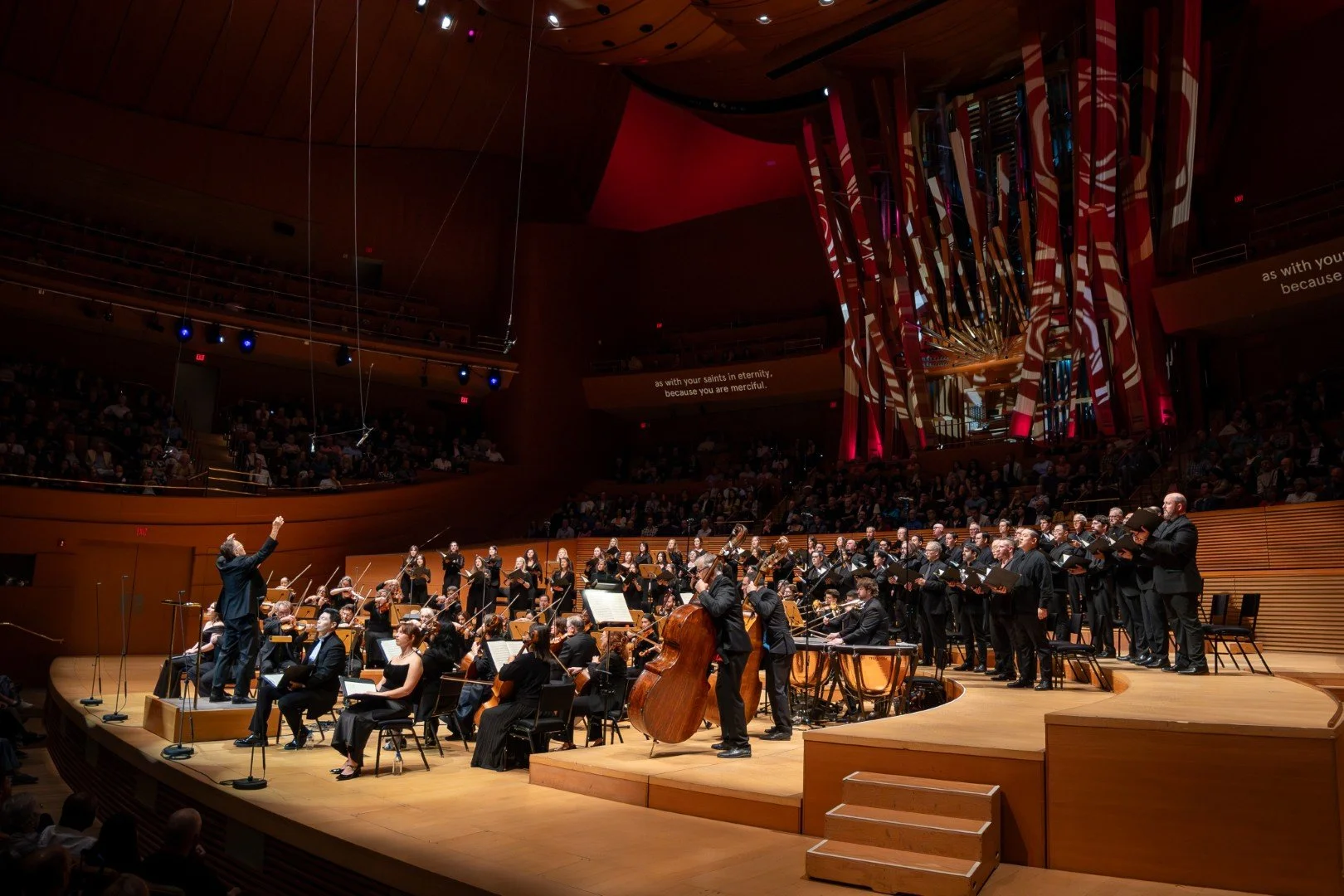
Photo credit: Gabe Zuniga, Los Angeles Master Chorale
The LAMC’s singers moved with easy assurance between the oratorio’s lament and consolation. In the two major choral numbers, their blend was immaculate – a single, unified sound of remarkable richness, and the diction was consistently clear without sacrificing beauty of tone. I was quite moved by the comforting swelling and falling lines of the phrase “God shall wipe away all tears”, and the tone of resignation in “I have fought a good fight.” The four soloists were, for the most part, commendable, with Addy Sterrett’s pure, luminous soprano reaching angelic heights in her prayer for the lost souls.
After intermission, LAMC offered Mozart’s Requiem in an admirably direct, brisk reading of the Süssmayr version. The Introitus and Kyrie fugue had tremendous gravitas, the staccato eighth-note fanfare in Dies Irae was ferocious, and the Lacrimosa – always the emotional core of the piece – was a thing of great beauty, its ascending chromatic line at once sorrowful and serene. Mr. Gershon stretched a few phrases in ritardando here and there (notably “salva me” in Rex Tremendate) which, instead of sounding affected, struck me as very poignant and apposite to the text. Miss Sterrett, again, soared her silvery soprano impressively in Benedictus.
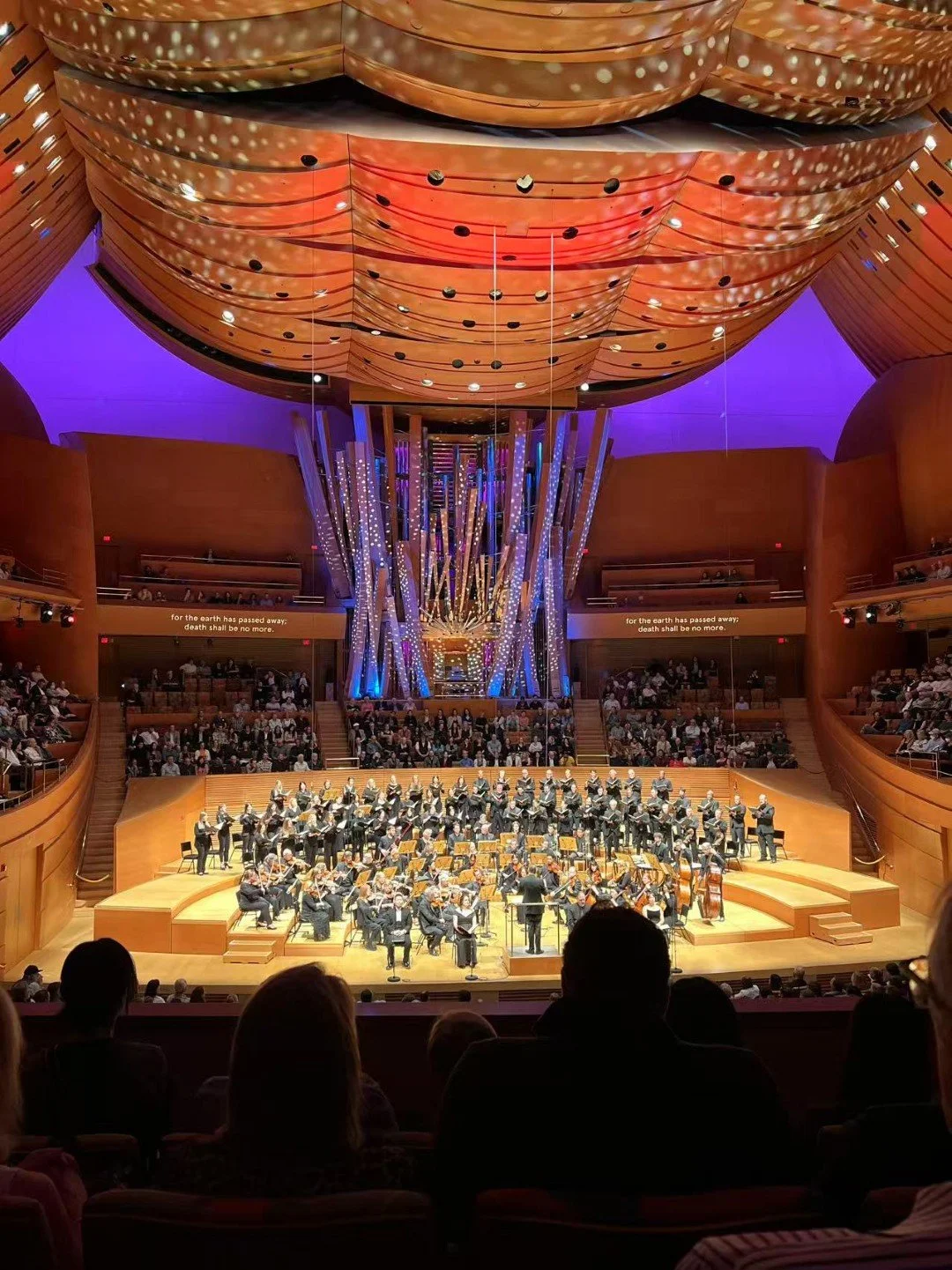
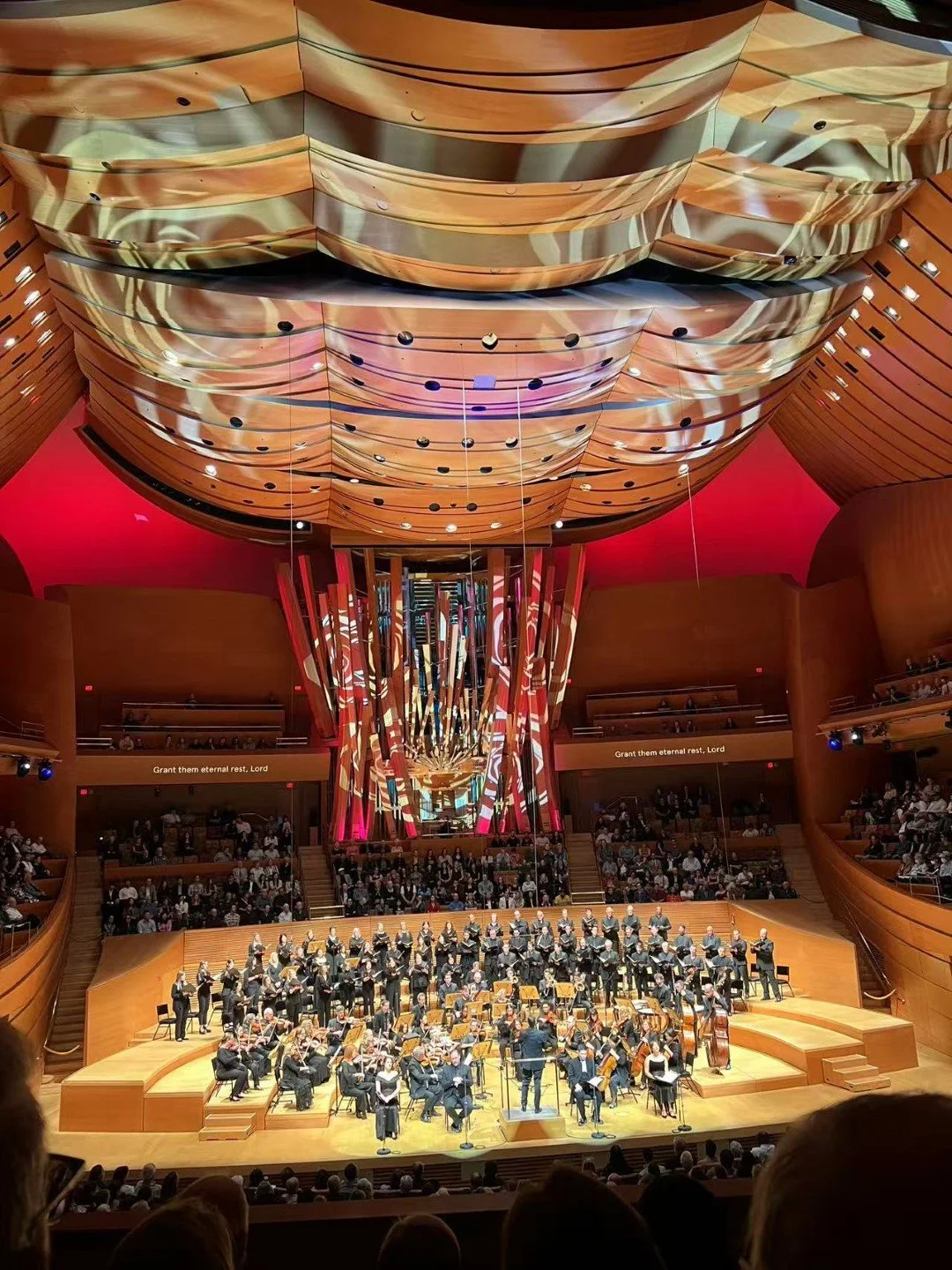
In a speech before turning to conduct, Mr. Gershon admitted the LAMC is a musical, not religious, organization, and aims to convey a universal message. I suspect many in the audience were nonbelievers who, like me, find spiritual peace in the music, in the architecture, even in the beautiful words of the King James Bible. They give me a sense of being at peace — with life and with myself.
Truman C. Wang is Editor-in-Chief of Classical Voice, whose articles have appeared in the Pasadena Star-News, San Gabriel Valley Tribune, other Southern California publications, as well as the Hawaiian Chinese Daily. He studied Integrative Biology and Music at U.C. Berkeley.