Hollywood Bowl 2026 Summer Highlights
/By Truman C. Wang
9/8/2026
7/16/2026 Mozart & Brahms
The Hollywood Bowl should sound different this summer, owing to the newly-installed, AI-improved speakers and sound system. That, hopefully, should quell my years of suffering the poor sounds at these classical concerts. I was extra eager to hear the new sound at the July 16 concert.
The program opened with Korngold's Straussiana, a postcard of old Vienna filtered through Hollywood gloss. Here, Spanish conductor Roberto González-Monjas showed a different face, leaning into the score's schmaltz and drawing tones as rich and voluptuous as Sachertorte from the orchestra. The AI-improved amplified sound rendered the woodwinds more clear, less opaque, than before and the strings warmer; the overall sonic balance was more homogeneous and natural.
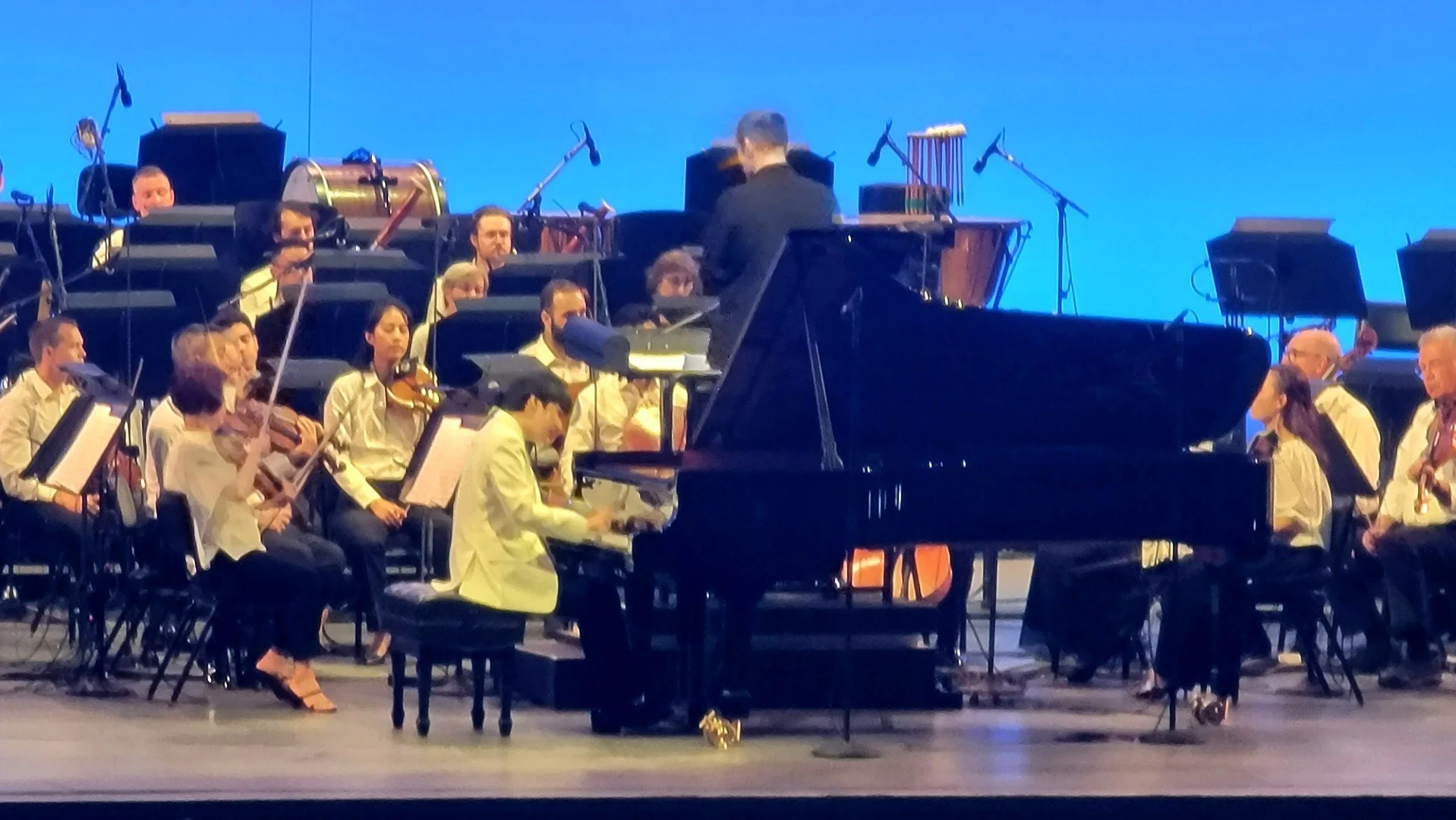
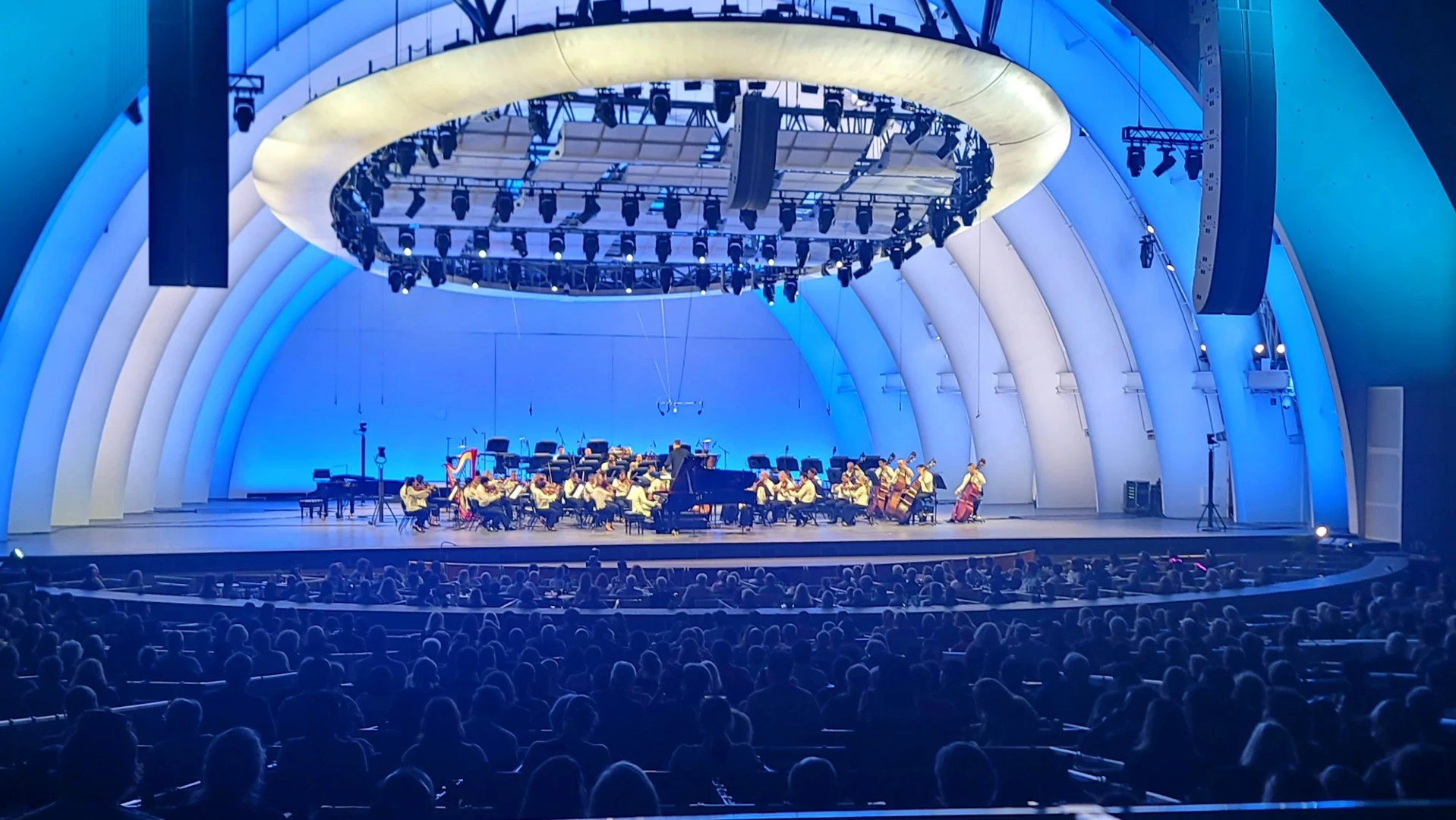
Pianist Mao Fujita, still riding the momentum of his 2019 Tchaikovsky Competition silver medal, brought a light, unhurried touch to Mozart's Piano Concerto No. 19. His refined yet passionate playing roused the listener to frenzied excitement, notably in the stormy first movement cadenza. The second-movement allegretto was sublime in its simplicity and calm. In the concerto's puckish finale, Fujita produced a shimmering, impeccably voiced cascade of sound even through its trickiest passagework — no small feat in a work that features what may be the most complex finale of a Mozart concerto.
Conductor González-Monjas, currently chief conductor of the Mozarteum Orchestra Salzburg, matched Fujita's sensibility from the podium. He partnered the soloist with lean, period-informed orchestral playing from the LA Phil musicians. The Brahms' Fourth showed plenty of grit and power in the cross rhythms, exactly as this music requires. It did not erase my memory of the Fourth when Muti brought the Chicago Symphony to the Disney Hall, but it was a gripping and wholly respectable performance.
8/1/2026 Tchaikovsky Spectacular with Fireworks
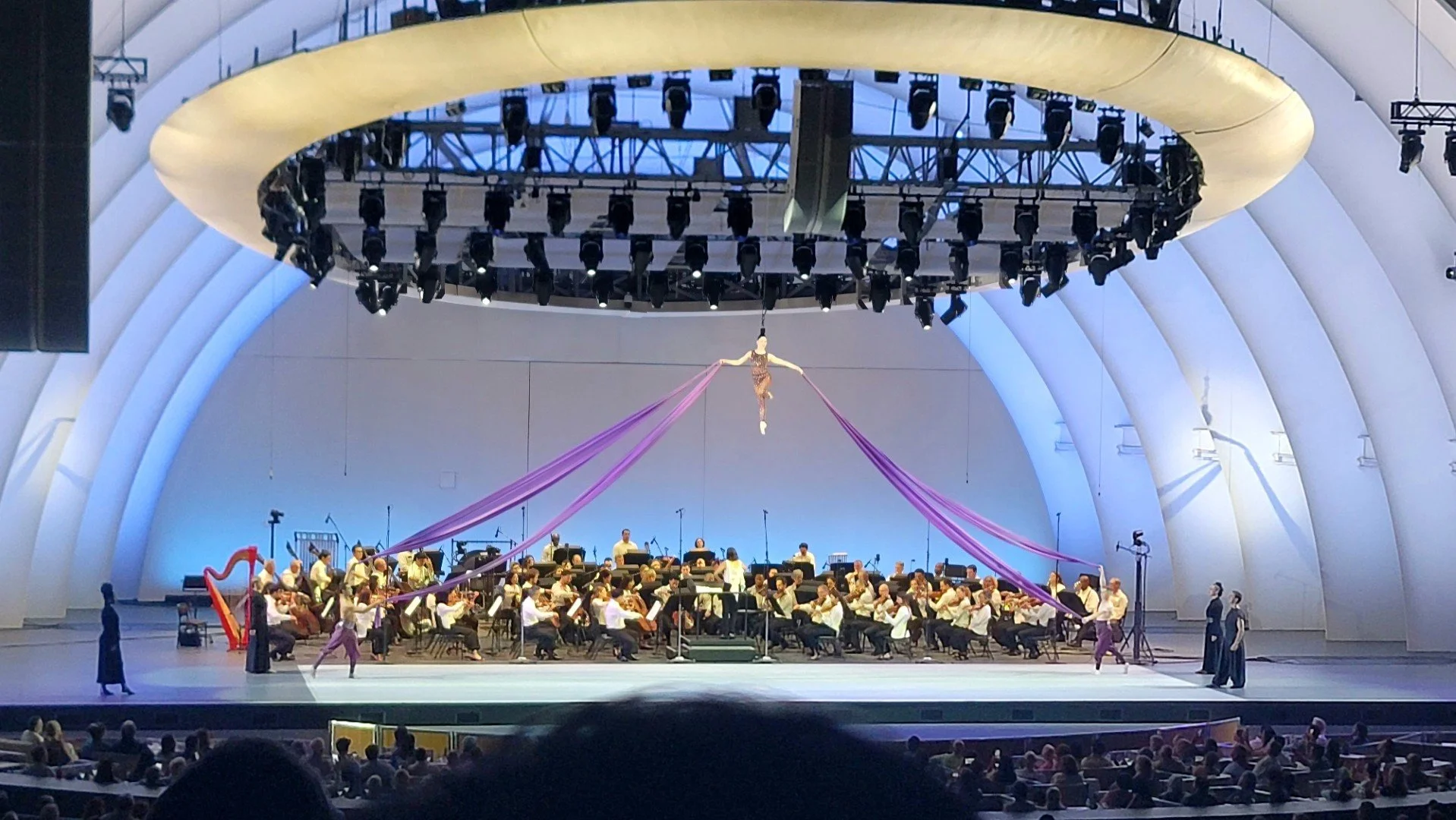
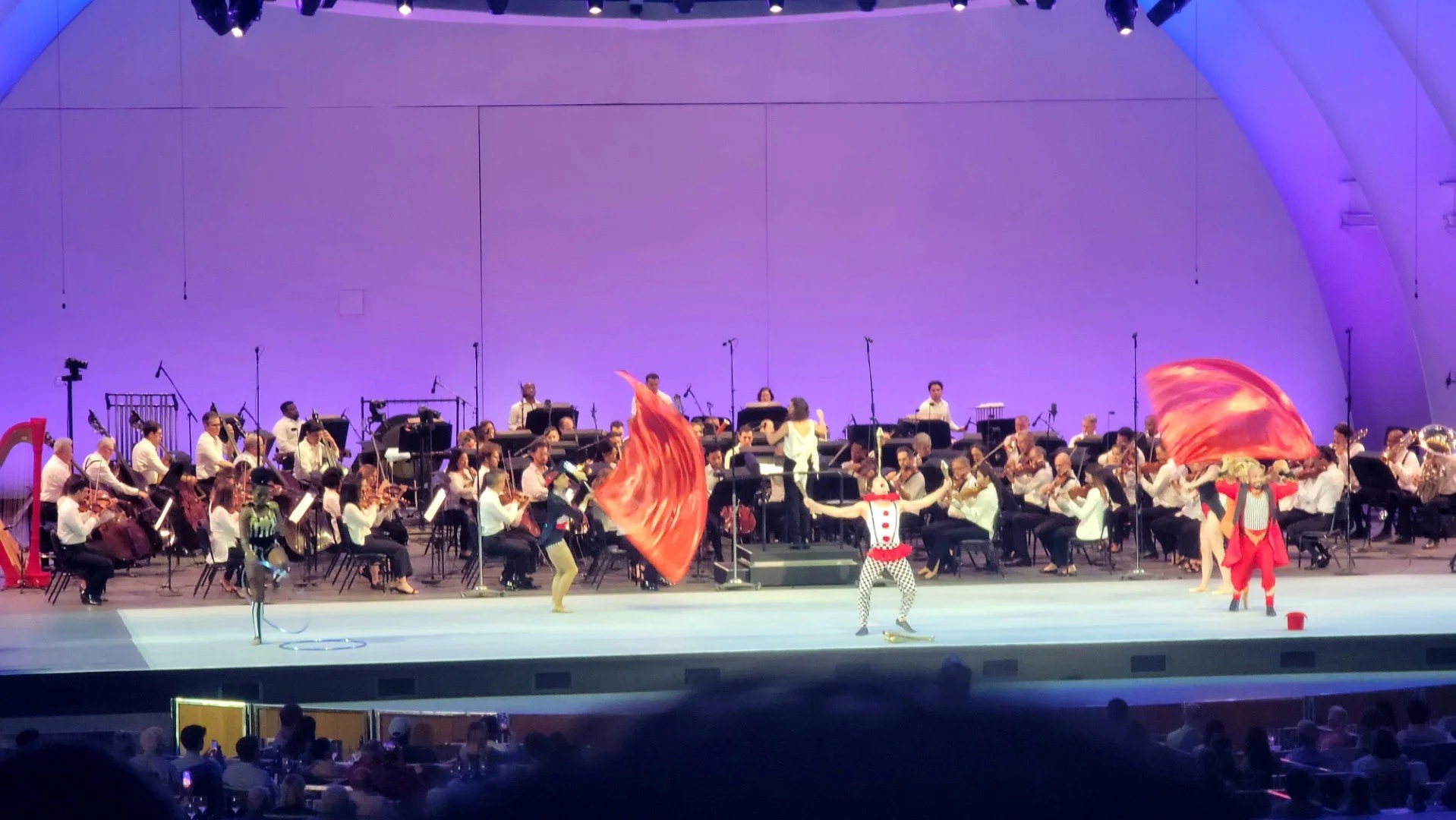
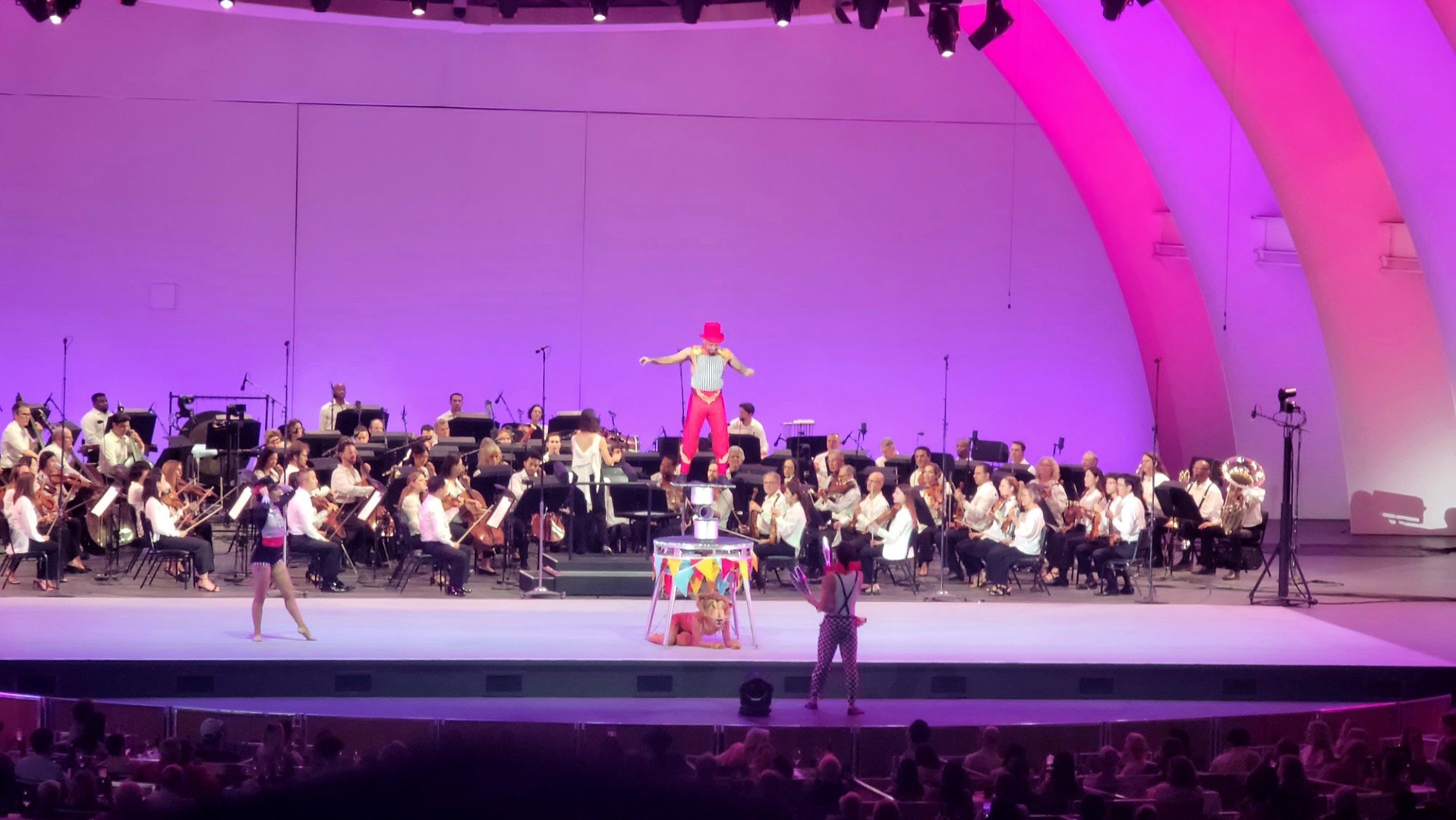
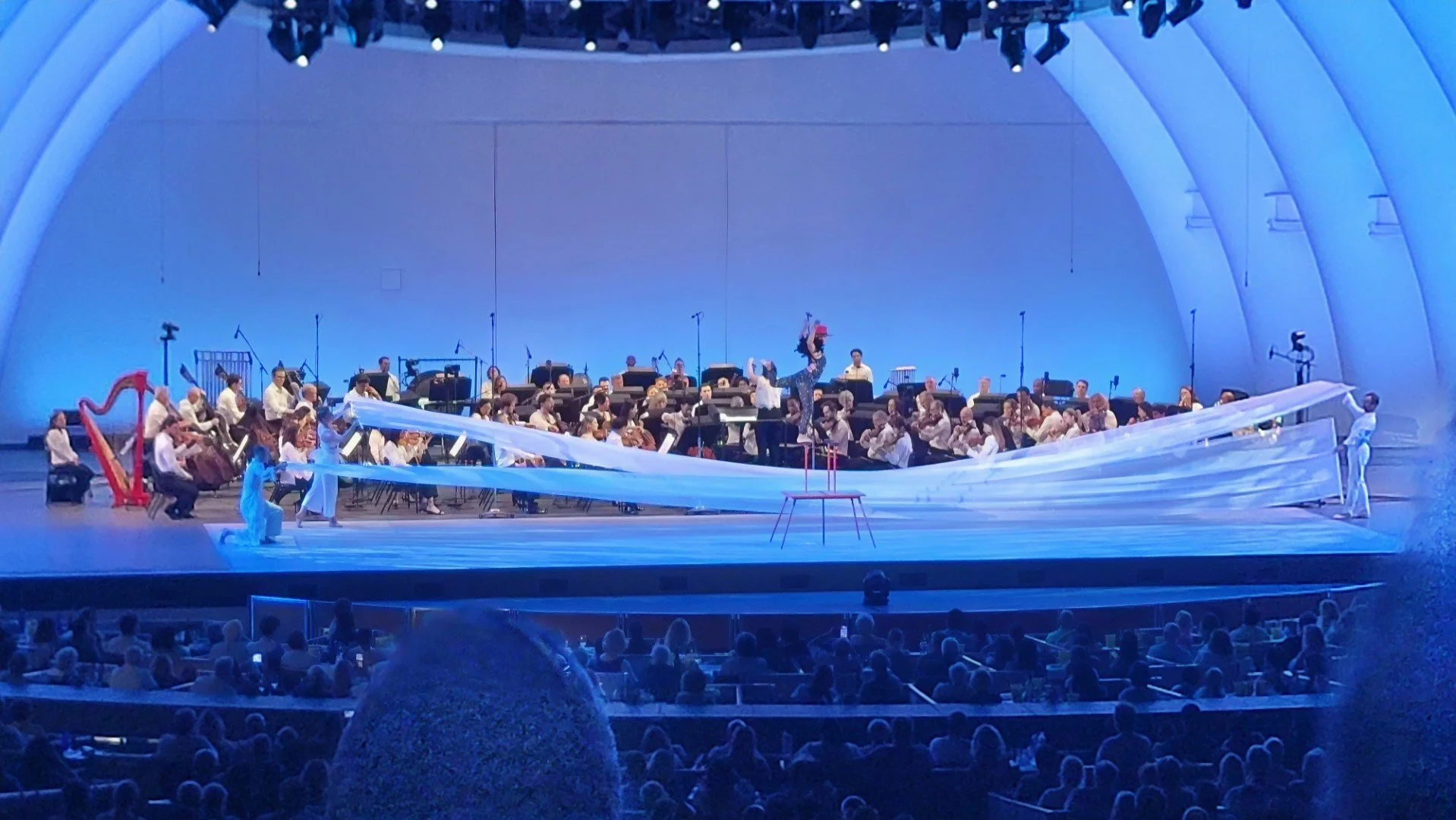
The Bowl's beloved pyrotechnic tradition — launched in 1969 when Zubin Mehta led the LA Phil's first all-Tchaikovsky program with cannon and fireworks — returned for its 2026 edition with a fresh creative pairing. This year's Spectacular brought Troupe Vertigo, the Los Angeles circus company, into the mix, following past collaborators like American Ballet Theatre and San Francisco Ballet. Troupe Vertigo's gravity-defying aerial and contortion virtuosity proved a perfect match for Tchaikovsky’s virtuosic skills in colorful orchestration. For once, one does not miss Petipa’s classic choreography in each dance and each ballet movement; rather, Tchaikovsky’s music for Sleeping Beauty and Swan Lake sounded tailor-made for the Troupe’s whimsical and powerful acts.
French conductor Chloé Dufresne, a former Dudamel Fellow, made her auspicious Hollywood Bowl debut on the podium, leading a program built for spectacle as much as symphonic fireworks. In addition to the two ballet suites, played with high lyricism (a few electronic hiccups notwithstanding), Defresne also led a fervent Marche Slave before intermission, with flag-waving circus performers that bore more than a passing show of support for the current war in Ukraine. The night closed, fittingly and spectacularly, with the 1812 Overture — an explosive finale complete with the USC Trojan Marching Band and, once more, the flag-waving circus troupe. A minor nitpick was the decision to shoot fireworks during the earth-rumbling passage for the double-basses, rendering it inaudible. Here is hoping the very talented Defresne’s career will burn long and bright, and not go out in a flash.
8/11/2026 Mozart Under the Stars
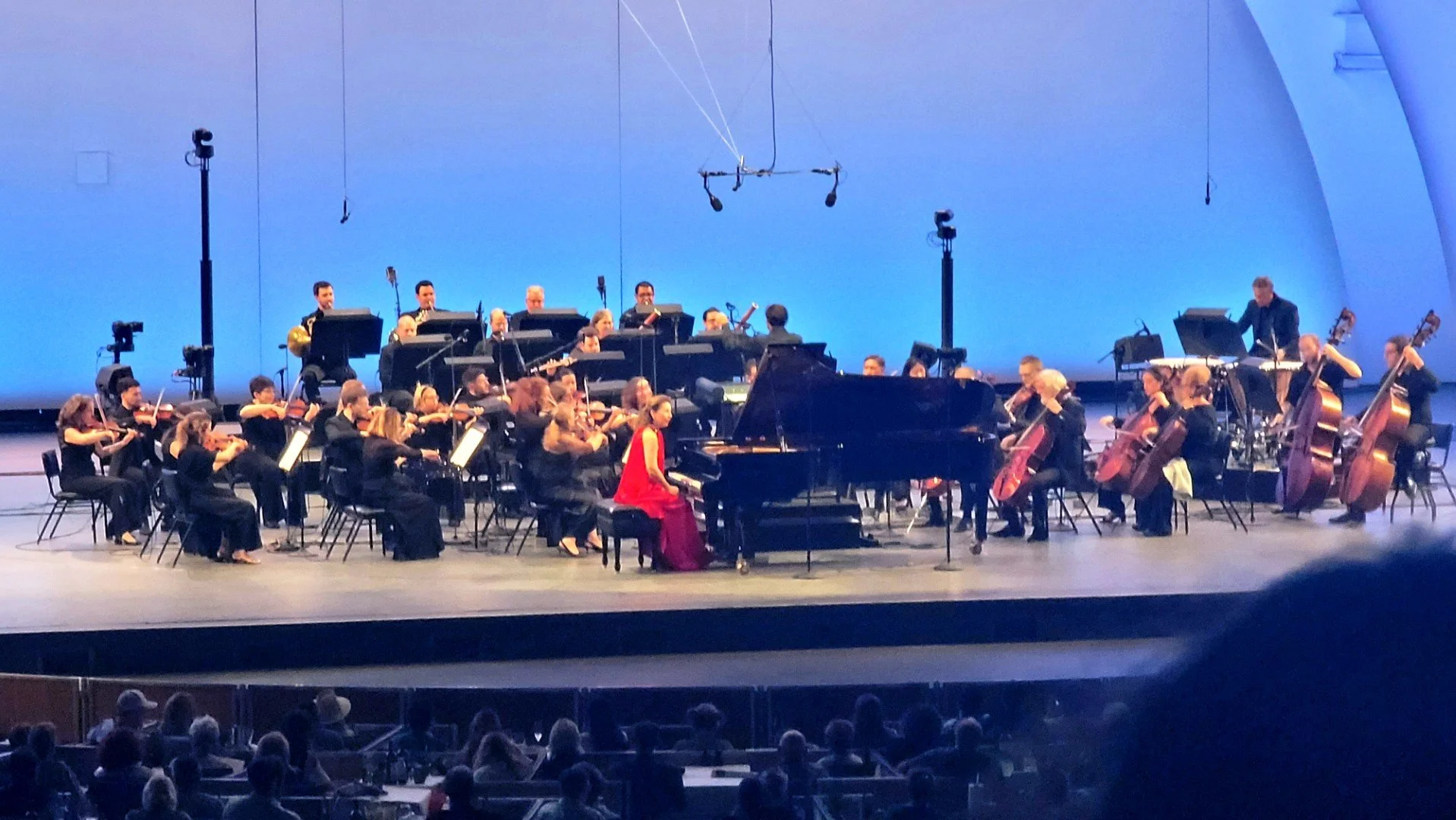
pianist angela hewitt
The August 11 concert was billed as “Mozart Under the Stars”. Alas, there were no celestial bodies shining down from above Hollywood Hills, only a couple of errant aircraft buzzing over the ‘Big X’ no-fly zone. The only star was the Canadian pianist Angela Hewitt, who played Mozart’s Piano Concerto No. 22 K482 on her personal Fazioli piano that travels with her. It was a unique, unmistakable Fazioli sound – big, powerful tones up and down the scale, with stunning clarity and none of the haze of a Steinway. (Interestingly, the Fazioli logos were nowhere to be seen – those of you Steinway conspiracy theorists please comment below.) The bold piano sound held up well against the onslaught of trumpets, drums and expanded winds in this “Grand Piano Concerto” written for Vienna. Conductor Nicholas Ellis, another Canadian, is something of a Mozart specialist, coaxed the LA Phil into playing like a period instrument band, with minimal vibrato, brisk tempi, and matched Miss Hewitt’s sense of forward momentum and irrepressible energy. In the quietly contemplative C-minor andante, the pianist wisely winnowed down her very bold and assertive left hand to a tender whisper in the coda. But not for long, the irrepressible energy returned in the dotted rhythms of the allegro finale, during which Miss Hewitt magically stopped with a tender minuet episode (one of only two such episodes in all 27 Mozart’s piano concertos.) A thrillingly brilliant cadenza of tour-de-force contrapuntal power (not sure which version, but more tasteful and just as devilish as the old Edwin Fischer cadenza) ended the K.482 Concerto on a high note. The LA Phil was never a Mozart orchestra under Dudamel or sounded particularly at home in the Classical repertoire. But on this night, under maestro Ellis, their playing could rival that of the Mozarteum Orchestra Salzburg. As fine as the readings of the K551 ‘Jupiter’ Symphony and the Don Giovanni Overture, my mind kept circling back to the Piano Concerto, the Fazioli, and Miss Hewitt bringing to Mozart the same intensity and romanticism that she did with the music of J.S. Bach.
8/18/2026 National Symphony Orchestra
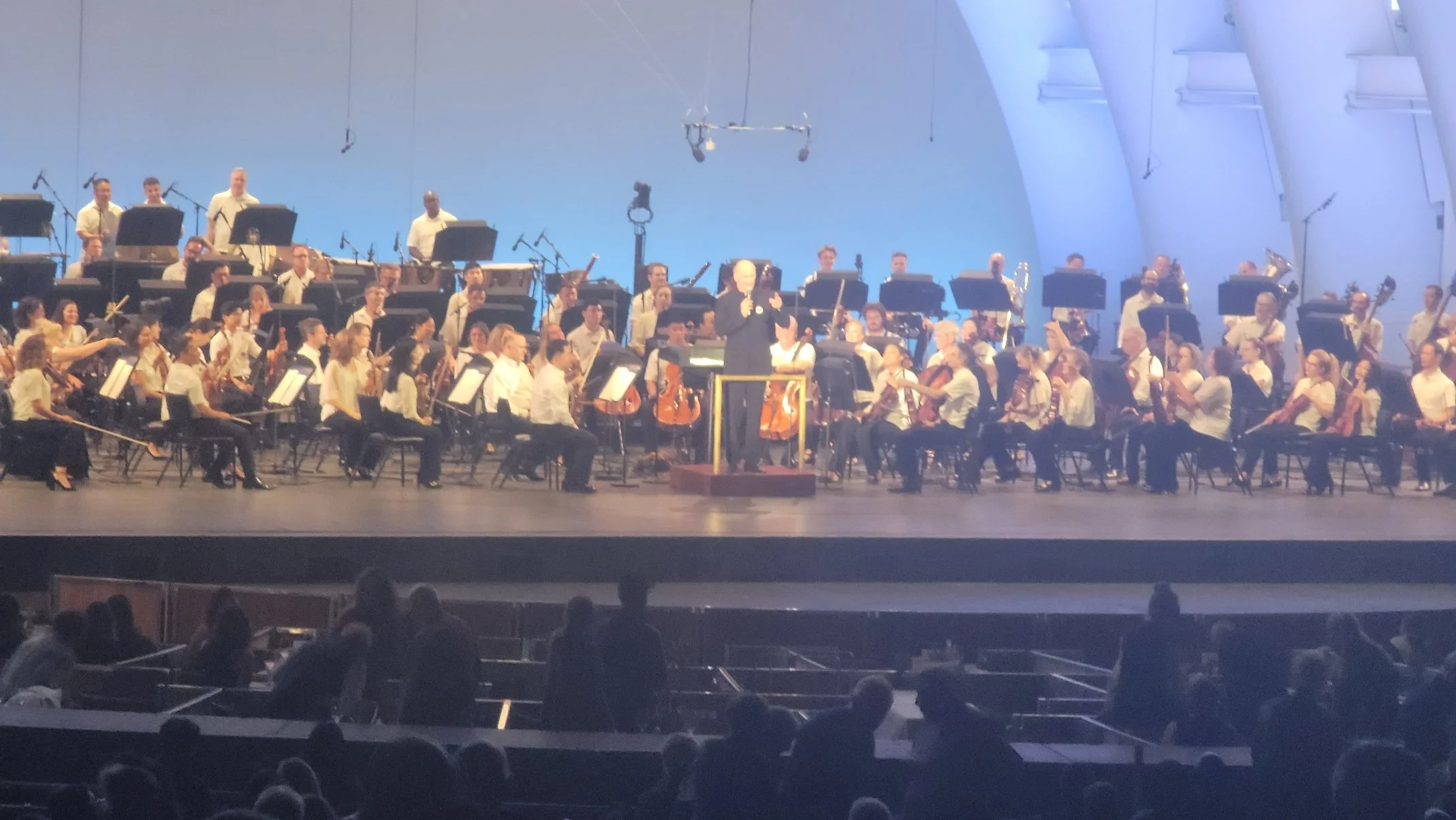
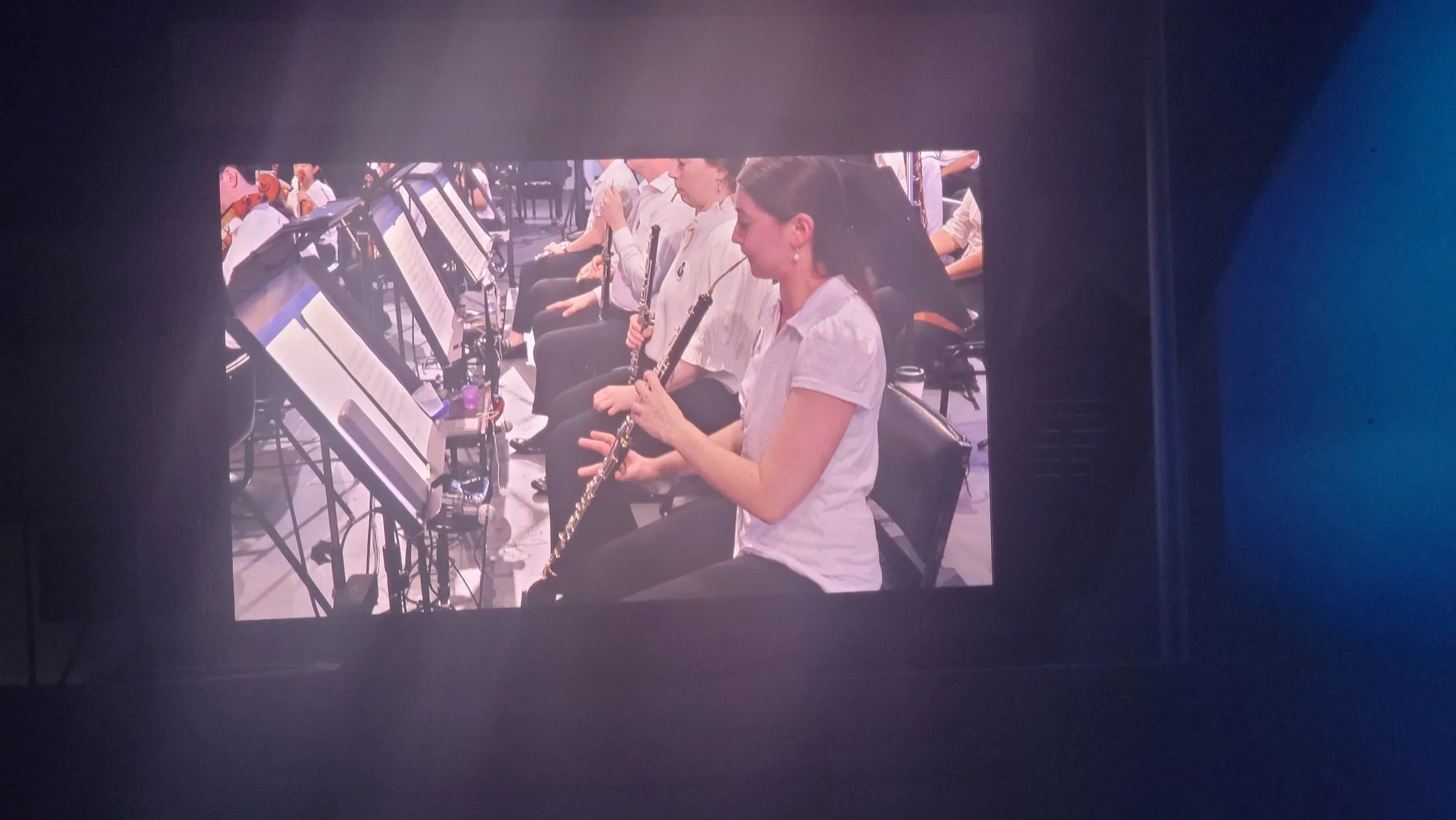
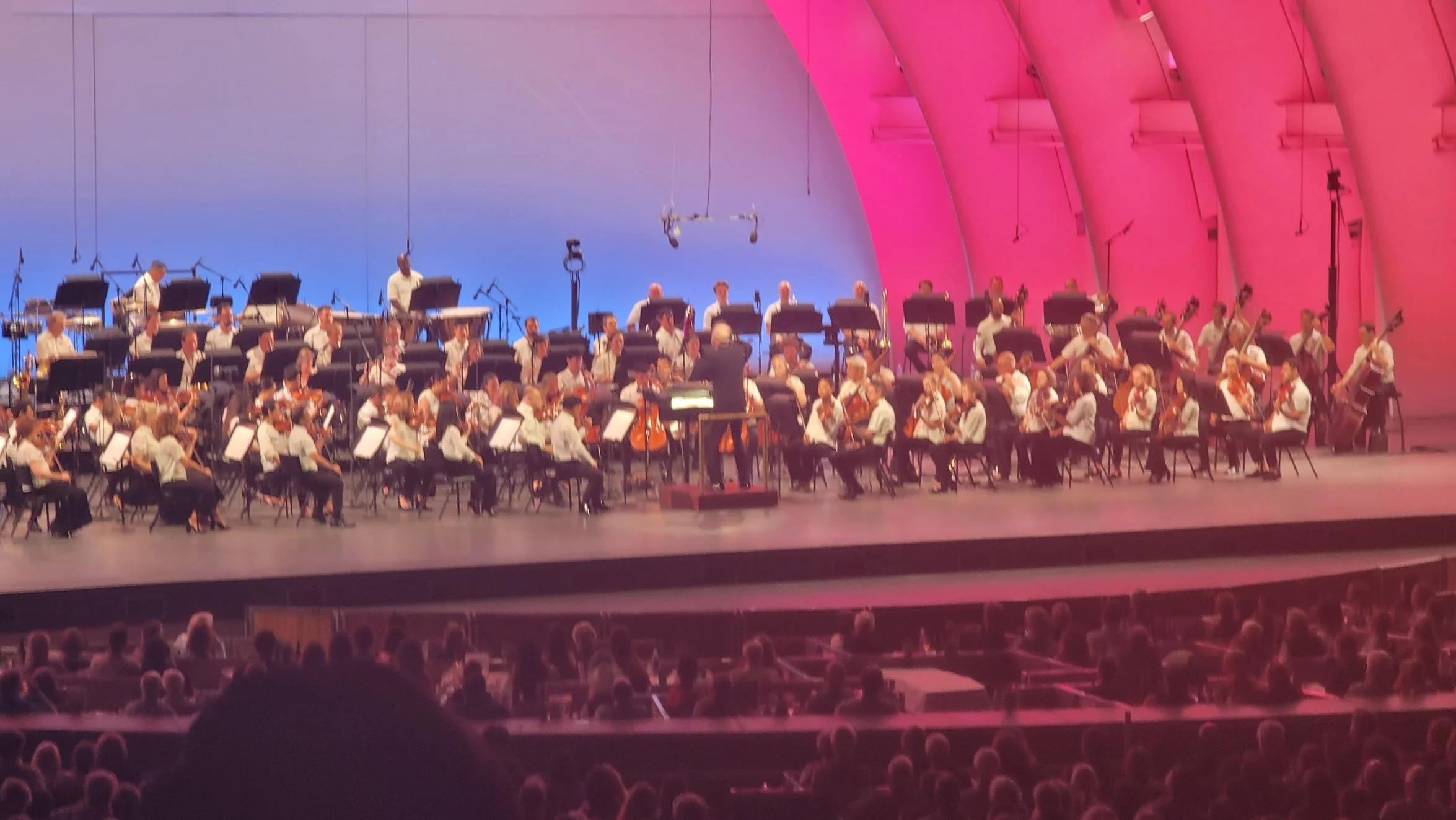
The National Symphony Orchestra makes its Bowl debut under Gianandrea Noseda in an all-American program. The celebratory occasion was dampened somewhat by an existential crisis of shutdown rumors of the orchestra’s home in the Kennedy Center in D.C. It was a patriotic program, befitting an orchestra from the nation’s capital. From the singing of the national anthem (the words “rocket’s red glare, the bombs bursting in air…. the land of the free” ringing more true today than ever), to the irresistible mambo and cha-cha rhythms of Bernstein’s West Side Story Symphonic Dances, to the taxi horns and jazzy trumpet and clarinet solos of Gershwin’s An American in Paris, the first half of the concert stirred up positive emotions in the audience across the political spectrum. The “New World” Symphony by Antonin Dvořák achieved the same effects in maestro Noseda’s powerful but sensitive reading, as well as Kathryn Meany Wilson’s quietly aching English horn solo in the famous Largo. The concert ended with a rousing encore of Bernstein’s Candide Overture – sending the audience home feeling that America, even in this time of global and national uncertainties, is still the best of all possible worlds.
8/20/2026 Celebrating Gustavo at the Bowl: Beethoven 9th
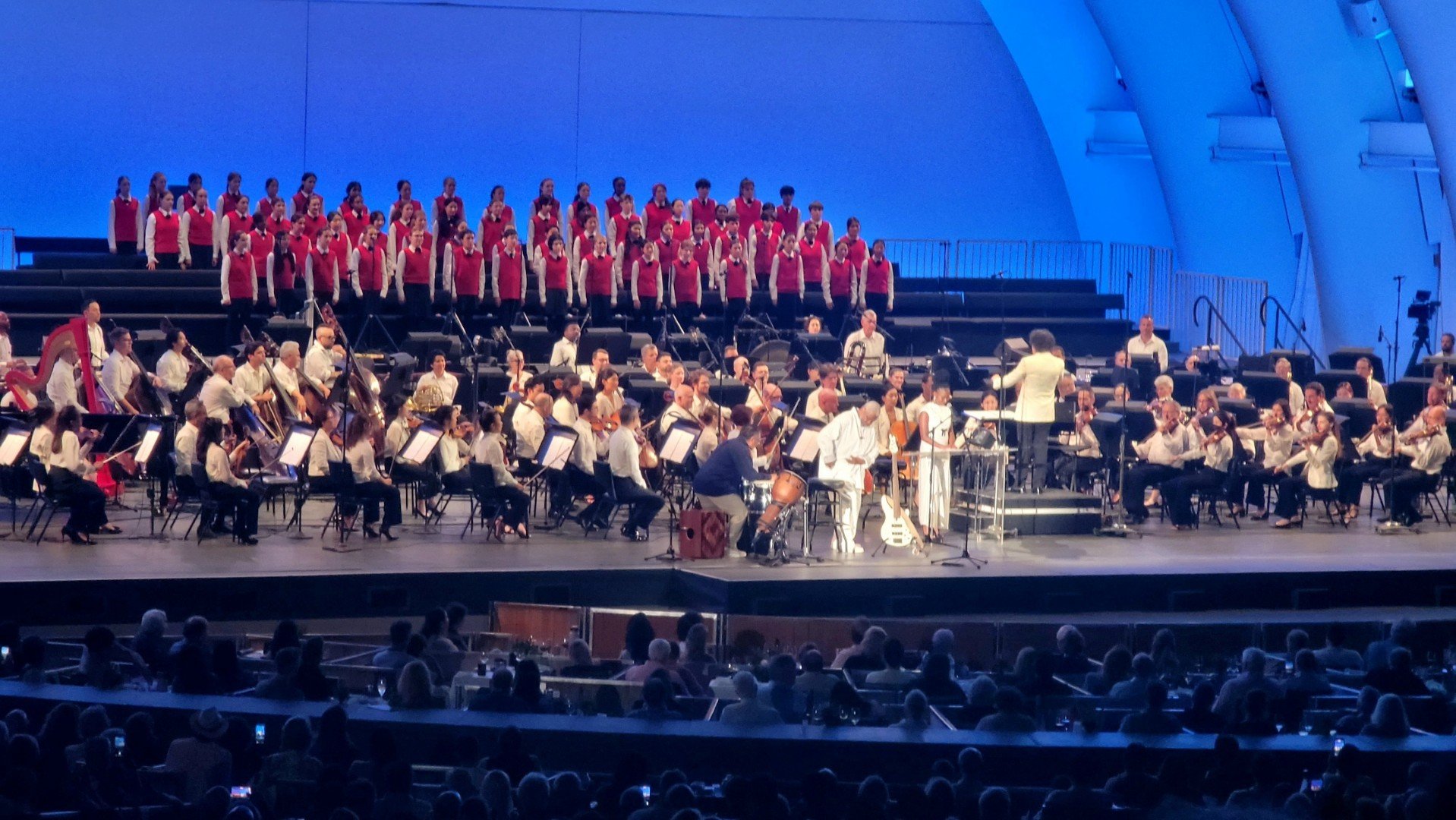
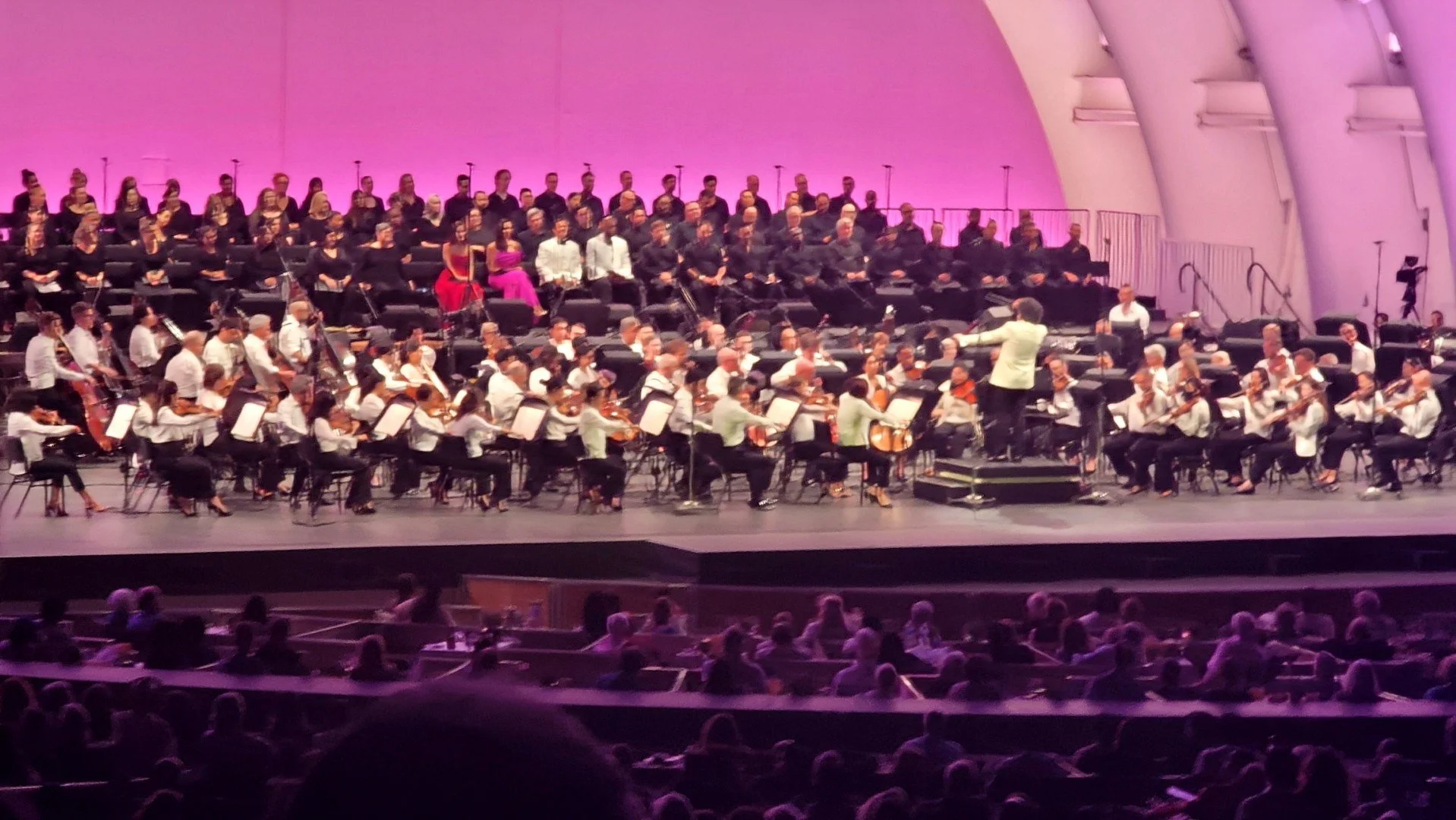
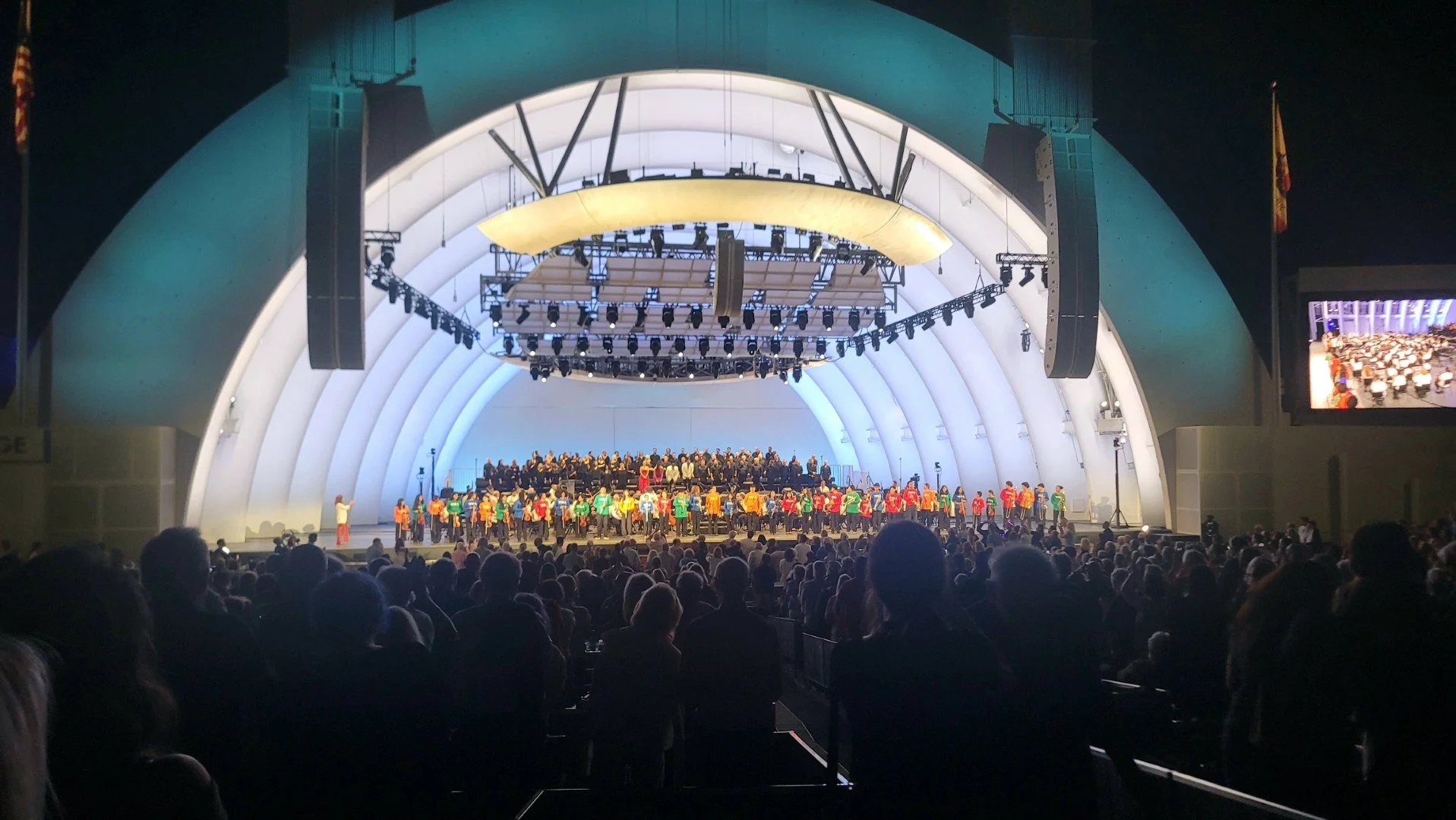
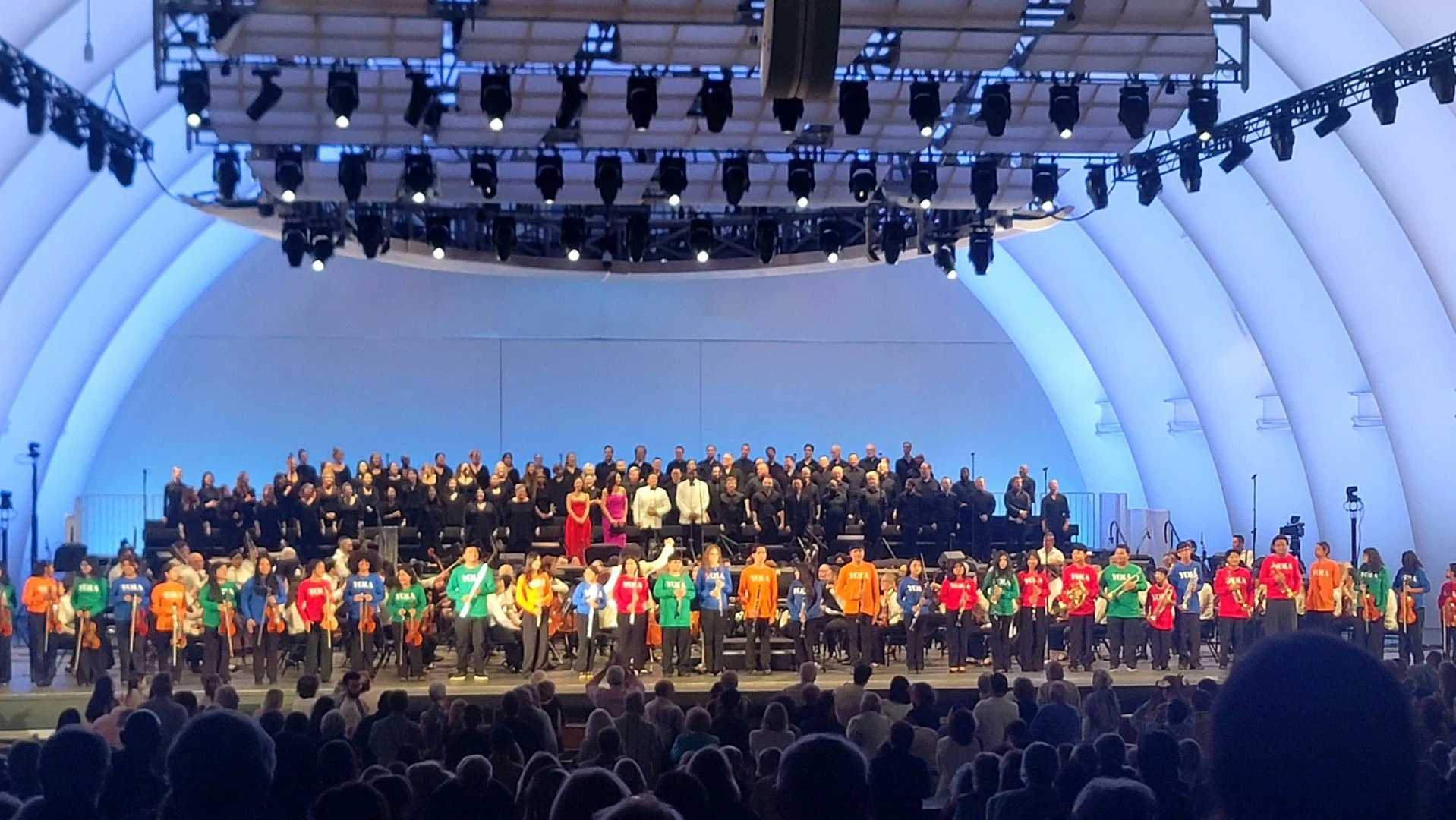
A milestone night marking Dudamel's send-off after 17 years as LA Phil's Music & Artistic Director, the evening opened with the world premiere of Hollywood composer Michael Giacchino's Hymns of the Heart, set to lyrics by Amanda Gorman, unusually scored for a mouth organ, a children's choir, and a children’s xylophone and glockenspiel band that produced rustling angelic sounds. (It rose gradually in intensity and volume to a thrilling climax.) The narrator introduced the finale with heavenly hymns, followed by a quick succession of African spirituals, a Cuban banda and dancing children. It was one big block party in Hollywood Hills before moving on to Beethoven’s “Ode to Joy” world brotherhood party in the second half of the concert. Over the years, I have heard many a reading of the Beethoven Ninth by Gustavo Dudamel, including two at the Bowl. They were all very consistent – in the chosen tempos and dynamics, even in the phrasing (the third movement ‘Adagio molto e cantabile’ was never particularly molto or cantabile in all the versions I have heard.) – and they never failed to impress or bring the audience to their feet in the blazing final coda. On this occasion, a strong vocal quartet (soprano Hera Park, mezzo Tamara Mumford, tenor David Portillo, bass-baritone Ryan Speedo Green) and the LA Master Chorale made the choral finale – “written badly for voices”, noted by Verdi in a 1878 letter to Boito – seem like a walk in the park (or a steep climb to the top of the Bowl.) The new AI-enhanced and amplified sound greatly favored the voices (if only Mr. Green’s Wotan at the Disney Hall in May had sounded this good!) and rendered the strings thin and anemic in the Adagio and the “Ode to Joy” theme.
8/27/2026 Rachmaninoff & Adams
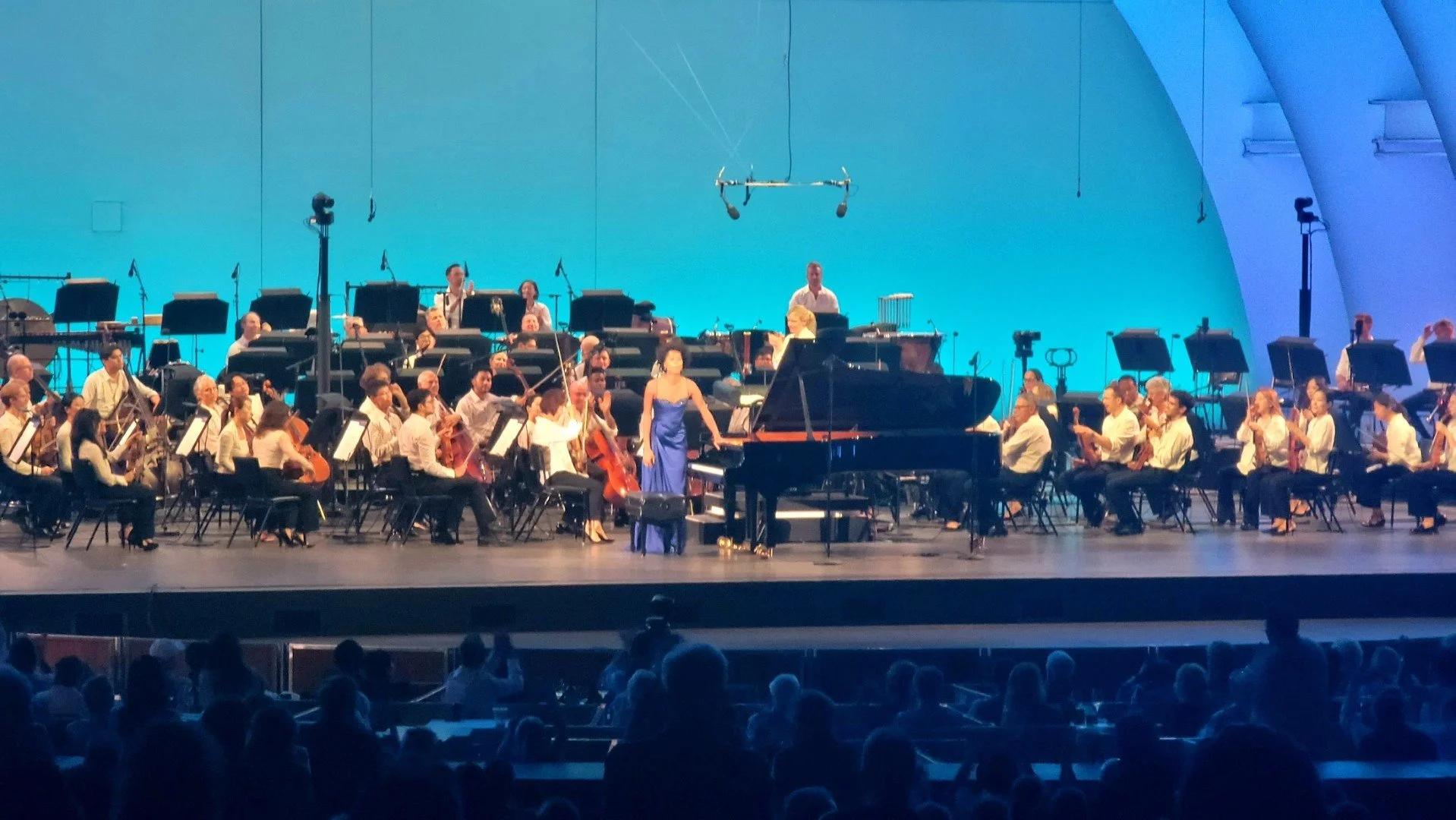
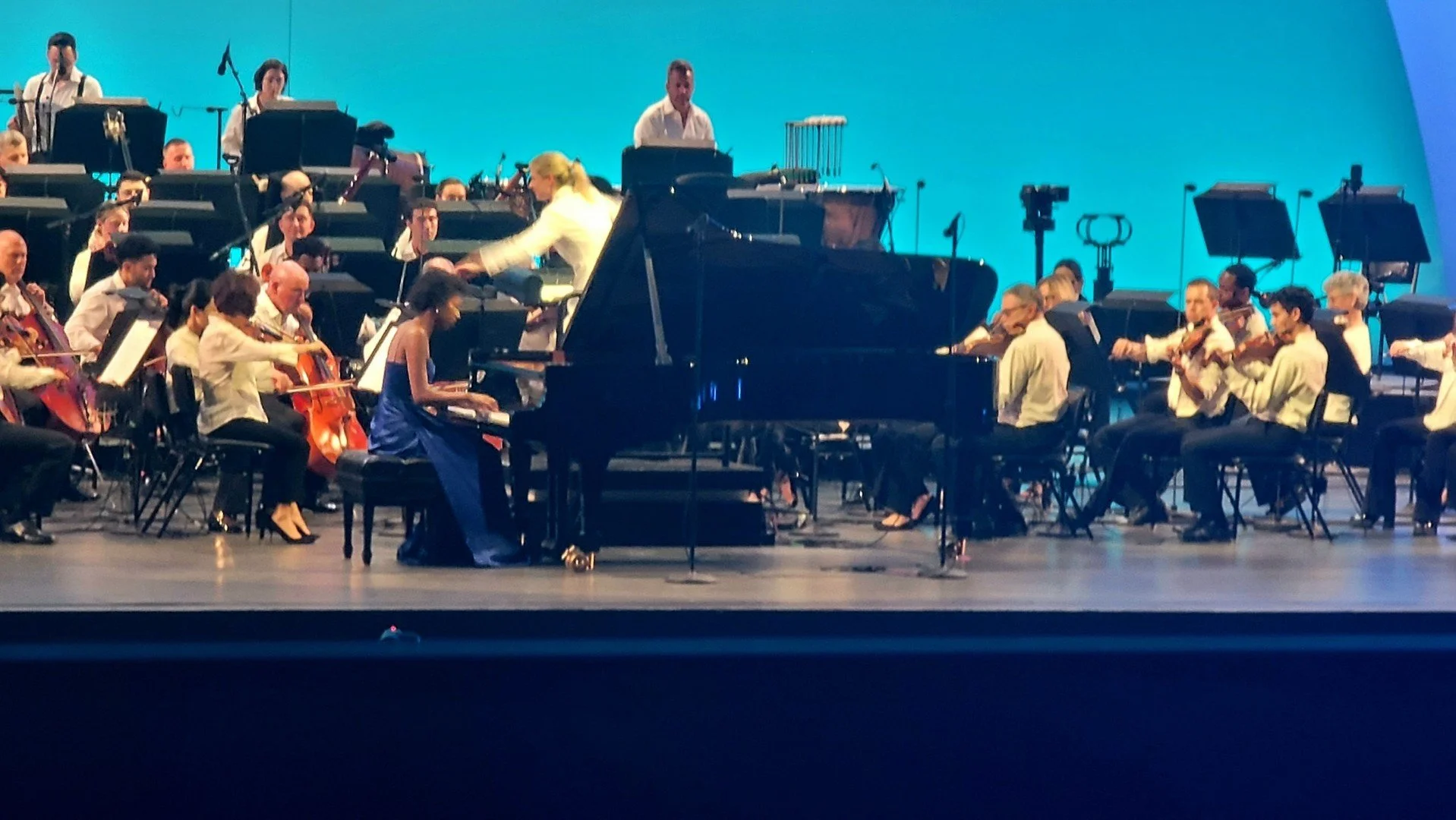
I did not quite enjoy this next concert. The over-engineered sound amplification did serious damage to the overall balance and detail of the fine work by the LA Phil musicians, and I felt sorry for them. It wasn’t just the alto saxophone that was spotlighted in Rachmaninoff's Symphonic Dances, but all the other instruments shone brightly all the time whether they are called for in the score or not. The strings sounded very thin and not at all romantic in Rachmaninoff's Piano Concerto No. 2. Jeneba Kanneh-Mason’s piano playing was accurate and clinical under such circumstances. She was better in the encore, in a deeply moving piano transcription of the opera aria "Mon cœur s’ouvre à ta voix" from Samson et Dalila. The New Zealand-born conductor Gemma New set the evening’s bright tone with John Adams’ propulsive, minimalist curtain-raiser Short Ride in a Fast Machine and did her best to battle the sound engineers all evening.
9/3/2026 ’Amadeus’ in Concert
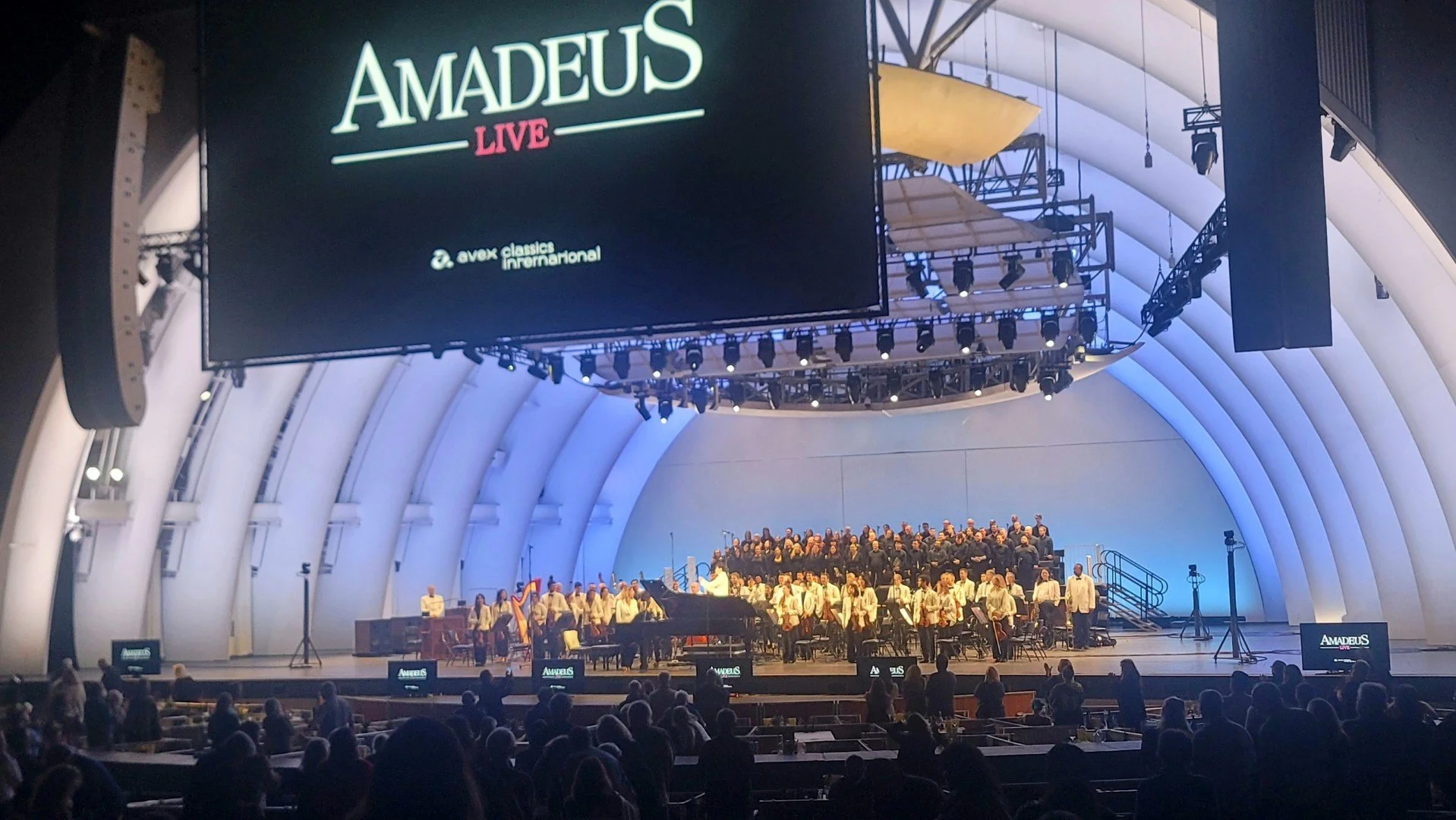
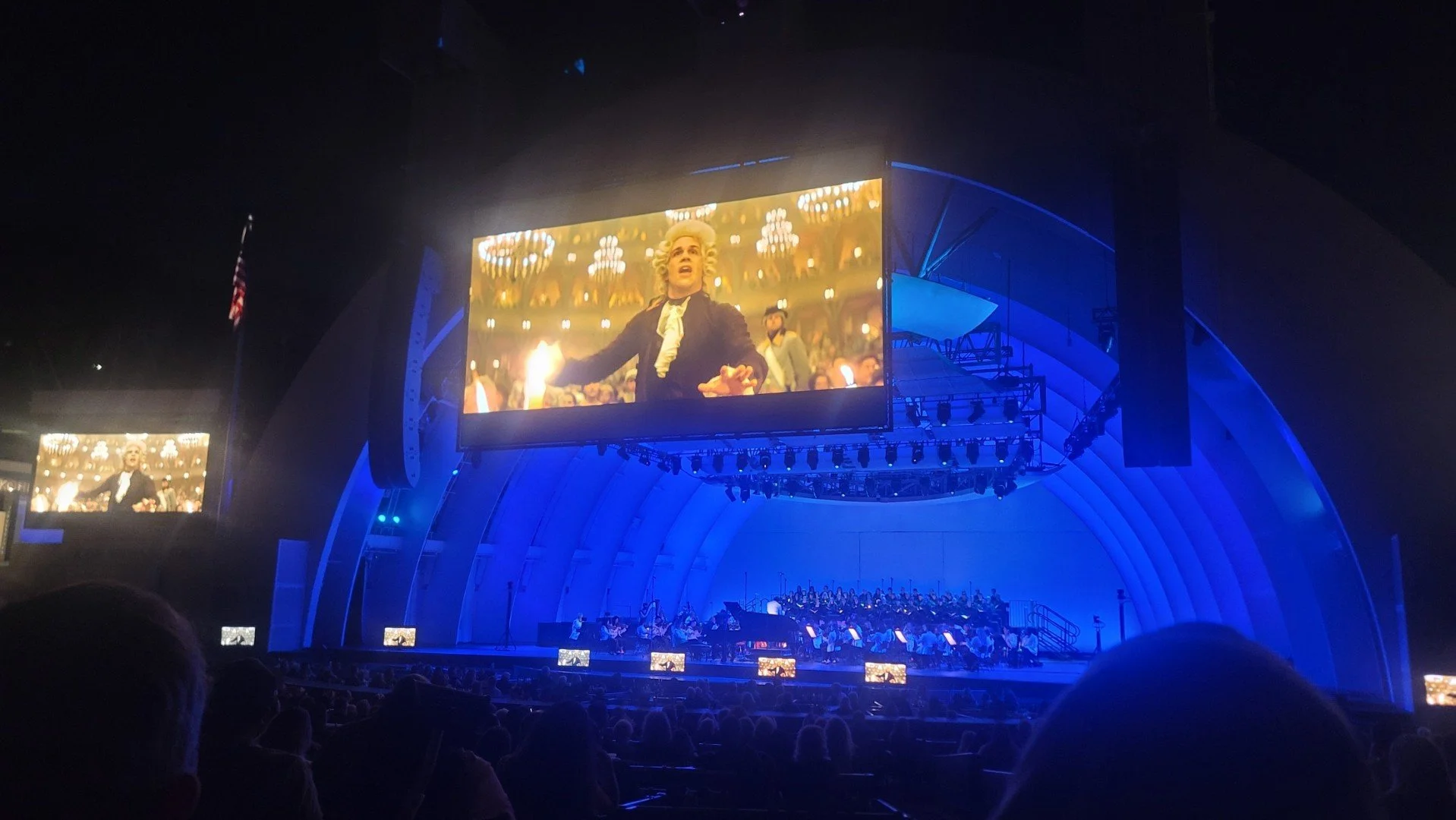
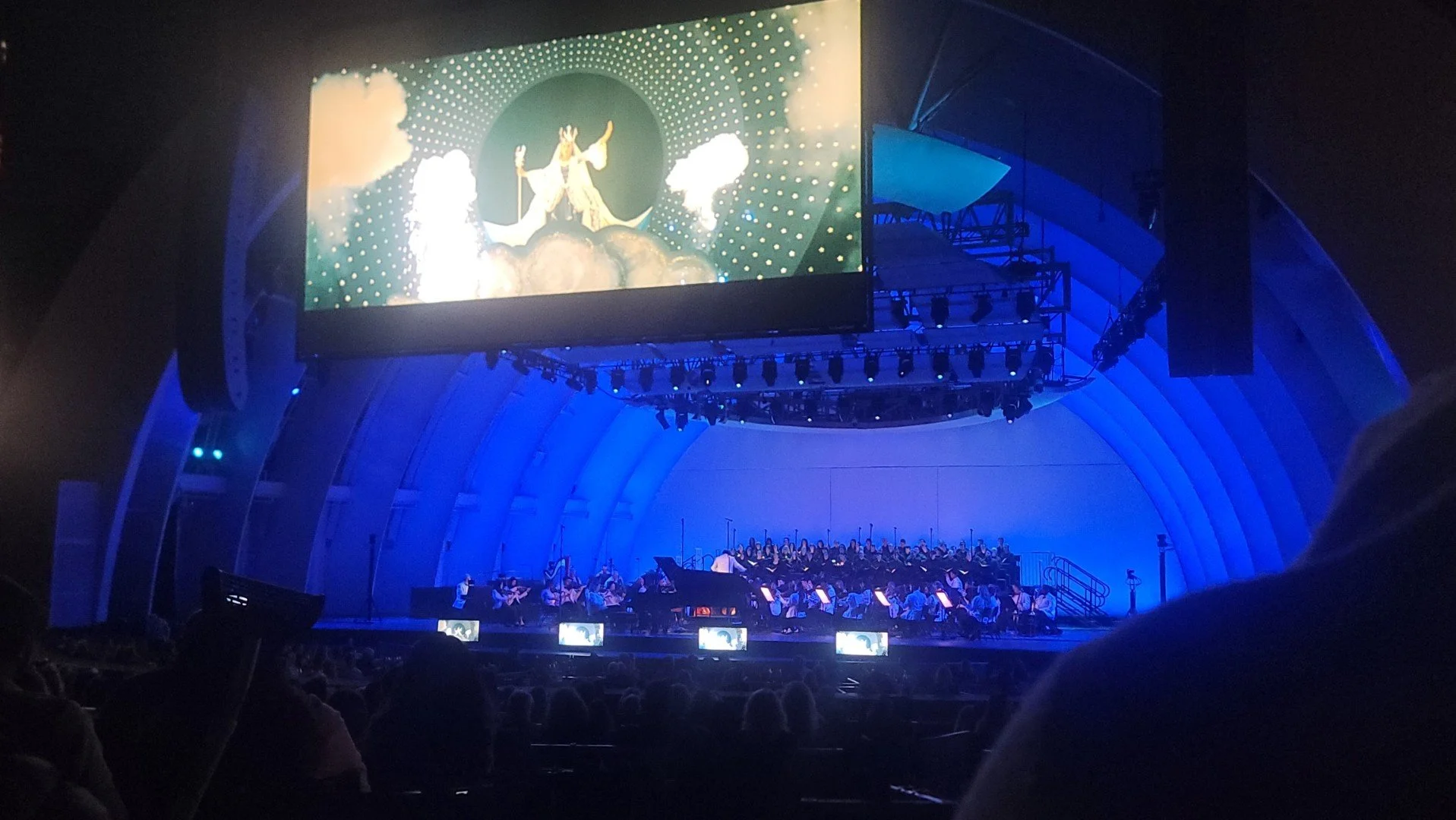
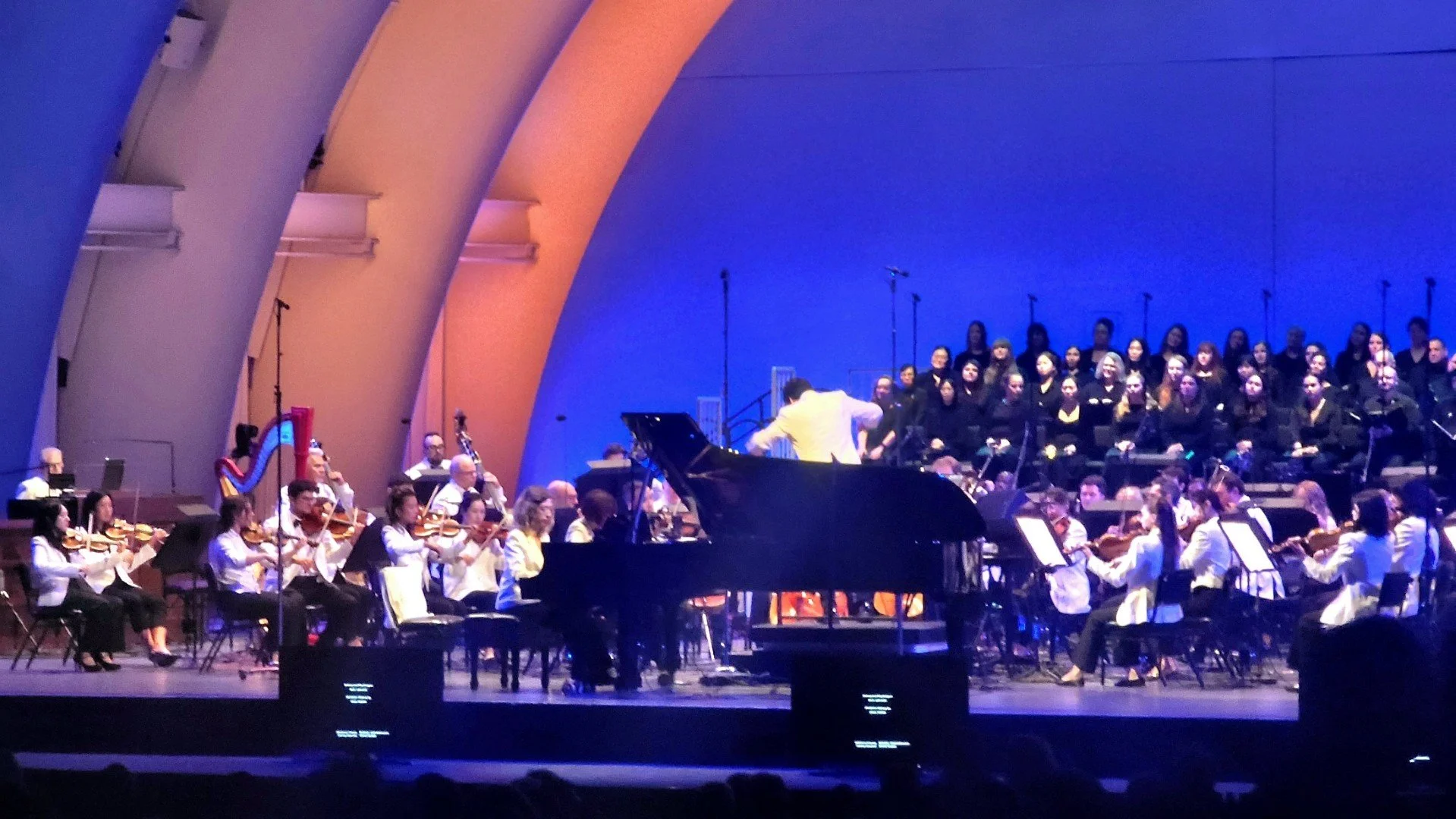
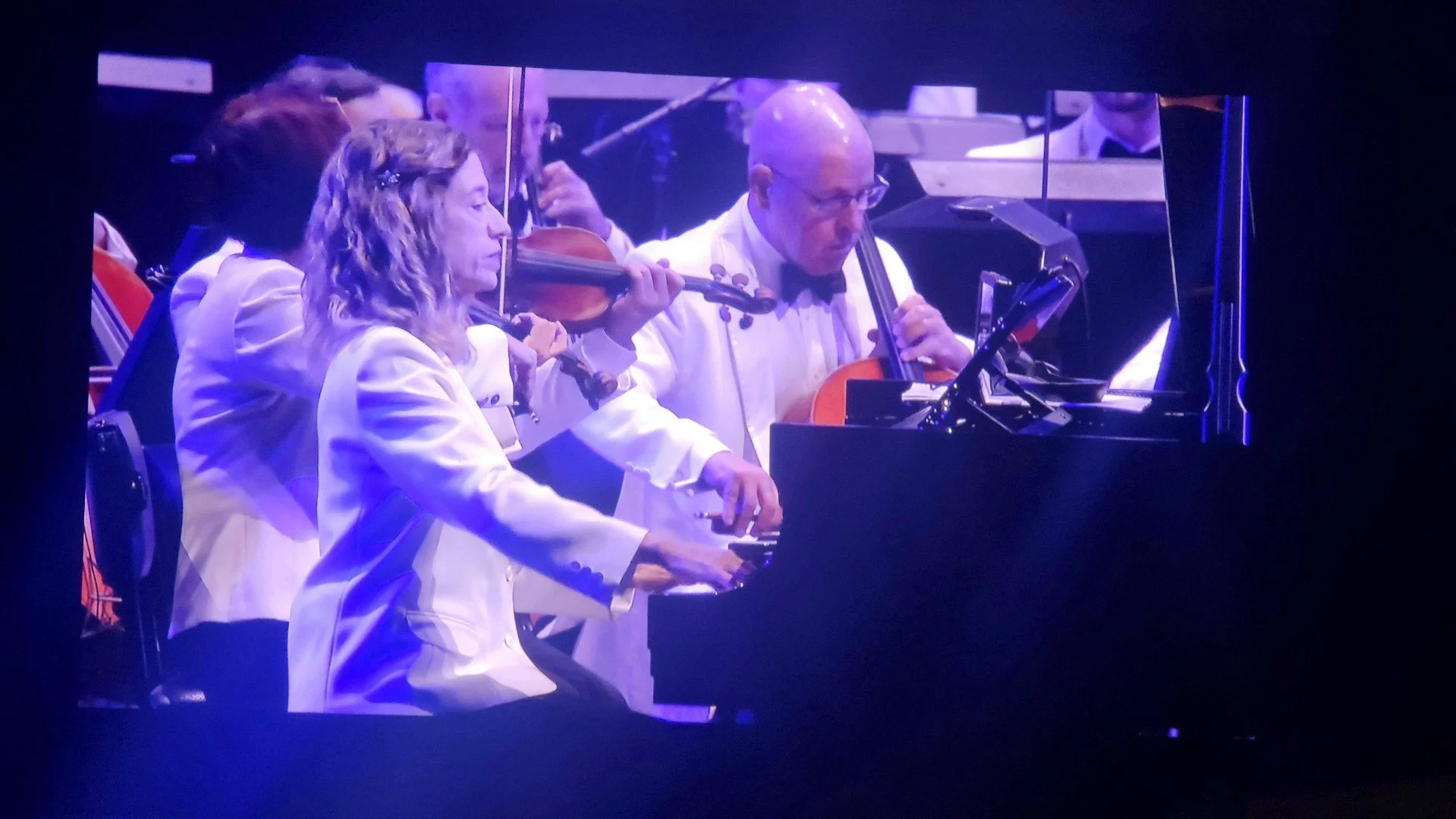
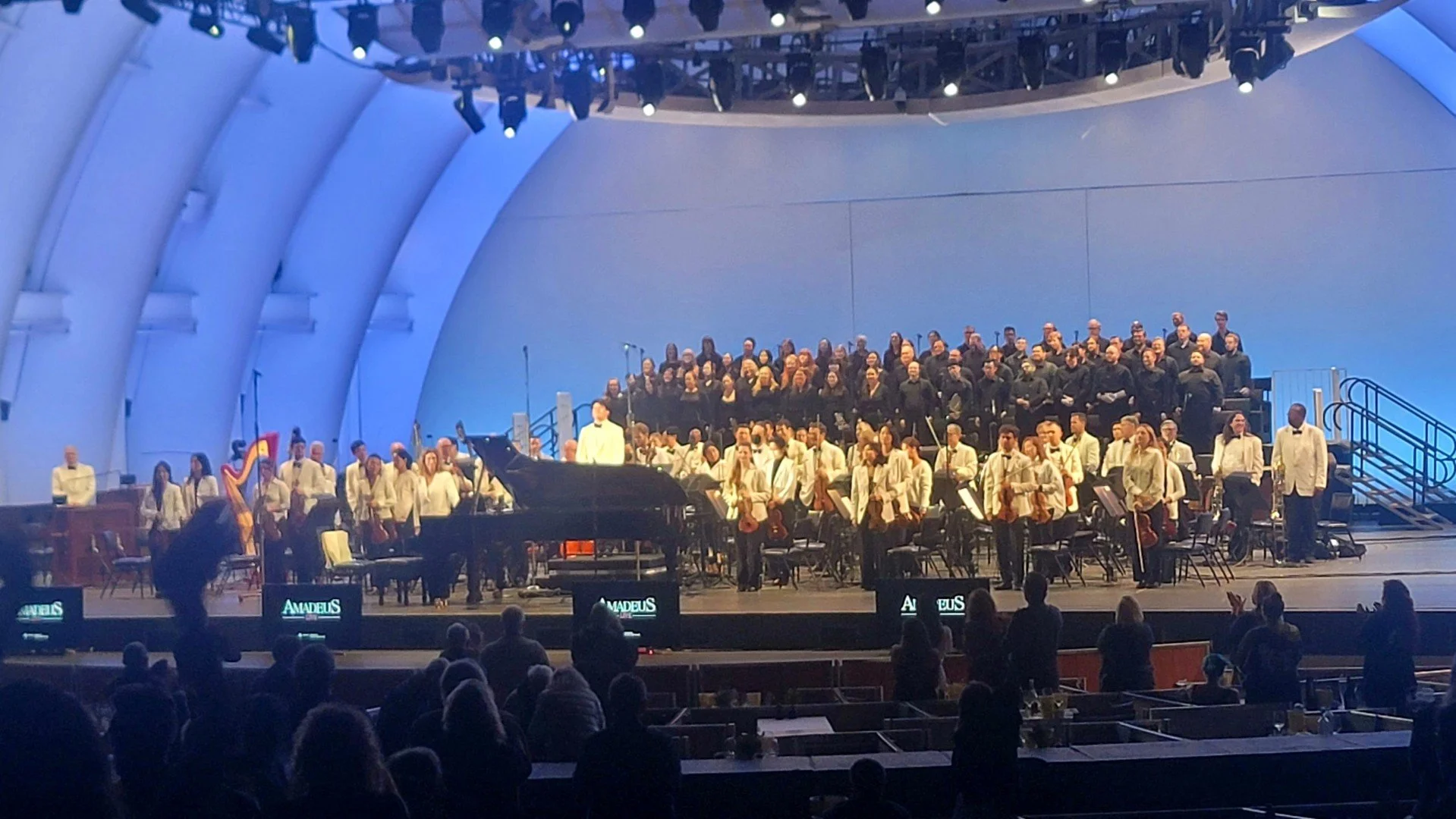
Just as the 1984 film by Miloš Forman was a surprise hit at the Oscars, garnering 8 trophies and 11 nominations, the 17,000-seat Bowl was surprisingly filled to near capacity for the screening of “Amadeus”. Accompanying the film were the LA Phil, the Pacific Chorale, conductor Norman Huynh, plus an assistant conductor for cuing various instruments from the Requiem and opera clips in the film. The sound amplification on this night was ideal – clear music and equally clear dialogs. The musical cues were also spot on – the choral scenes of boys choir, Seraglio, C-Minor Mass; Joanne Pearce Martin’s keyboard playing in the Salieri scenes as well as in the final credits (a sweetly perfumed Romance from Piano Concerto No. 20); the beguiling woodwinds as Salieri describes a passage for the bassoon, oboe and clarinet; the Harp Concerto snippet in the Constanza/Salieri scene. The audience reacted enthusiastically, from the opening shouts of “Mozart!”, to spontaneous applause at Salieri’s humiliation and dropping of Mozart’s ‘perfect’ manuscripts. It was a movie experience unlike any other, a communion of 10,000-plus Mozart lovers on his 270th birth year.
9/5/2026 Maestro of the Movies: A Tribute to John Williams
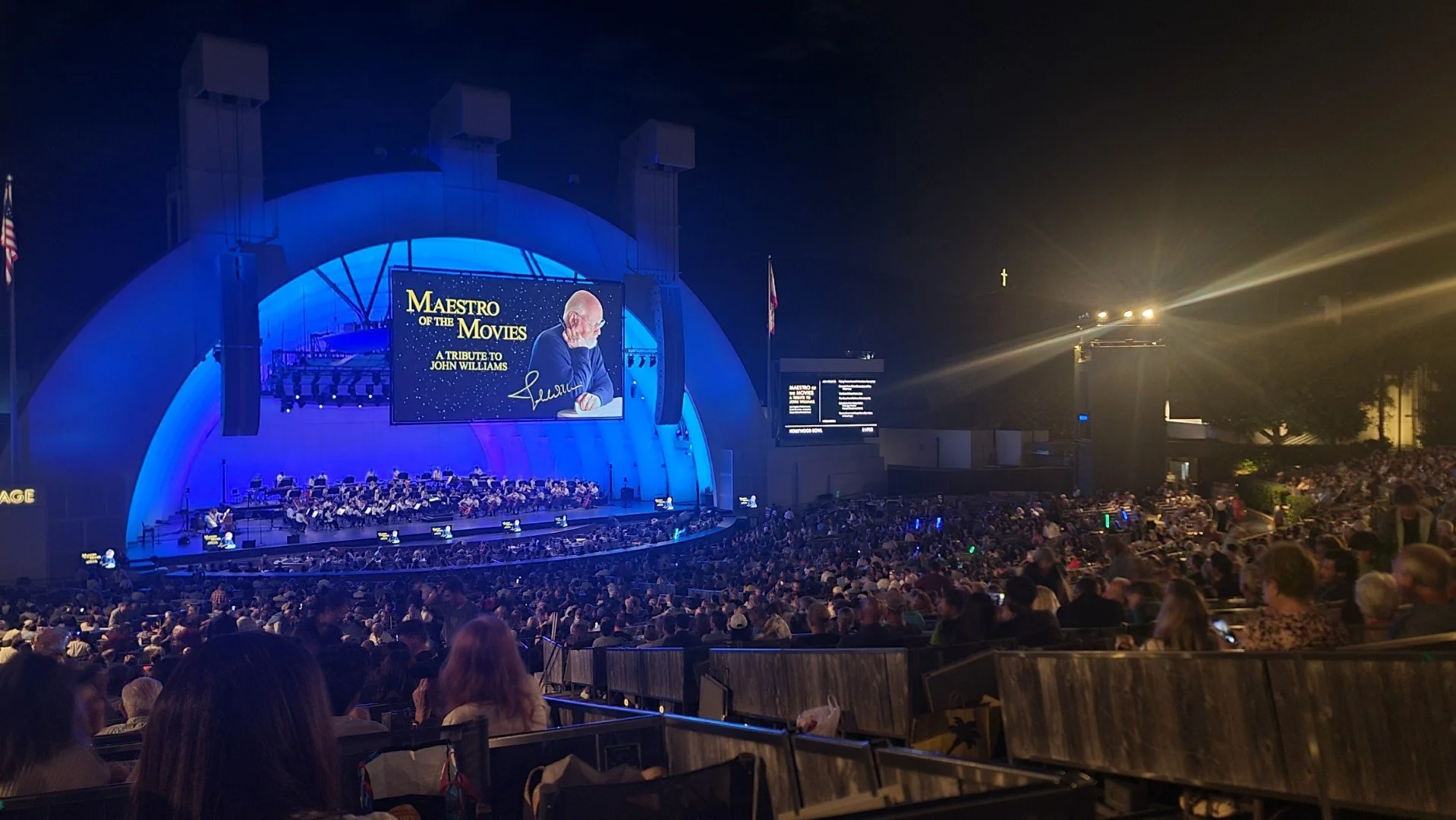
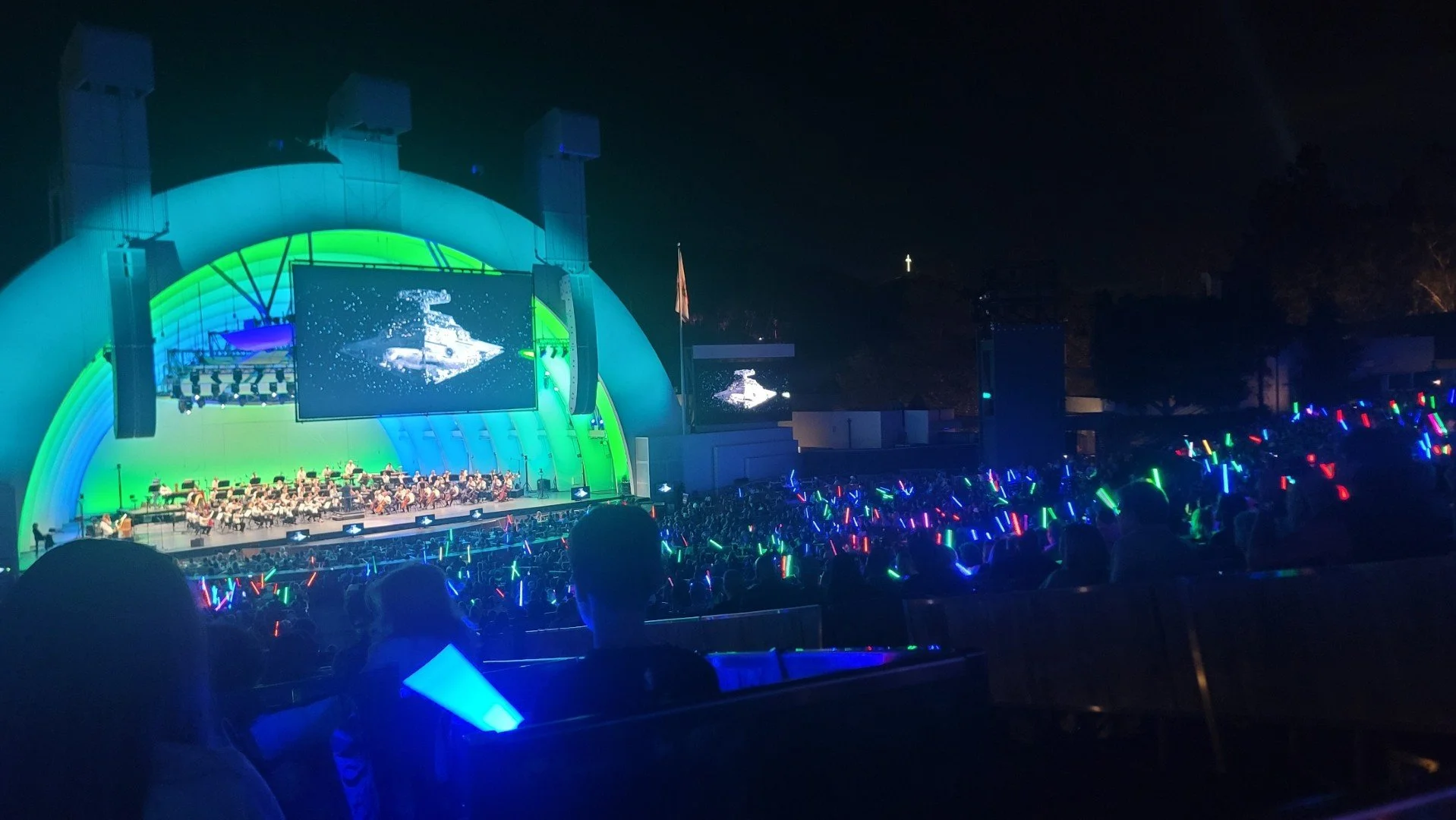
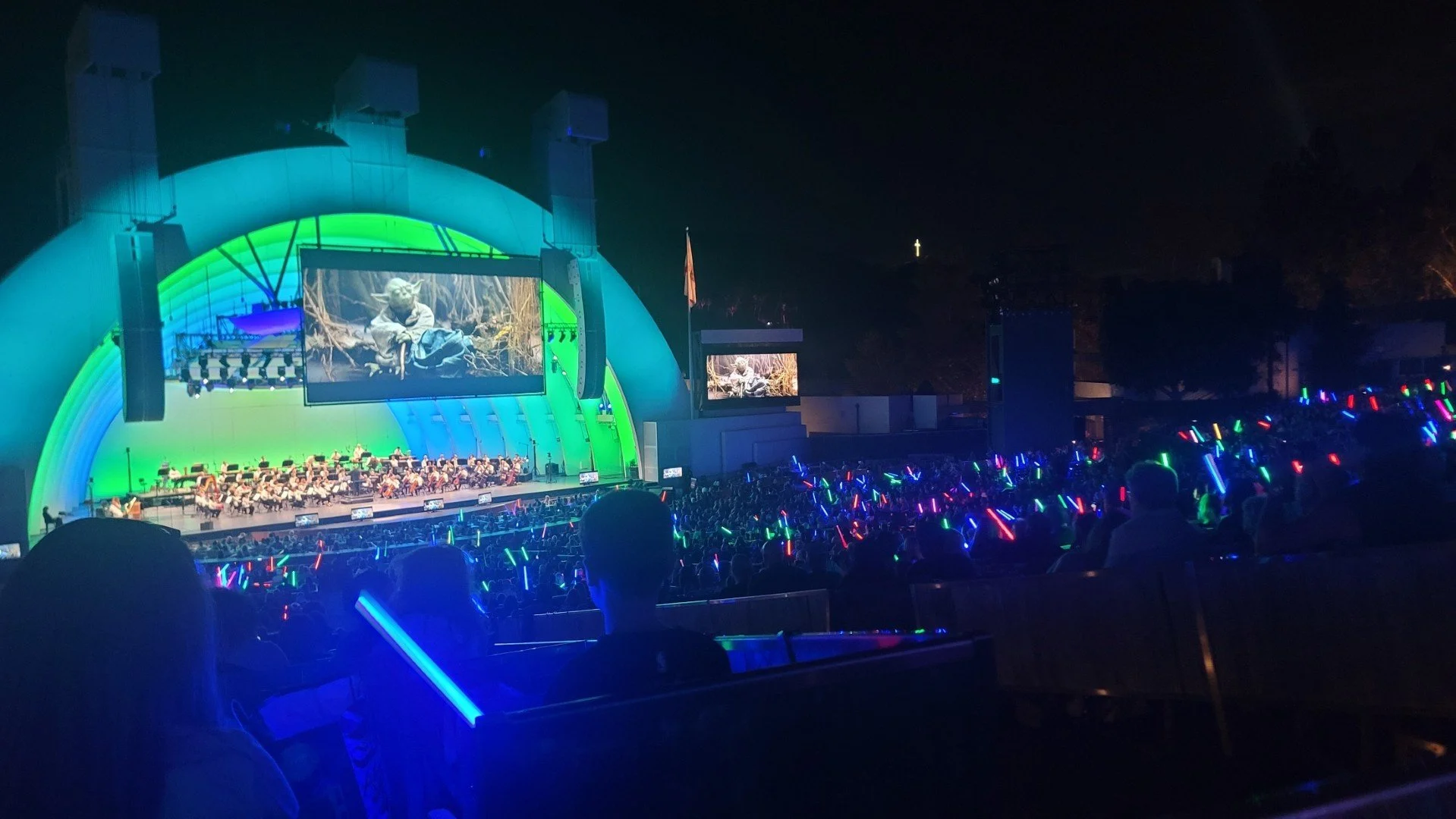
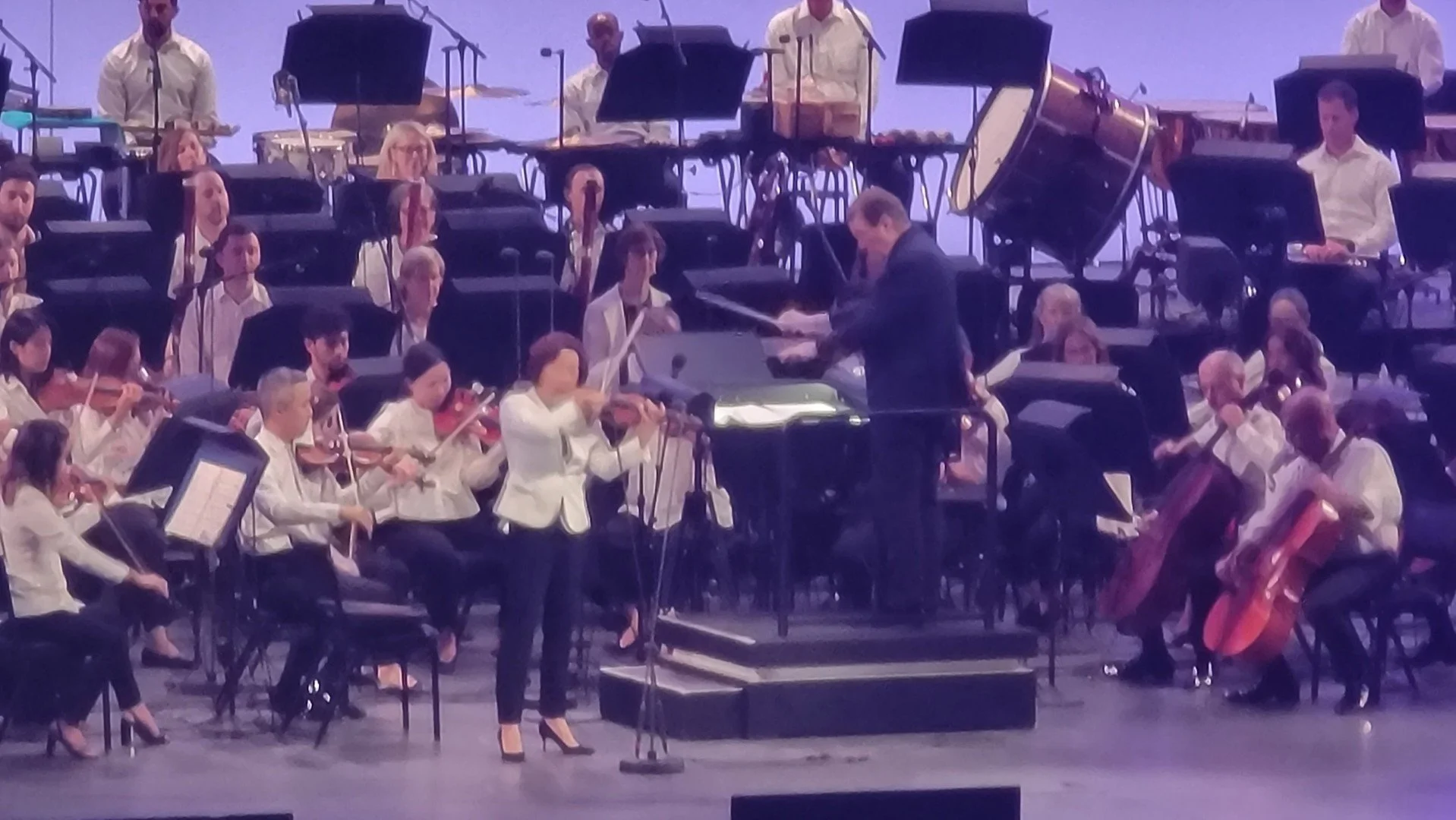
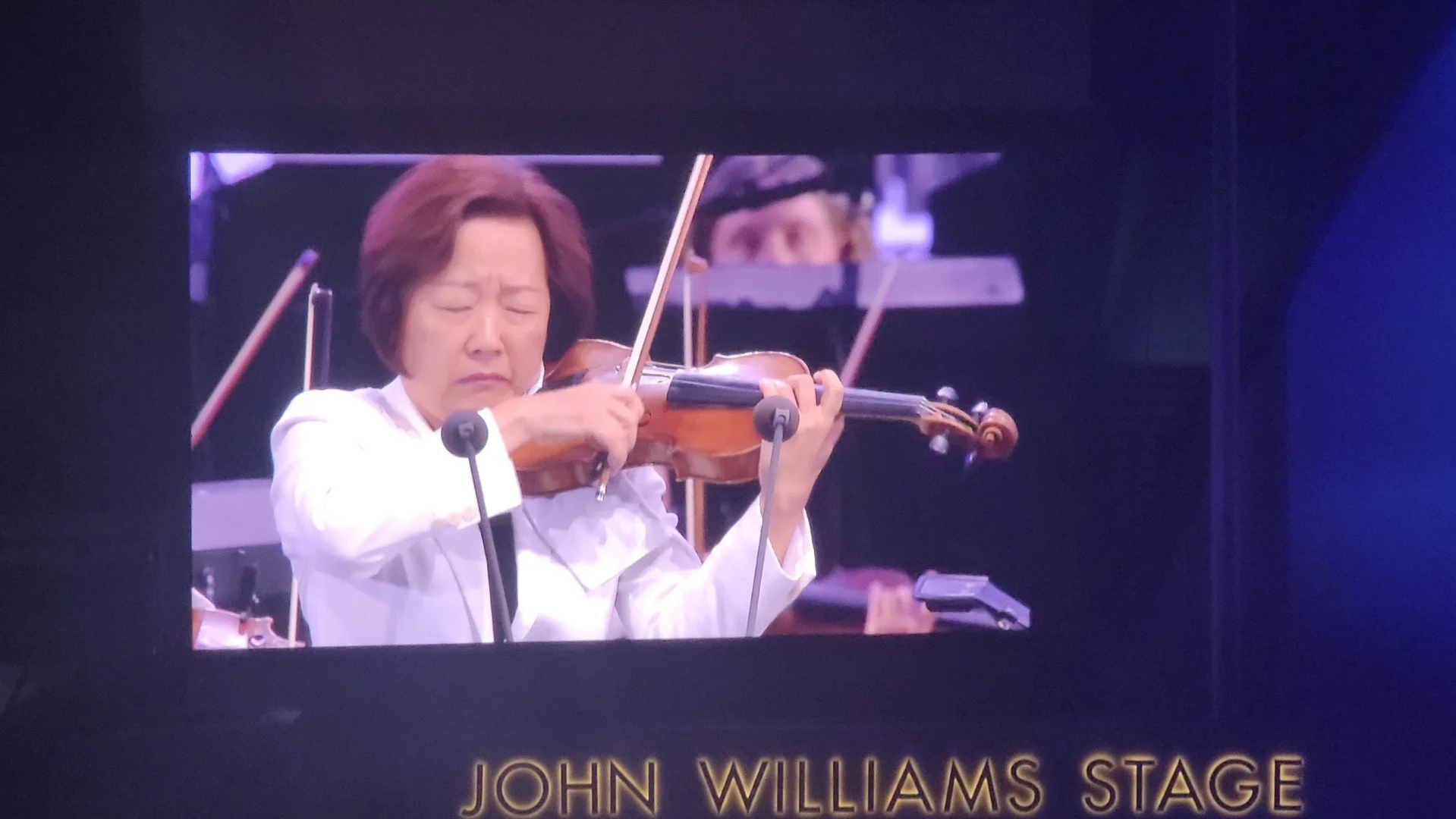
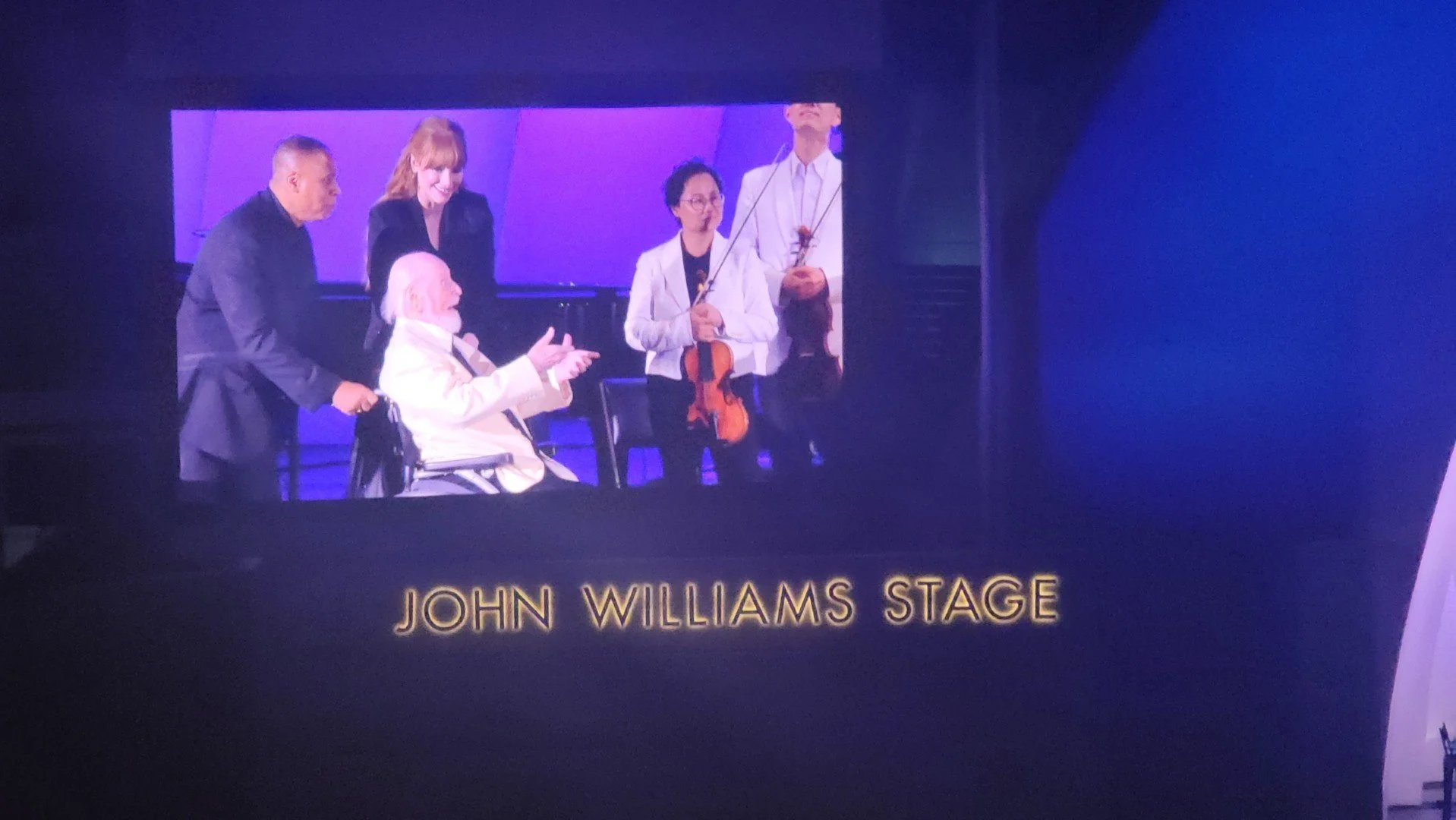
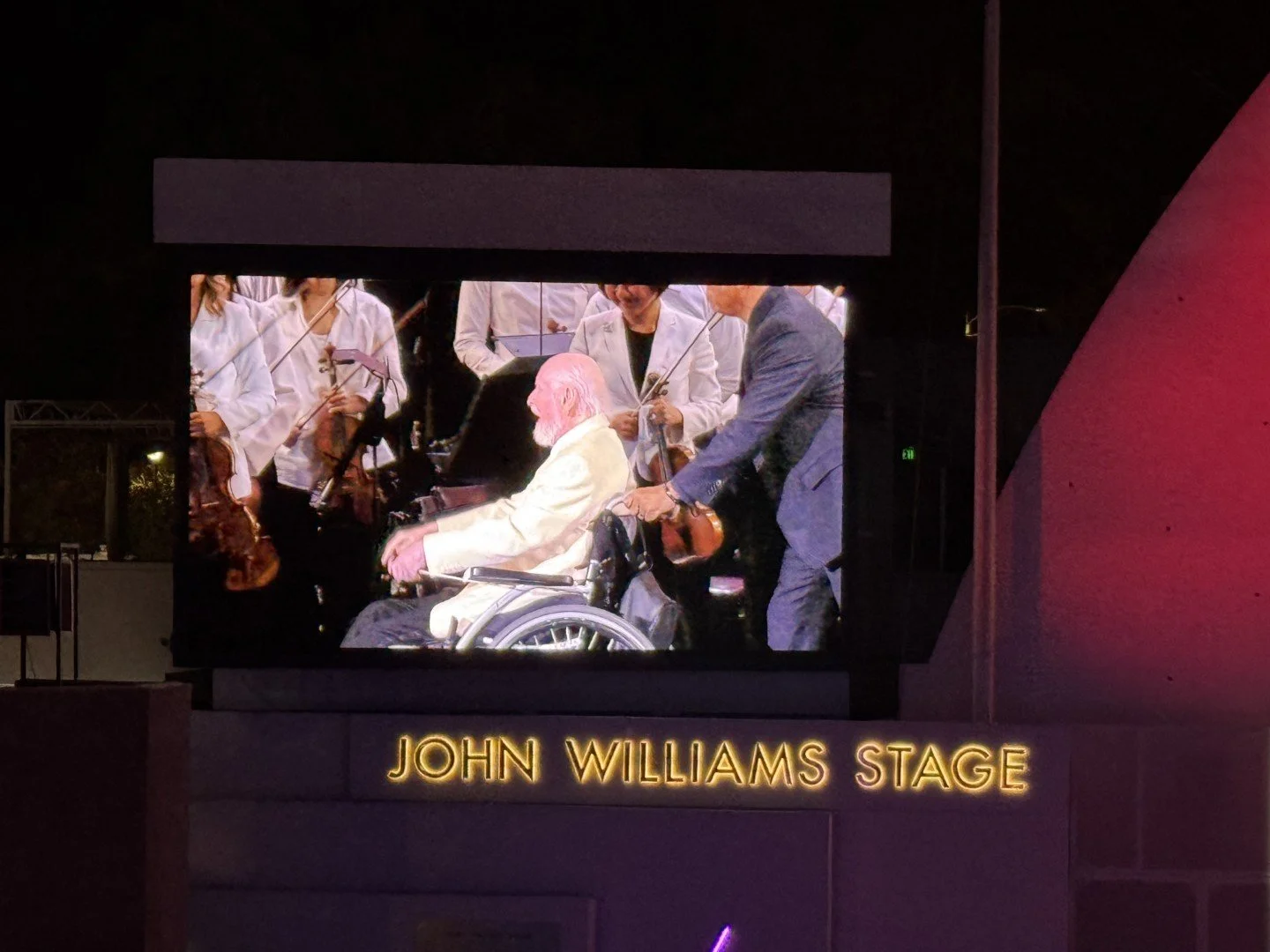
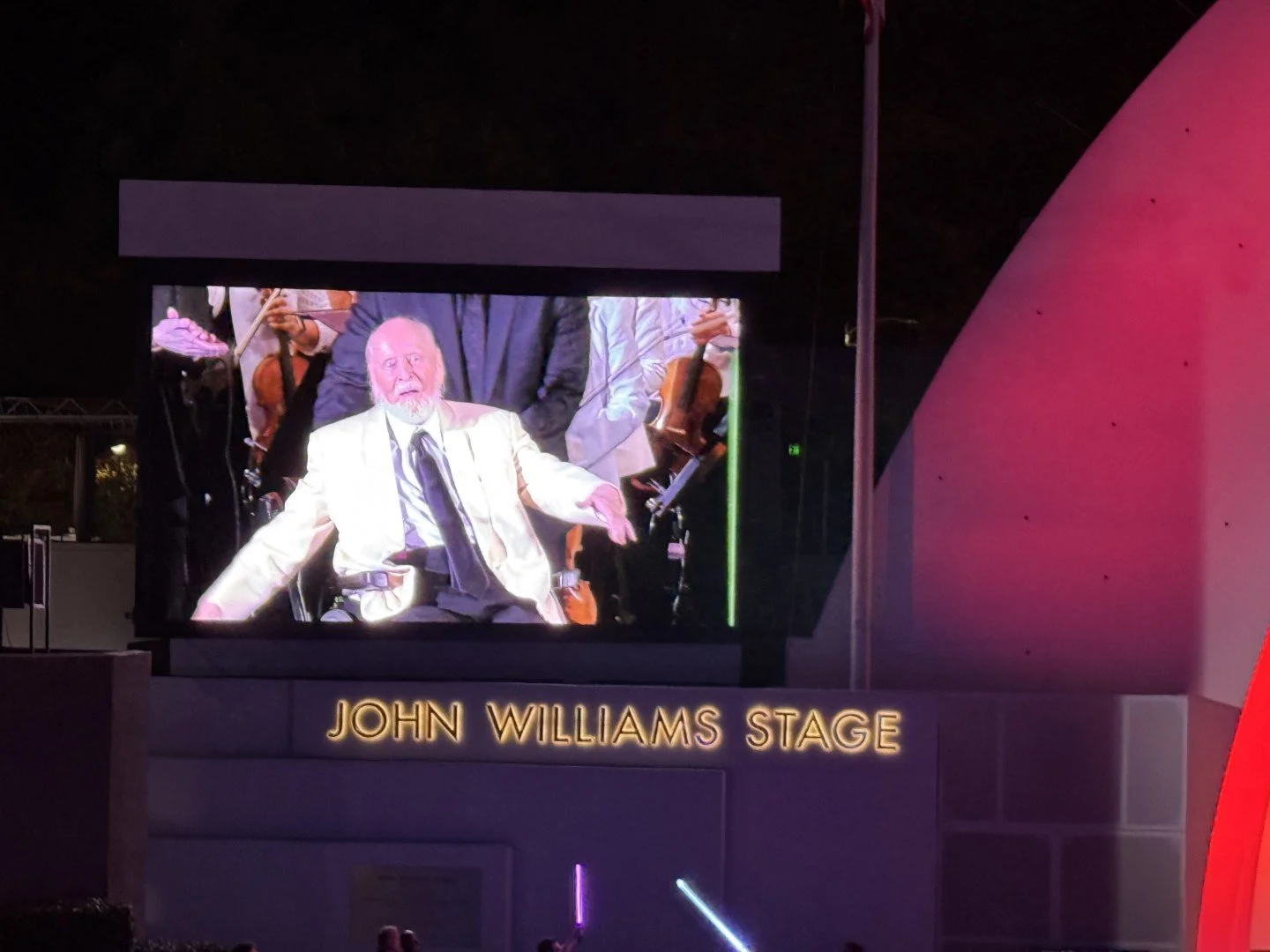
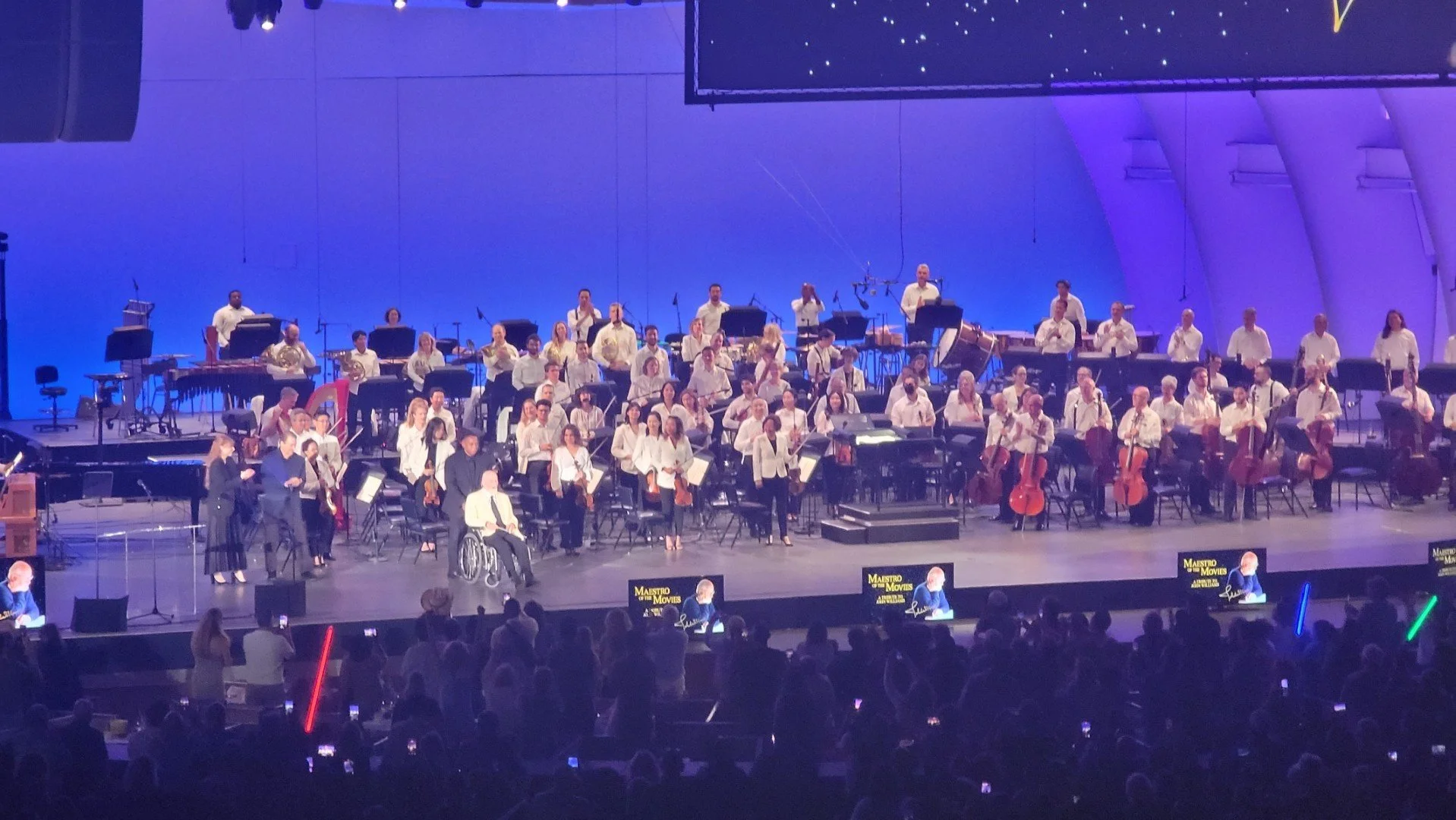
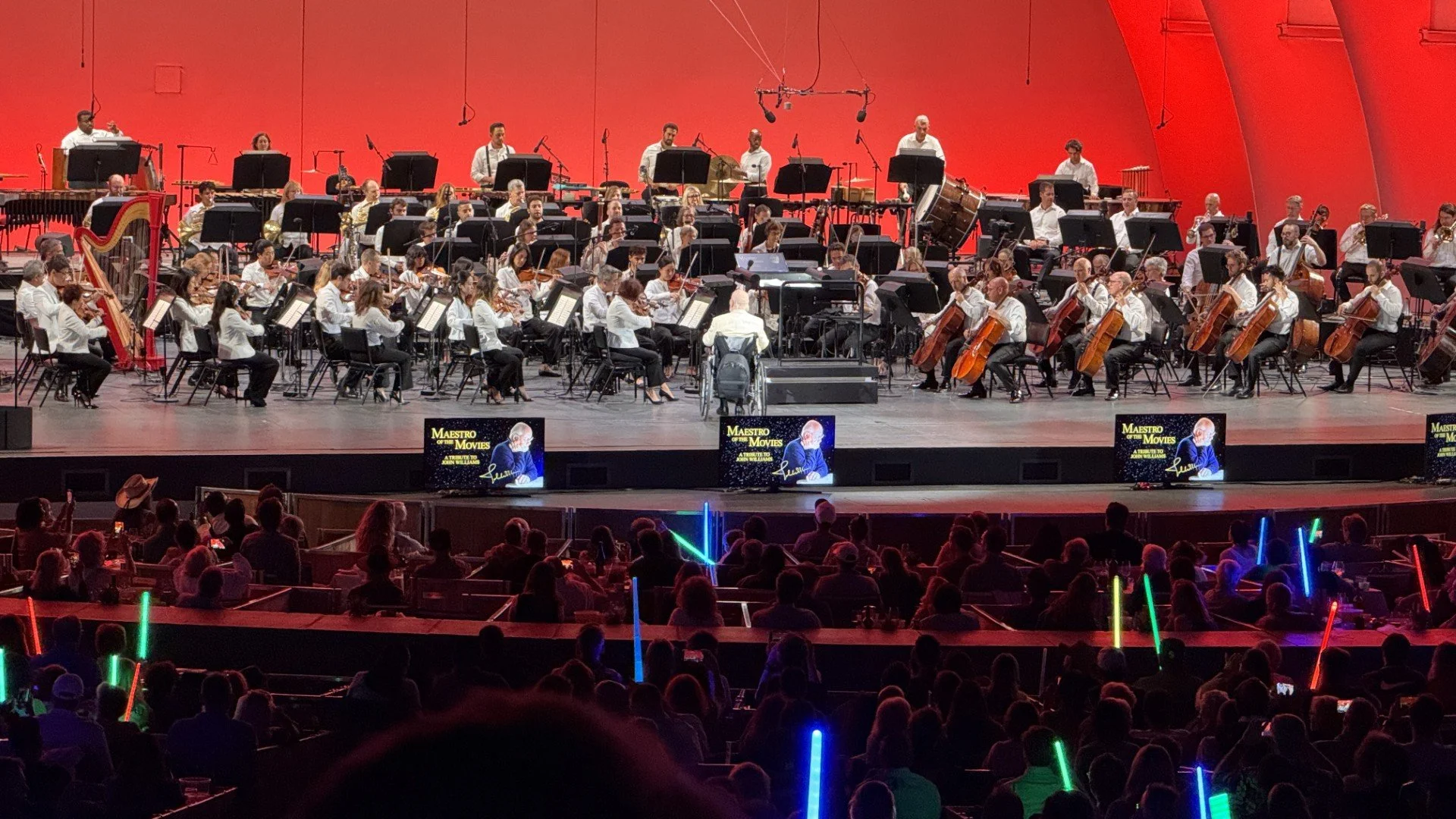
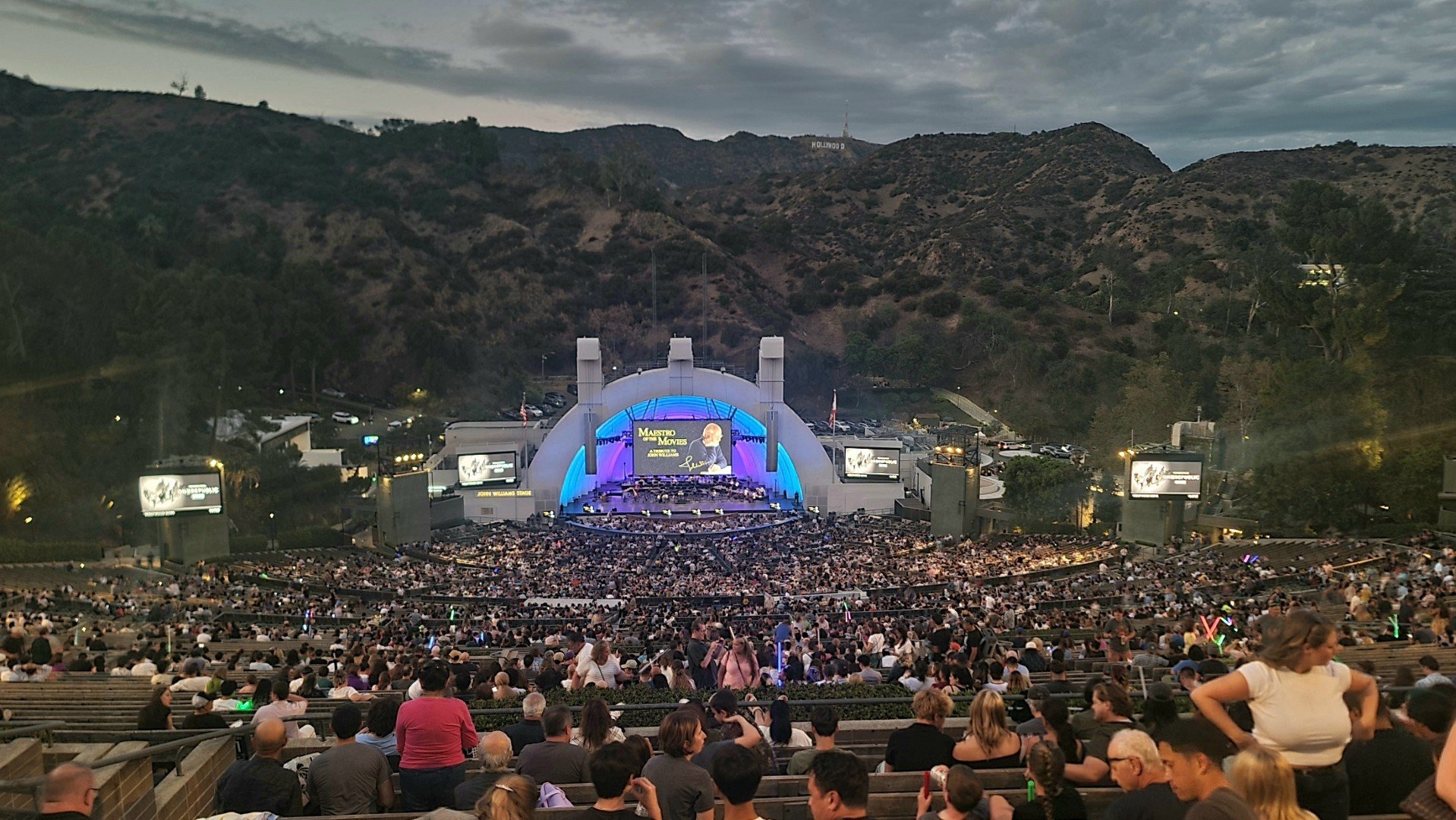
From a singular genius in all music to a singular genius in American film music, movie buffs returned the following day to pay tribute to John Williams, the “Maestro of the Movies”. Earlier this year, the Hollywood Bowl stage was christened “John Williams Stage”, so there is no better place to celebrate Mr. Williams’ long career than on his namesake stage. David Newman was the conductor, as he has been in years past, and actress Bryce Dallas Howard was the host who introduced each work and film clip.
The evening started with a video montage of street interviews (“JW’s music is the coolest!”), followed by film clips and a short speech by Newman (“My father was Alfred Newman [a Golden Age Hollywood composer]… his older brother Lionel was JW’s best friend.”) Miss Howard then regaled us with the impressive JW statistics and the story behind each movie clip: over 100 film scores, 5 Oscar wins, 54 Oscar nominations, 27 Grammies, 4 Golden Globes.
The orchestra began to play. The E.T. Flying Theme transitioned imperceptibly into the five-note motif of the “Close Encounter of the Third Kind” which swelled up to a powerfully moving climax. Moments of terror ensued with the Barrel Chase from “Jaws”, followed by the joyful Cave Sequence from “Raiders of Lost Ark”. The “Harry Potter” selections heard LA Phil keyboardist Joanne Pearce Martin’s magical playing of the Hedwig’s Theme on the celeste. The first half of the concert ended in the “Star Wars” medley accompanied by a sea of waving lightsabers. (First 500 lucky fans through the gate received a free lightsaber.)
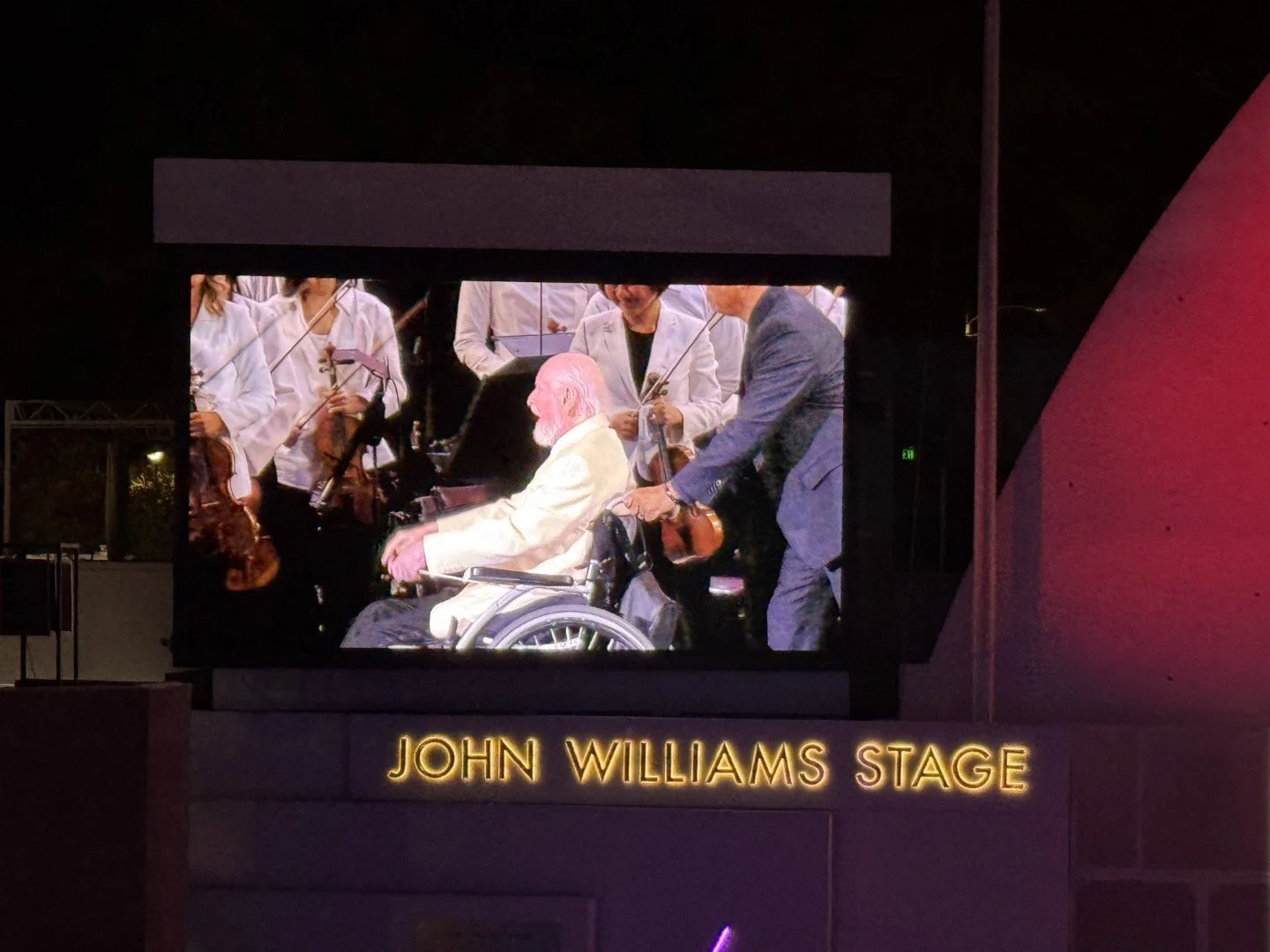
The second half began with interview clips of Spielberg, Lucas and Ron Howard, then “Superman” March accompanied a montage of old JW photos and conducting videos. Host Miss Howard returned to remind us that JW not only composed for film but also many notable commercial jingles, including NBC Evening News, Sunday Night Football, as well as the Olympics Fanfare. The brooding cello music from “Lincoln” (played by LA Phil’s principal cello Robert DeMaine) provided a moment of reflection and lyrical repose. The majestic, stately “Jurassic Park” theme and the heartbreaking emotion of “Schindler’s List” theme (played by concertmaster Bing Wang) – both written in the same year (1993) – showed remarkably John Williams’ versatility and humanity. The music for E.T.’s final scene was through-composed, with Spielberg cutting the film to the music, unusual for a Hollywood score. It is a sweeping multi-movement orchestral tone poem by Hollywood’s finest living symphonist.
Wholly unexpectedly, the audience erupted in cheers as the 94-year-old composer was wheeled out to conduct the encore, the Imperial March from “The Empire Strikes Back”. It was truly a night to remember in American film music.
Truman C. Wang is Editor-in-Chief of Classical Voice, whose articles have appeared in the Pasadena Star-News, San Gabriel Valley Tribune, other Southern California publications, as well as the Hawaiian Chinese Daily. He studied Integrative Biology and Music at U.C. Berkeley.