
Enjoyable Evening of Suite for Violin, Viola and Female Voice in Berkeley
/By Elsa Tranter
5/2/2026
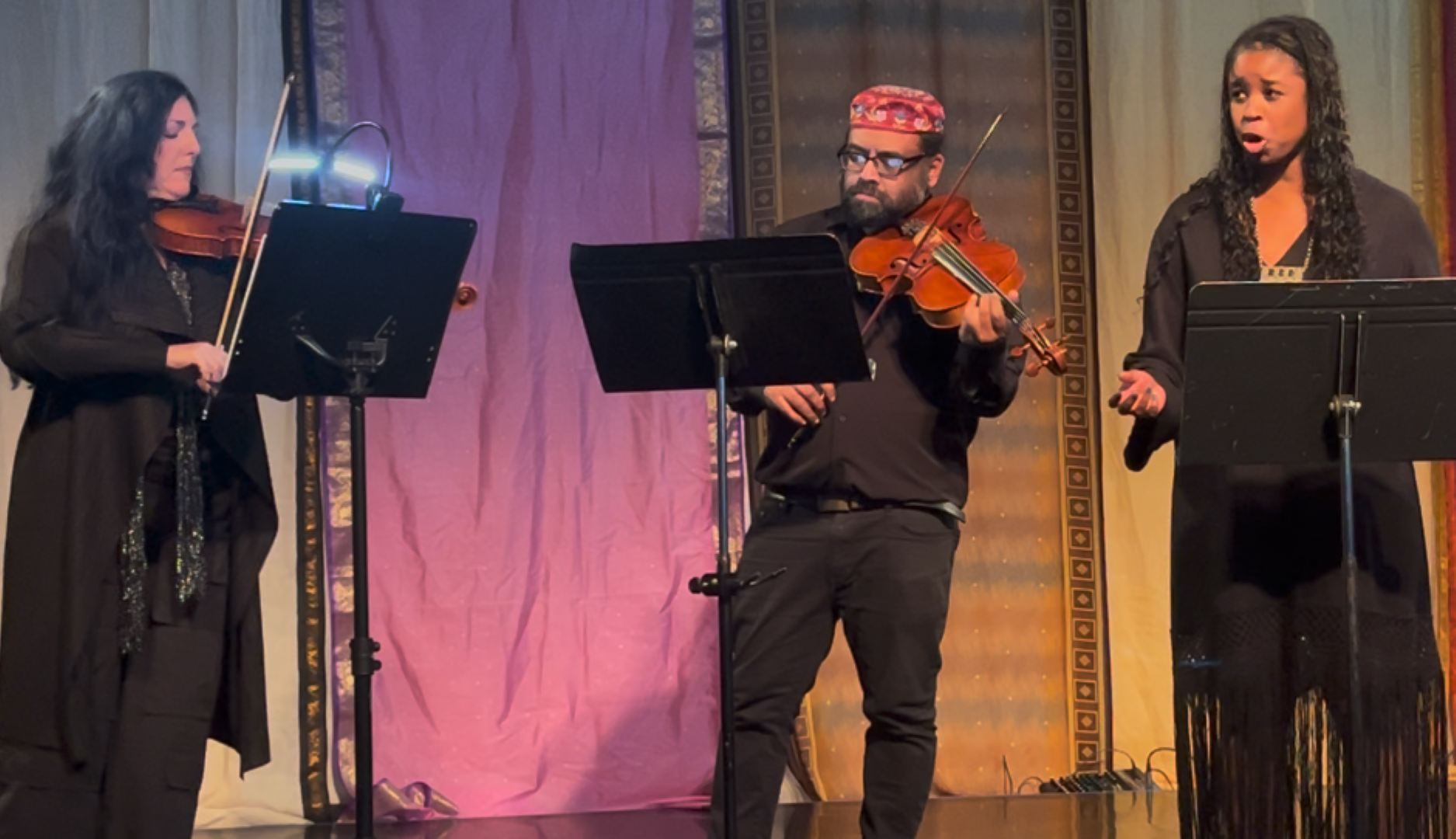
On Saturday April 25 I attended a performance of “Female, Ashkenazi, with Sewing Machine—a Suite for Violin, Viola and female voice” at Inferno Theater Berkeley’s 13th Contemporary performance Diasporaras Festival. This suite, the first of the evening’s eight pieces, was written in 2025 by Richard Jennings; it is inspired by and an adaptation from the incidental music he wrote for the play of the same name by Jamie Greenblatt in 2017.
I saw a production of the original play when it premiered in and found it quite engaging; it follows the life story of a woman who goes through many travails, successfully, and ponders her life and times. I remember the acting, the costumes, the story, from the original, but the music itself has not stayed with me.
Tonight the music, in ten short movements stood on its own. The Suite is written mostly in the Freygish (almost, but not quite, the same as the Phyrgian) scale which occurs in Indian, Middle-Eastern, and Flamenco music. It had a familiarity about it that was very pleasing to the ear; it sounded to me like a cross between classical and klezmer music with the frequency of minor keys and dance-like rhythms. Each section contrasted with the ones before and after and the piece as a whole was most engaging (not always the case with modern music upon first hearing). The composer was in the audience; I hope he was pleased.
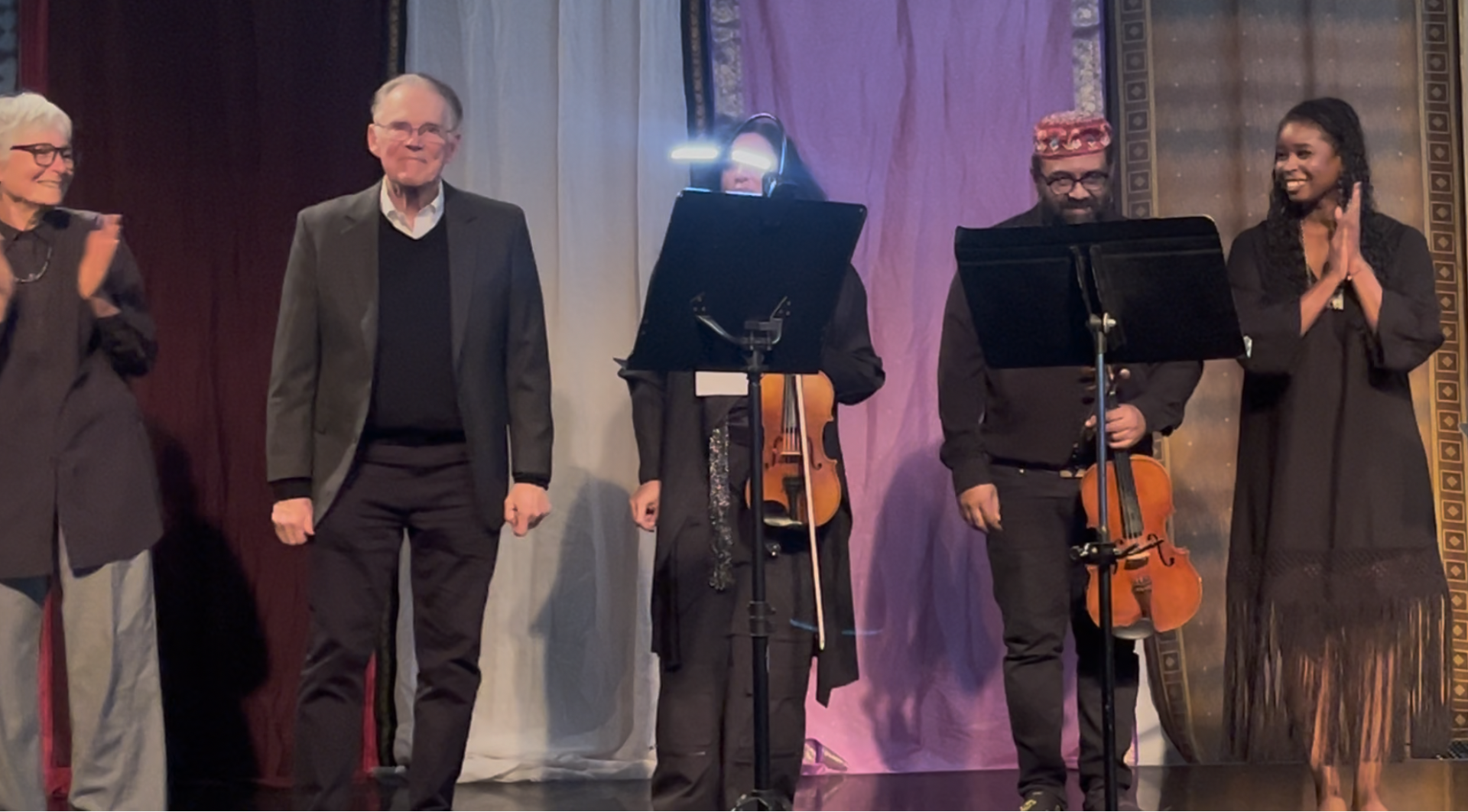
The violinist was Lila Sklar, who is classically trained but has broadened her performance styles to more varieties, including world music; she has traveled around the world with her instrument. She played a five-string violin which has an extra string tuned to a low C. This enables it to cover the full range of both violin and viola. Her tone was beautiful and her playing skillful and satisfying.
The violist was Charith Premawardhana, a classically trained violist and violinist born in Sri Lanka. He studied at the San Francisco Conservatory of music and plays widely in the Bay Area. He works hard to promote live music in community venues, a most worthy task. His tone was also beautiful and clear. The two strings blended and played against one another to great effect.
For one movement they were joined by vocalist Crystal Brown (who had, by the way, performed in the original theatrical production of Greenblatt’s play). She sang in Hebrew and English and has a lovely clear voice, which showed great emotion. However, I didn’t quite understand why one particular section had singing but not any of the others. Still, it was a lovely addition—as an opera buff I wished for more.
All in all I enjoyed the performance; the music and singing were first rate and all three performers were of a very high standard.
Elsa Tranter is a Bostonian who has lived in Berkeley for over 50 years and has been an opera goer for most of those years. She worked as a graduate student adviser at UC Berkeley and still attends Cal Performances regularly. Her favorite composer is Wagner and her favorite opera is Les Troyens.