
New Year's at LA Phil with Yunchan, Yuja and Cate Blanchett
/By Truman C. Wang
2/18/2026
February 1
Elim Chan, a former Dudamel Fellow, is on a short list of candidates to replace Dudamel in Los Angeles and has conducted some memorable concerts both at the Disney Hall and the Bowl. This month, she made another triumphant return to Disney Hall. A diminutive presence on the podium, a baton-less hand, and a ball of fire.
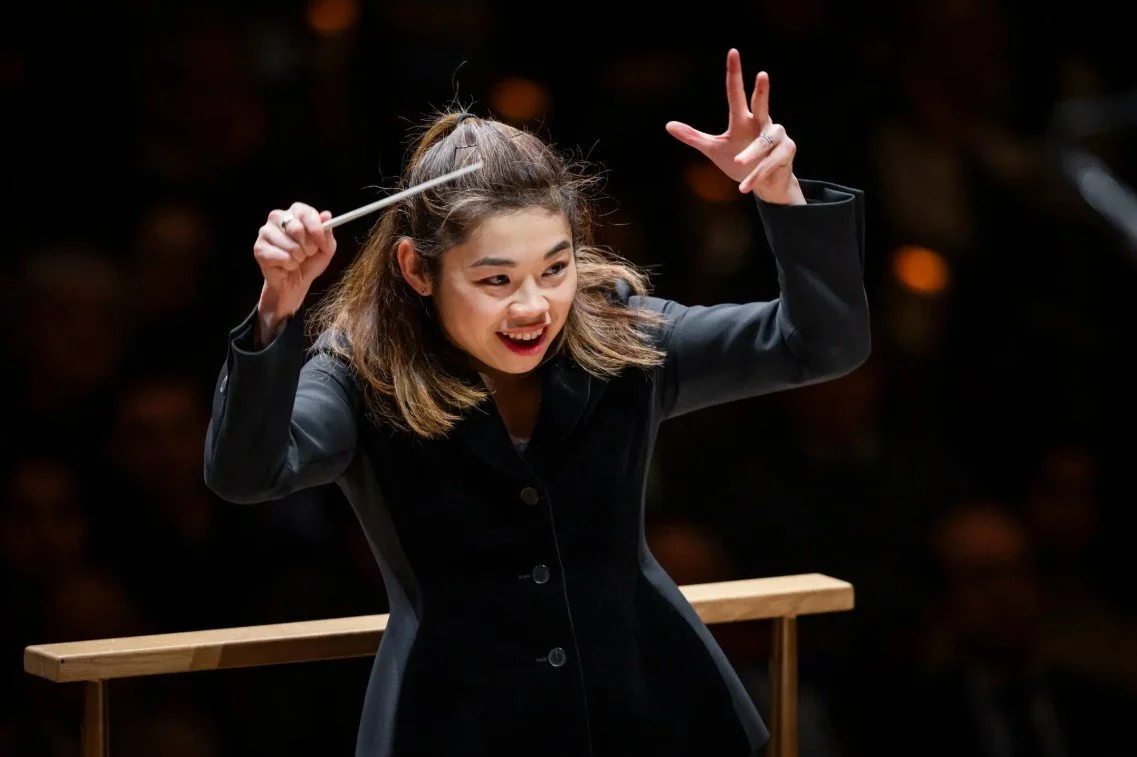
elim chan, photo credit: ny times
Ravel's Le Tombeau de Couperin, that most civilized of memorials, highlighted the orchestra's woodwinds in a kind of sonic filigree, which Chan shaped with elegant restraint, never letting the nostalgia curdle into sentiment. Bartók's Dance Suite then gave everyone permission to loosen their ties – five dances that prowl and strut with folk-inflected swagger, a reminder that Eastern Europe was always more interesting than the tourists thought.
Then came Mahler's Fourth, a symphony so deceptively light-footed that it sneaks into your chest before you realize what's happened. Chan navigated its tonal landscape with grace and confidence, shifting from pastoral sleigh bells to genuinely menacing violin solos in the scherzo. When South African soprano Masabane Cecilia Rangwanasha sang beautifully and floated some heavenly high notes in the celestial finale.
February 8
Thomas Adès conducting his own music while also programming Tchaikovsky at his most operatically unhinged is a bit like a chef who plates a four-course tasting menu and then casually mentions he wrote the kitchen's architectural plans. The man contains multitudes.
The evening opened with the US premiere of British composer William Marsey's Man with Limp Wrist — an LA Phil commission inspired by Salman Toor's oil painting of the same name. Marsey's orchestral color palette is vivid and essentially melodic, his music attentive to the painting's quality of gentle subversion.
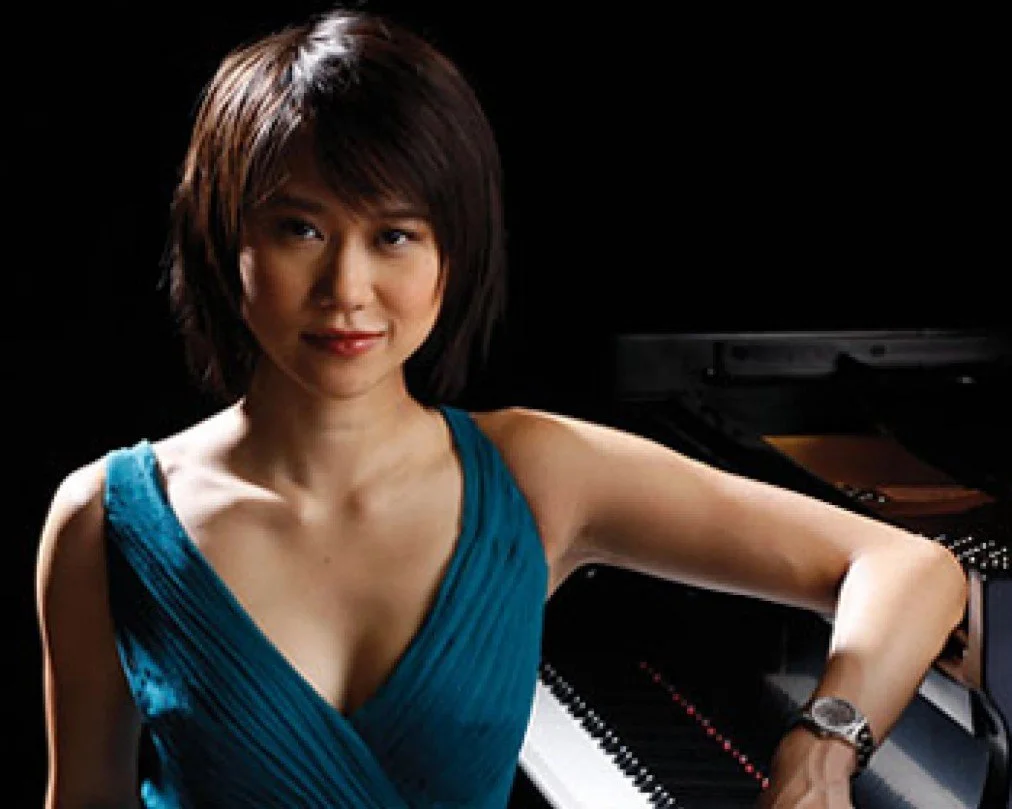
pianist yuja wang
Yuja Wang may skimp in her wardrobe choice (a shredded shiny silver short shirt on this occasion), but never in her music-making. Prokofiev's terrifying Piano Concerto No. 2 would send a lesser pianist into therapy; Wang dispatched it with a devil-may-care abandon. The colossal first-movement cadenza alone — a sprawling, almost sadistic test of endurance — was an Olympics-worthy tour de force of pianistic gymnastics. Wang was immaculate, implacable, and thrilling.
After the intermission, Tchaikovsky's Francesca da Rimini swept in like another weather event in Southern California — basses and winds conjuring the hurricane of Dante's second circle with almost unseemly relish, cymbals crashing as the doomed lovers' story reaches its inevitable end. Adès conducted it with the authority of someone who understands that Tchaikovsky's excess is the point, not the problem. He closed the concert with his own Aquifer, a fast-moving, mysterious piece that felt like a subterranean current — cool, purposeful, and gone before you quite understood where it was heading.
February 14
Only the LA Phil could make Valentine's Day into a meditation on tyranny, Enlightenment idealism, and the price of freedom — and somehow make it feel romantic.
Gustavo Dudamel opened with the world premiere of Ricardo Lorenz's Humboldt's Nature, an LA Phil commission inspired by Alexander von Humboldt's early 19th-century wanderings through South America. Lorenz captures the naturalist's insatiable wonder with orchestral color that feels genuinely exploratory — not travelogue music, but the internal experience of discovering that the world is stranger and richer than can be easily categorized. The scoring for a large orchestra, a wide assortment of percussion, and loudspeakers emitting roaring deep low-frequency tones, was surprisingly effective in tender moments as well as turbulent episodes.
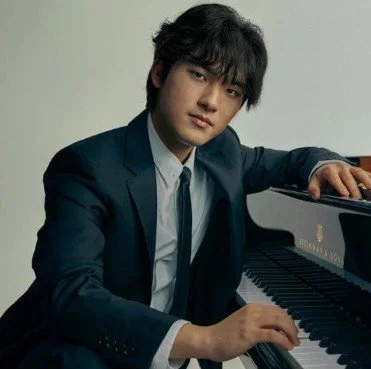
yunchan lim, photo credit: james hole
Between exploration and heroism stood Yunchan Lim with Schumann's Piano Concerto, and this young 21-year-old Korean pianist — winner of the 2022 Van Cliburn at the unprecedented age of 18 — continues to rewrite one's expectations of what emotional depth looks like in a performer barely into adulthood. His Schumann was warm, searching, and absolutely certain of itself: Schumann's famous claim that music can "send light into the darkness of men's hearts" felt like a factual statement rather than a metaphor.
Beethoven's complete incidental music to Egmont, reimagined in a new adaptation by playwright Jeremy O. Harris, with Cate Blanchett as narrator. If the casting sounds irresistible, the execution matched the promise. Blanchett brought Goethe's tale of Dutch resistance to Spanish oppression into fierce contemporary relief — Dudamel noting that the struggle for freedom "still resonates powerfully today," which given the current state of the world required no elaboration. Soprano Elena Villalón was luminous in Beethoven's songs, and the famous Egmont Overture hit like a fist. A grand, politically charged, formally dazzling evening — exactly the sort of thing that reminds you why arts matter.
Truman C. Wang is Editor-in-Chief of Classical Voice, whose articles have appeared in the Pasadena Star-News, San Gabriel Valley Tribune, other Southern California publications, as well as the Hawaiian Chinese Daily. He studied Integrative Biology and Music at U.C. Berkeley.