
L.A. Opera Presents Miss Congeniality Diva, Nadine Sierra, at Zipper Hall
/By Truman C. Wang
3/26/2026
Photo credit: Classicalvoice.org
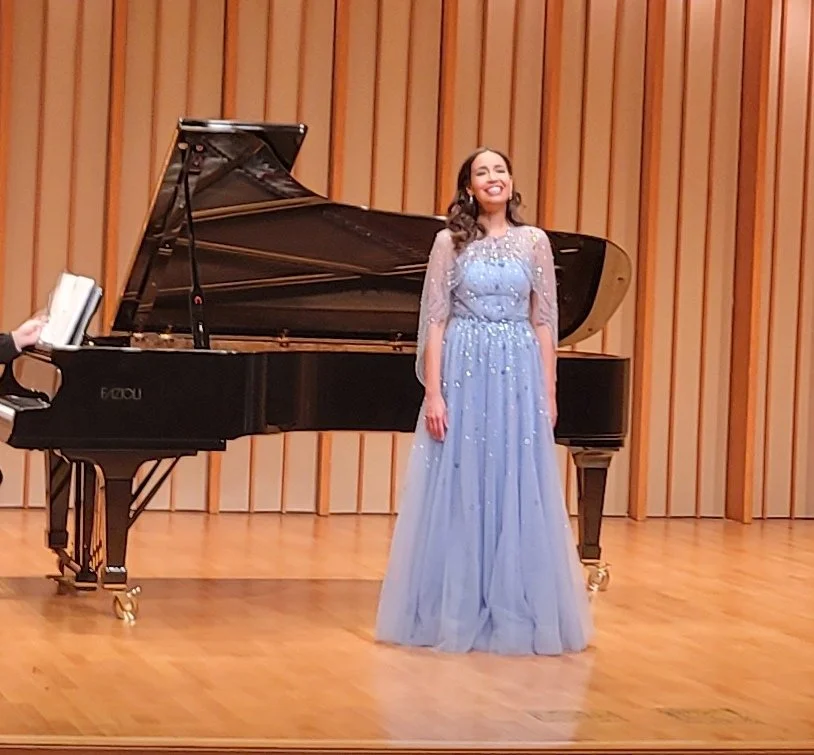
Nadine Sierra arrived at Zipper Hall on Saturday, March 21 – an L.A. Opera event – and proceeded, over the course of two hours, to remind everyone in the room why the coloratura soprano remains one of opera's most intoxicating voice types — and why Ms. Sierra herself is among its finest living practitioners. Accompanied with unfailing elegance by pianist Bryan Wagorn, she delivered a program of breathtaking range and considerable charm, ending in a cascade of encores that sent everyone home humming and beaming.
The first half of the concert was all opera, bathed in belcanto sunshine. "So anch'io la virtu magica" from Donizetti's opera Don Pasquale heard every ornament placed with precision, every pianissimo floated softly, every coloratura run coolly sparkling, matching the twinkles in her light blue chiffon dress. Then came Mozart’s "Deh vieni non tardar" from Le Nozze di Figaro, where her long legato line and the portamento (in the closing bar) were exquisitely rendered. In contrast to the florid Donizetti number, the Mozart was a simple pleasure unadorned with any ornament or appoggiatura.
The accompanist Bryan Wagorn stepped up for a solo turn, playing the Manon Lescaut intermezzo with great passion and commanding authority, like a maestro on the podium and the entire orchestra on his ten fingers.
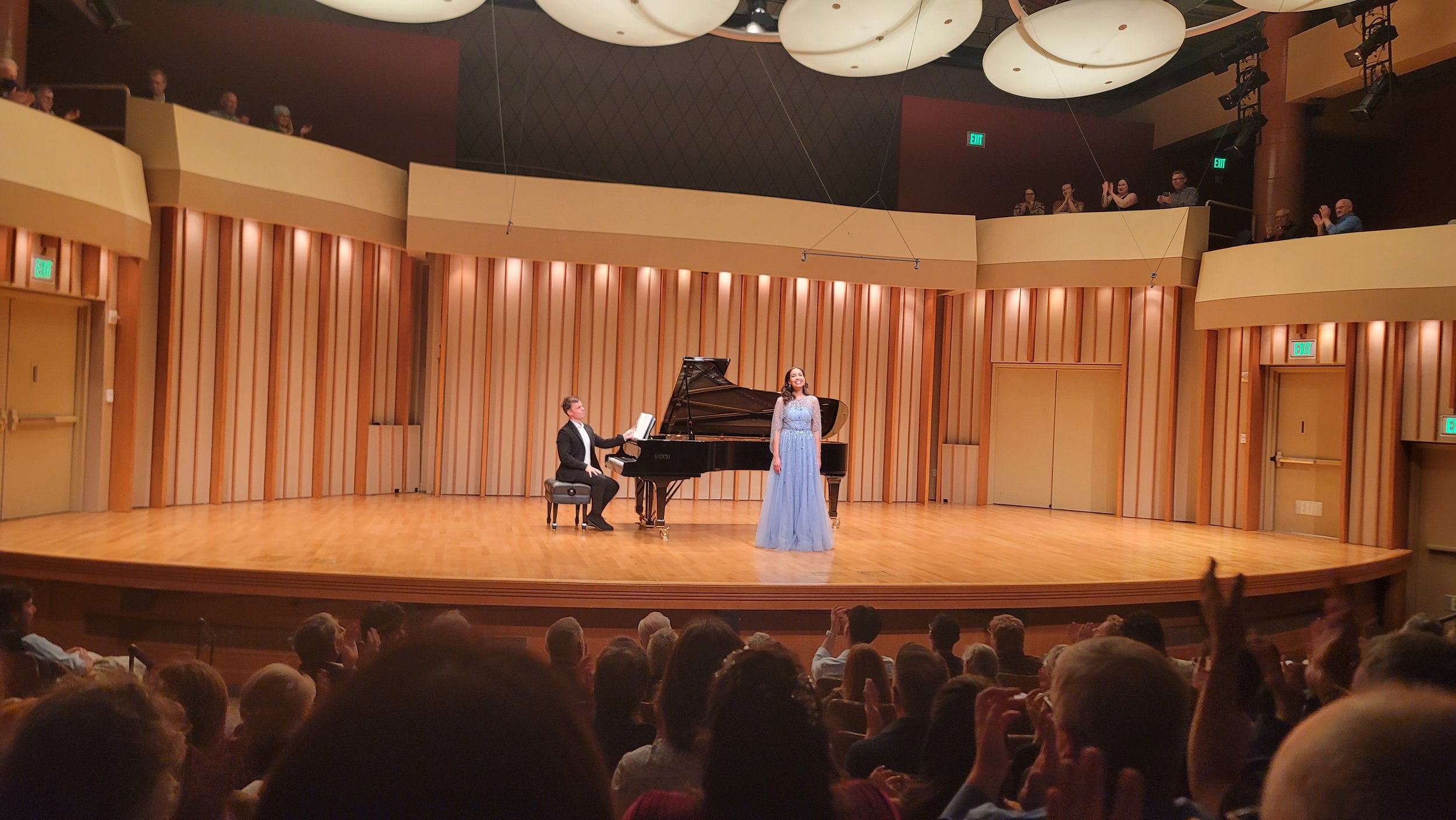
Two Puccini arias followed: "Quando m'en vo" and "Mi chiamano Mimì" from La Bohème for two characters of polar opposites – a town flirt party girl and a dreamy seamstress. They showcased Ms. Sierra’s ability to inhabit the two opposing characters with vocal acting, conveying Musetta’s vanity with a knowing half-smile in the voice, and Mimì’s poetry with a heartbreaking “i fior ch’io faccio, ahimè”.
Violetta’s solo scene "È strano... Sempre libera" is a musical and dramatic highlight that ends act one of Verdi’s La Traviata (a role that Ms. Sierra portrayed on stage with distinction). Here it ended the first half of the concert in a torrent of emotions, a string of stratospheric roulades, all while maintaining pellucid, lovely tone throughout, up to the penultimate high Eb. Wagorn accompanied at the piano as if he and the soprano were breathing as one, unfazed by sudden rubato and tempo shifts.
After intermission, the evening pivoted south — to Spain and Latin America —where tempos are hot and songs are sexy. Joaquin Rodrigo's Cuatro Madrigales Amatorios were exquisite miniatures – two sad love songs and two siren songs with pert vocal embellishments – all delivered by Ms. Sierra in silvery clarity, crisp diction and genuine affection. Villa-Lobos's Melodia Sentimental glowed warmly and sensuously; Consuelo Velázquez's immortal Bésame Mucho (a popular hit number of the Portland Oregan-based Pink Martini band) was delivered with low-key, smoldering sensuality.
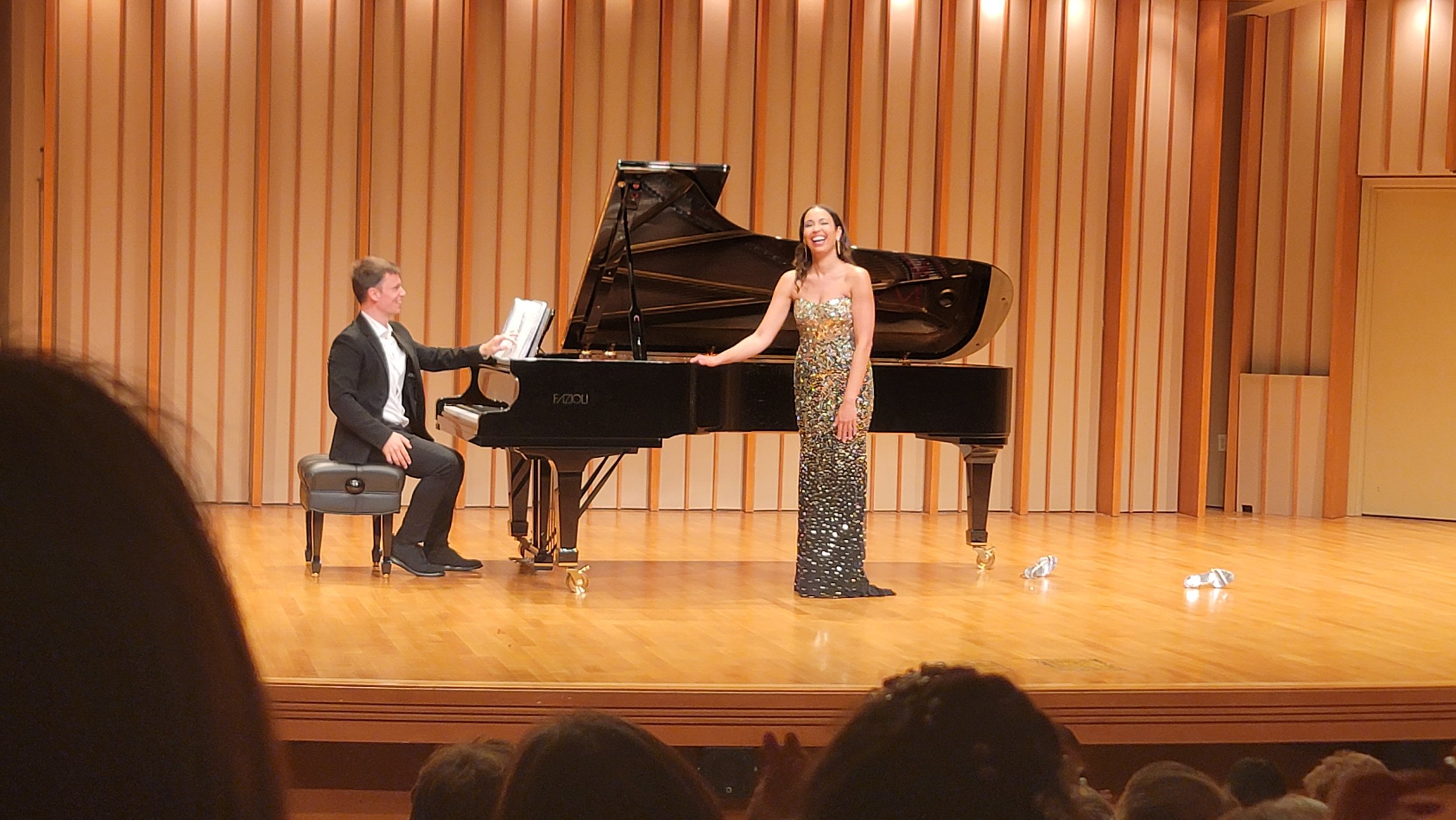
Two pop songs ensued – "Estrellita" and "Cielito Lindo" – the audience was invited to sing along in the latter, a rare treat in a song recital. The main program closed with Gerónimo Giménez's "Me llaman la Primorosa" from El Barbero de Sevilla. It was a piece of sparkling Spanish zarzuela in which Ms. Sierra, like the singing minx Rosina in the story, kicked off her heels, deployed her shrewd comic timing and flirtatious stage presence to maximum effect. There was even a very funny piano lesson episode. The pianist and soprano were clearly enjoying themselves in this one, as were the audience.
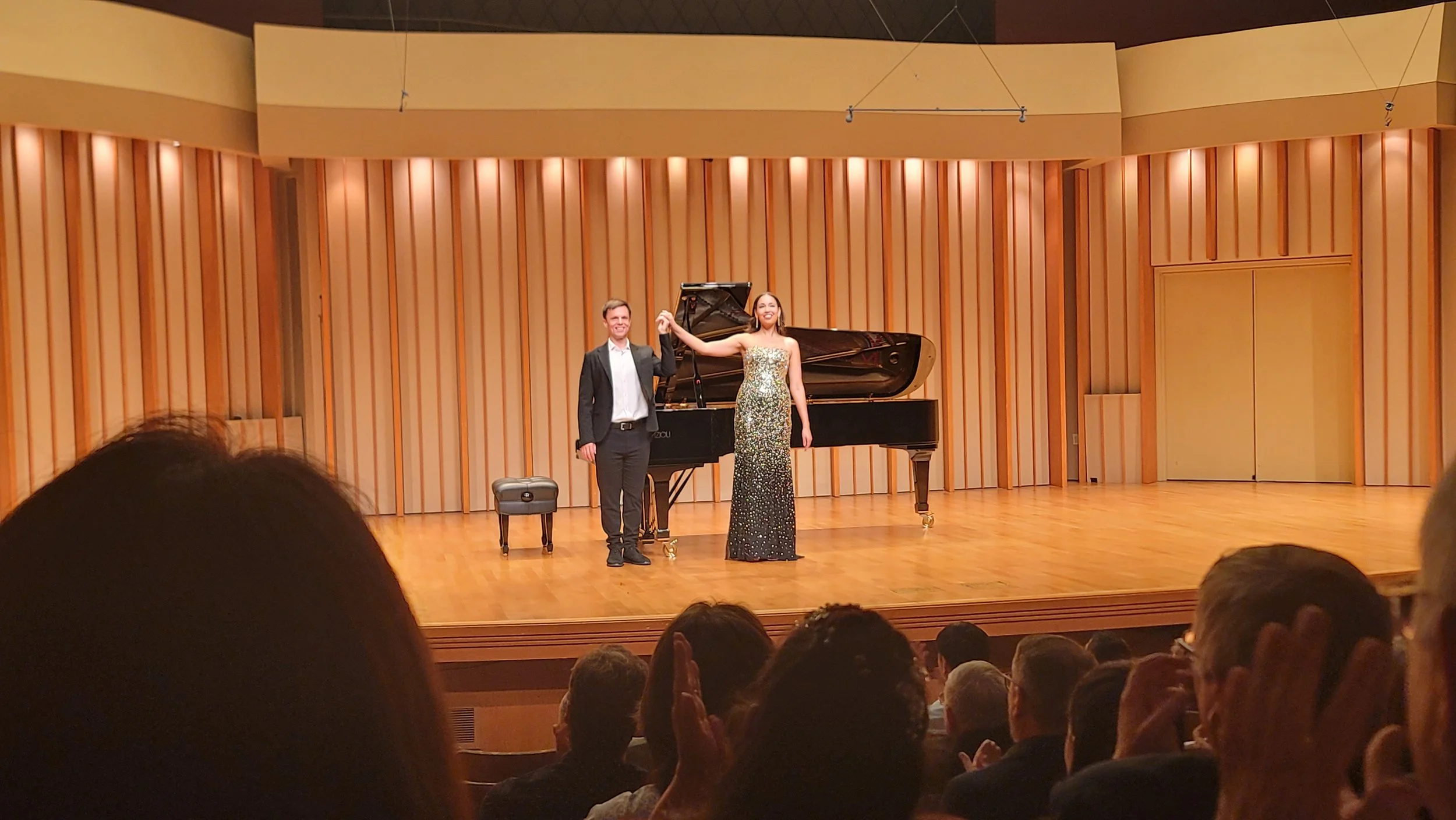
Desserts are often the most memorable part of a meal. There were six delectable encores in total. “Summertime” was all smoky, suspended beauty. Gounod’s Jewel Song showcased Ms. Sierra at her most playfully brilliant, coloratura sparkling like her sequined black cocktail dress that she changed into after intermission. "I Could Have Danced All Night" was genuinely delightful. "Vissi d'arte” was deeply felt and added complex depth to a parade of cheesecake and soufflé. Then, an "O Sole Mio" that ended in a flash of coloratura fireworks (no tenor could possibly do that!) And finally, as a closing benediction of almost surreal sweetness, and a heartfelt homage to the great American mezzo-soprano Marilyn Horne (now 92 and confined to a nursing home in Santa Barbara), mentor to both Ms. Sierra and Mr. Wagorn: Stephen Foster's "Beautiful Dreamer," which left the room in a kind of suspended hush before the applause broke all over again.
Nadine Sierra is, without a doubt, a fine mistress of belcanto singing. But what sets her concert apart was her down-to-earth demeanor as a ‘Miss Congeniality’ diva, willing to share her music and even her personal life with her fans in talks and banter. (“We hear you got engaged!”, someone in the audience shouted out; to which she replied, “No…where’s my ring? But I am taken.”) One hopes Ms. Sierra will return to L.A. Opera to portray one of her memorable belcanto roles.
Truman C. Wang is Editor-in-Chief of Classical Voice, whose articles have appeared in the Pasadena Star-News, San Gabriel Valley Tribune, other Southern California publications, as well as the Hawaiian Chinese Daily. He studied Integrative Biology and Music at U.C. Berkeley.