
Casual Friday at LA Phil, with Free Drinks, a Finnish Demigod, an old Venetian Cello, and a Bagel
/By Truman C. Wang
4/18/2026
What do a bagel, a Finnish demigod, and a 300-year-old Venetian cello have in common? Friday night (April 17) at Walt Disney Concert Hall, they shared a program — and somehow it all made perfect sense.
Conductor Ryan Bancroft opened with Shostakovich's Suite for Variety Orchestra No. 1, a delicious oddity in five movements that reads like the composer raiding a cabaret prop closet: saxophones slinking through smoky corners, a guitar strumming with rakish nonchalance, and an accordion grinning like it knows a joke the rest of the orchestra doesn't. It's Shostakovich in his most subversive party-host mode — the fun is real, but you suspect he's laughing at you as much as with you.
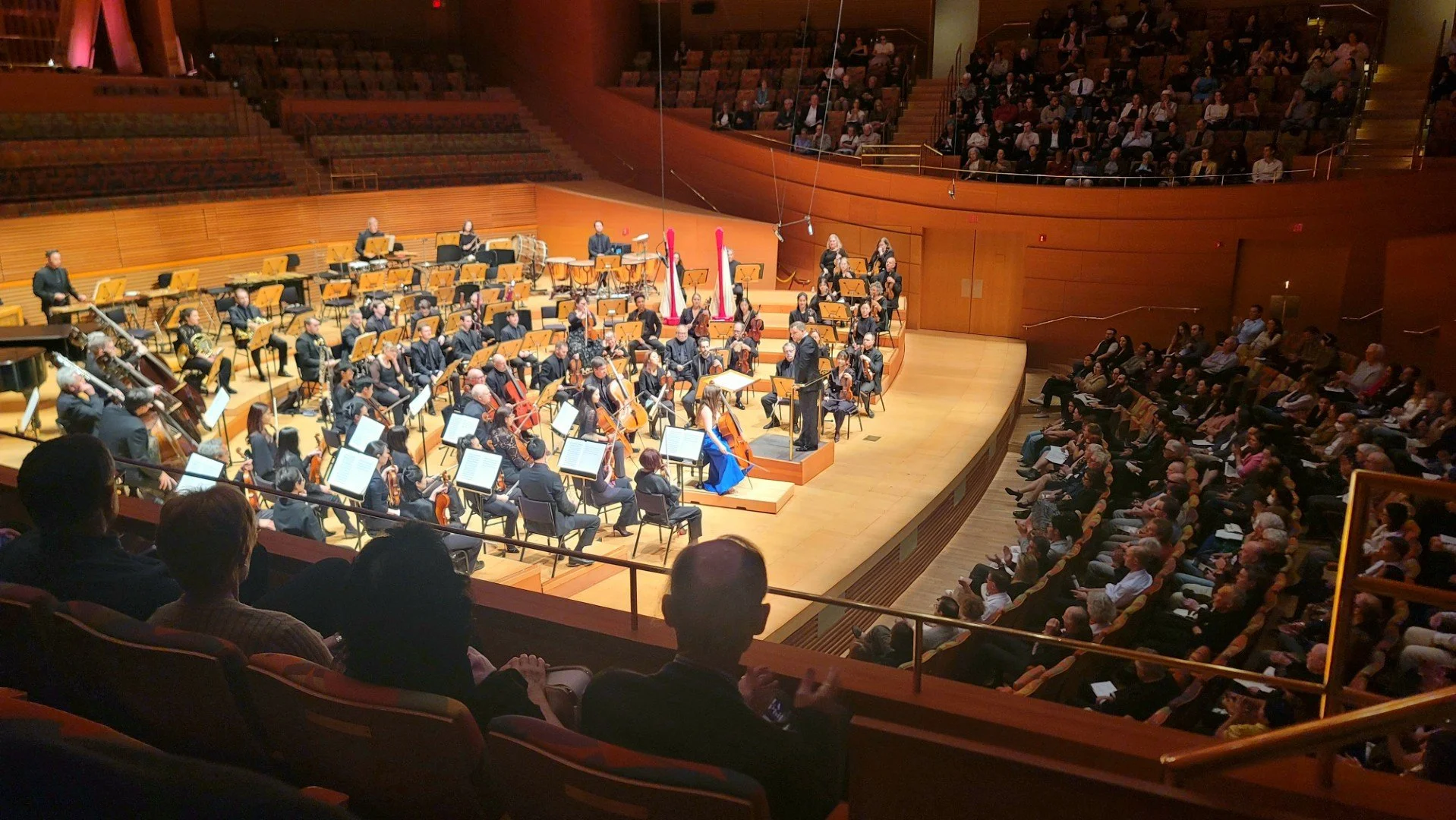
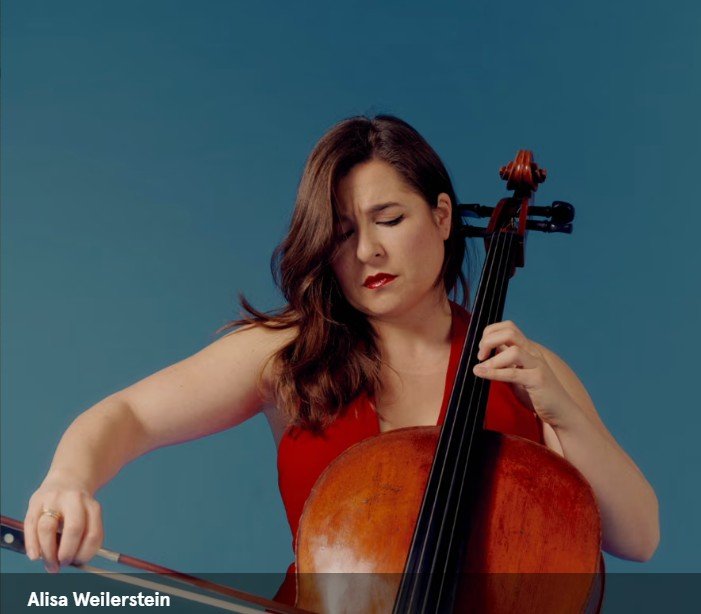
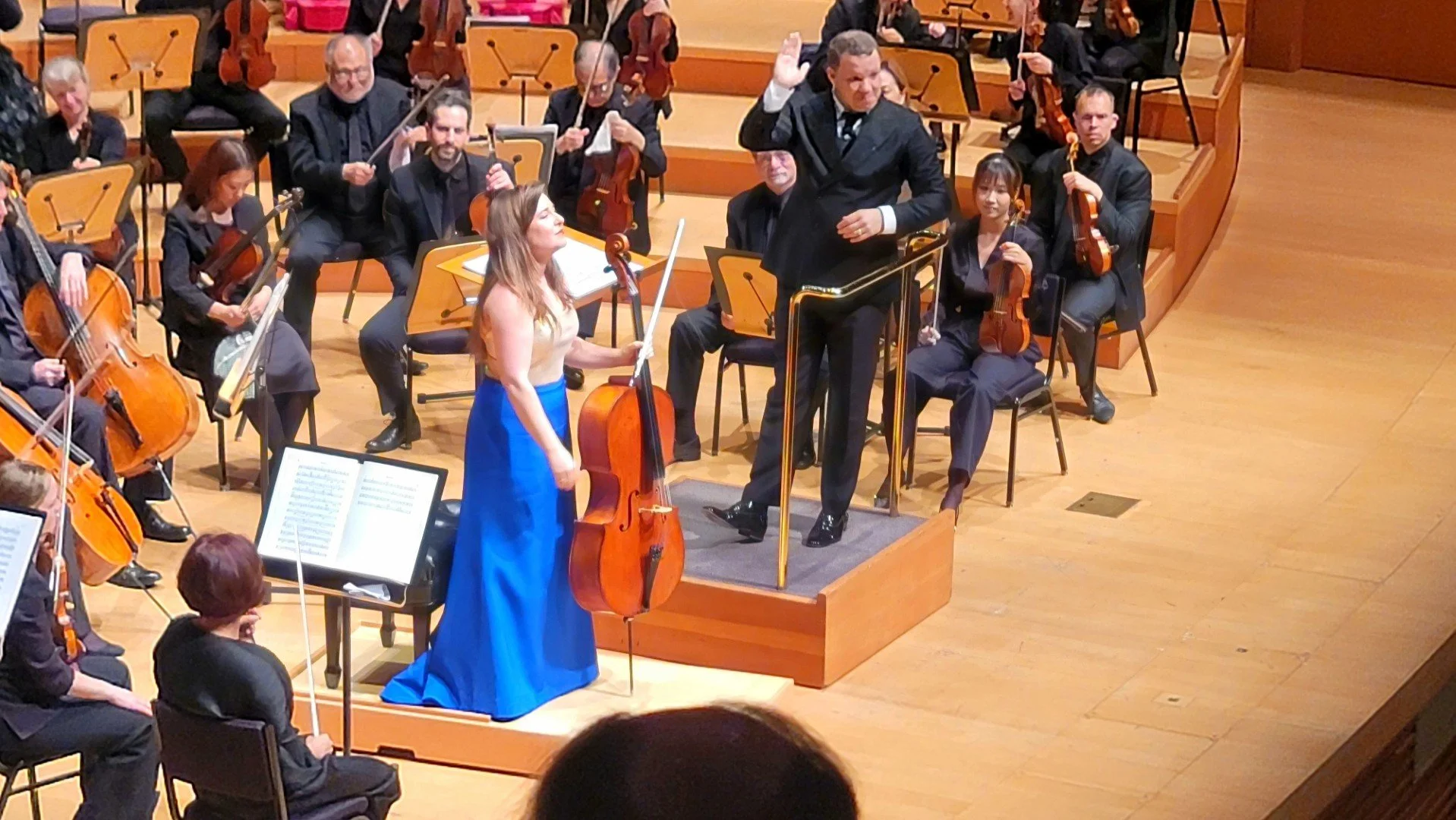
Then came the main event. Alisa Weilerstein took the stage with her 1723–1730 Domenico Montagnana cello – the "Mighty Venetian" – which produced what was possibly the most beautiful, bewitching cello sound I have ever heard in any hall. Unlike the more popular and better-known first concerto, and in a stark contrast to the extroverted opening piece, Shostakovich's Cello Concerto No. 2 is a strange, haunted creature: brooding and spooky, yet built on a Ukrainian street vendor's song hawking bagels ("Who will buy my bagel (bubliki)?"). Only Shostakovich could take baked bread and alchemize it into existential dread. Ms. Weilerstein's playing ranged from passages of almost unbearable tenderness to fierce, clawing outbursts (she literally let her long hair down in several heated moments and cadenzas) – the Montagnana cello's deep, rich, powerful, yet clear tone clinging to the ear after each phrase, like a complex, deep broth lingering on your tongue long after it is consumed. Ms. Weilerstein gave an encore (Sarabande from J.S. Bach’s Solo Cello Suite No. 4) with tender phrasing and tragic overtones, spilled over from the cello concerto.
After intermission, Mr. Bancroft led the LA Phil into the mythical forests of Sibelius' Lemminkäinen Suite – four tone poems tracking the hero of Finland's national epic the “Kalevala”, through love, battle, death, and defiant return. The strings shimmered with icy luminescence; and the English horn’s famous cry in The Swan of Tuonela floated over the orchestra like a ghostly apparition. The monumental finale, Lemminkäinen's Return, sent the audience home on a surge of brass and timpani that felt like scaling a mighty glacier.
A program that began with a saxophone and an accordion, pivoted to bagel-fueled existentialism, and ended with Finnish mythology, it was all served up with free drinks on a Casual Friday night at the LA Phil.
Truman C. Wang is Editor-in-Chief of Classical Voice, whose articles have appeared in the Pasadena Star-News, San Gabriel Valley Tribune, other Southern California publications, as well as the Hawaiian Chinese Daily. He studied Integrative Biology and Music at U.C. Berkeley.