
Sir John in Love in LA: Verdi's Lovable Rogue Gets a Worthy Revival
/By Truman C. Wang
4/20/2026
Photo credit: Cory Weaver

Sarah Saturnino as Meg Page, Craig Colclough as Falstaff, Nicole Heaston as Alice Ford and Hyona Kim as Mistress Quickly
There is a particular delight in seeing a 79-year-old composer write his first comedy in 50 years and produce the wittiest opera in the repertoire – and there is a parallel delight in watching L.A. Opera revive the opera, Falstaff, with infectious enthusiasm for a new generation of operagoers. I attended the opening night on Saturday, April 18.
The production is a happy resurrection of the late Lee Blakeley's 2013 staging; it is handsome, well-crafted, sensitive, straightforward, and without an ounce of directorial pretention. Adrian Linford's sets and costumes deserve special mention: the design is period-grounded without being stiff, with the warm ochre and deep green of a Shakespearean English tavern that feels at once Tudor and timeless. Scene changes take place discretely behind a drop-down parchment paper scrim (upon which are quotes from Shakespeare’s Merry Wives of Windsor, and Henry IV Parts I and II – Boito’s sources for the libretto.) In Ford’s Act I monolog, the movable backdrop serves two purposes – scene change from Garter Inn to Ford’s house, and Falstaff’s sartorial transformation into full pompous splendor.


Director Shawna Lucey has taken to heart Falstaff’s Act I admonition to his thieving henchmen: “Steal gracefully, and with good timing” (which also serves as a musical advice of tempo di rubato for their inept attempt at antiphon.) The Quickly-Falstaff scenes, the Alice-Falstaff scene, the Act II finale concertato, in which all are frozen and befuddled, were executed with grace, pace and perfect comic timing in synch with Verdi’s miraculous score.
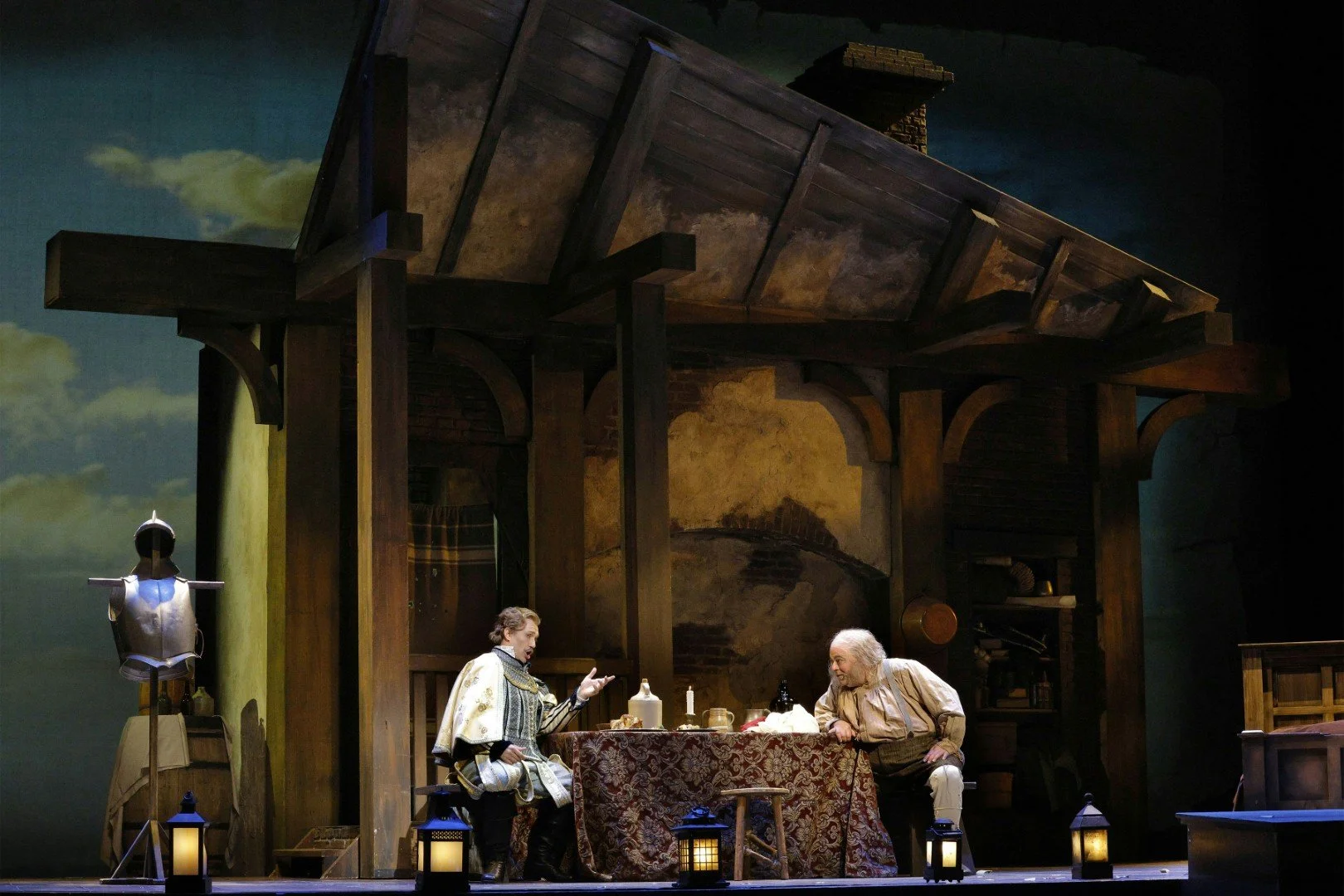


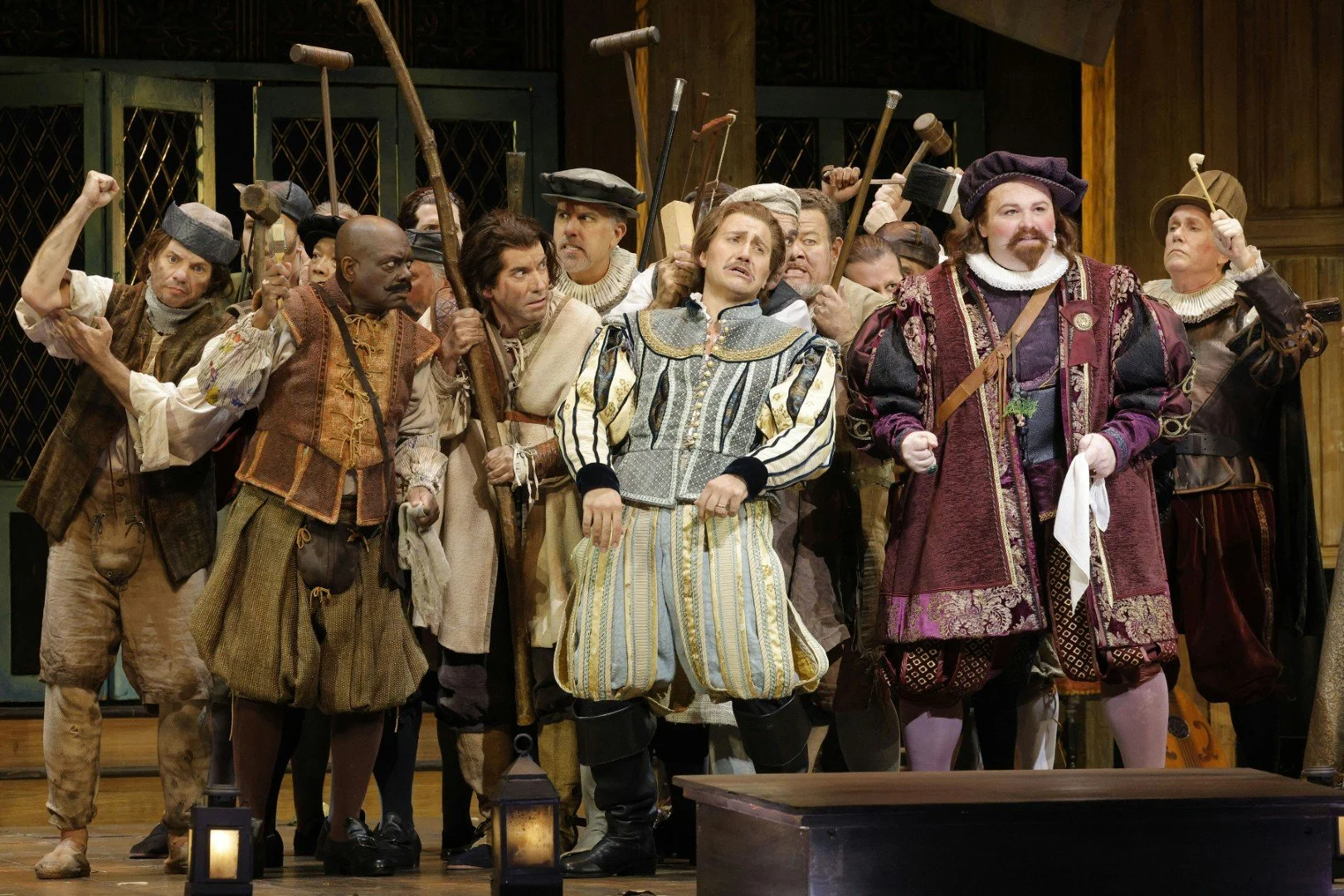


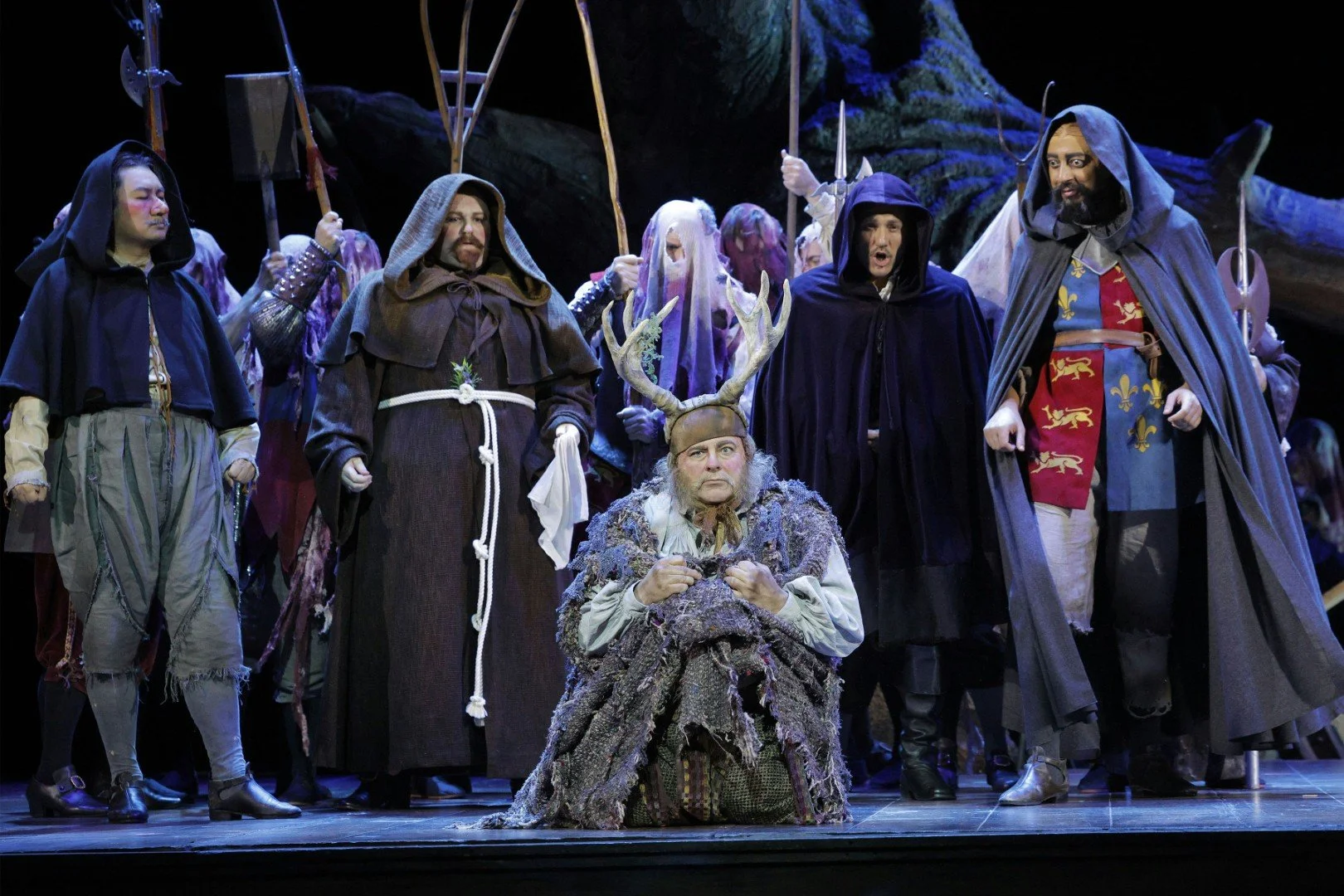
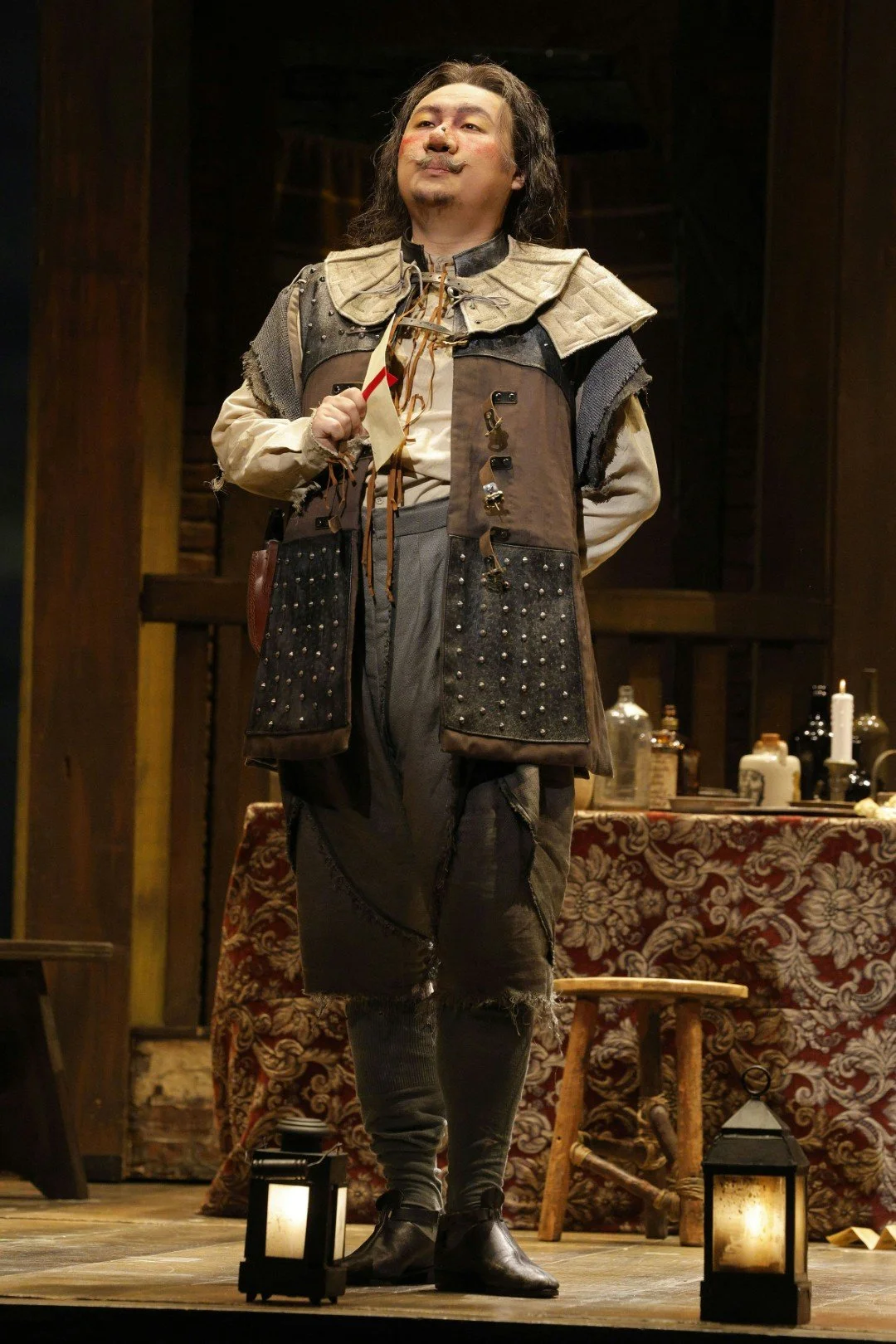
The talented young cast are mostly alumni or current members of L.A. Opera’s young artist program. Mezzo-soprano Hyona Kim's promising company debut last season as Suzuki did not prepare me for her Mistress Quickly: an assumption in which glances, gestures, changing timbers, and savoring of the text conspired to create a delightful character. Bass-baritone Craig Colclough, the Falstaff, had the needed fatness and fullness in the voice, but he could use it lightly, conversationally, to etch remarks with fine, telling line. The Dr Caius of tenor Nathan Bowles was incivie, witty, charming in a role often caricatured. Tenor Anthony León sang Fenton tastefully if a bit plainly, and soprano Deanna Breiwick, as his love interest Nannetta, sang exquisitely, tracing the phrases of her duettinos and aria with full, sweet, silvery tone. (I wish she got to sing Nannetta’s original sixteen-bar lyrical passage in the Act II concertato that was cut from the La Scala opening night.) As the two merry wives, mezzo-soprano Sarah Saturnino was a lively Meg, and soprano Nicole Heaston a delightful and vocally sumptuous Alice. Ernesto Petti, the only Italian in the cast, used his rich baritone to great effect in Ford’s monolog . Falstaff’s two henchmen were tenor Yuntong Han, a nimble Bardolph, and bass Vinícius Costa, a thunderous Pistol.




Music Director James Conlon, in his 20th and valedictory season, conducted with great verve and delicacy, securing virtuoso playing from the L.A. Opera Orchestra. Like all good opera conductors, Mr. Conlon was responsive to the drama being enacted onstage, both an inspirer and an accompanist quick to adjust balances and phrasing to what the singers do at any given moment. A case in point is Act I scene 2 that starts as a quintet of men, then becomes a nonet through the addition of the chatter of four women. The whole ensemble was most skillfully managed by Mr. Conlon, and Verdi’s tripping music is a joy even if we do not understand a word of what is being sung. A farewell concert for James Conlon is scheduled for Friday, April 24 on the Dorothy Chandler stage.
Five more performances of the opera on April 26, 30, May 2, 6, 10
Truman C. Wang is Editor-in-Chief of Classical Voice, whose articles have appeared in the Pasadena Star-News, San Gabriel Valley Tribune, other Southern California publications, as well as the Hawaiian Chinese Daily. He studied Integrative Biology and Music at U.C. Berkeley.